
If you have ever ordered a silky milk tea with a warm pineapple bun and felt instantly at home, you already understand the appeal of a cha chaan teng. Finding good cha chaan teng Singapore style is easier than you might think, because Hong Kong cafe culture travels well and our own kopitiam habits are a close cousin. These fast, affordable eateries serve a mash-up of Cantonese cooking and colonial-era Western food, and once you learn the menu you can order like a regular. This guide walks you through the classics, how to read the menu, and where to look for them across the island.
What A Cha Chaan Teng Actually Is
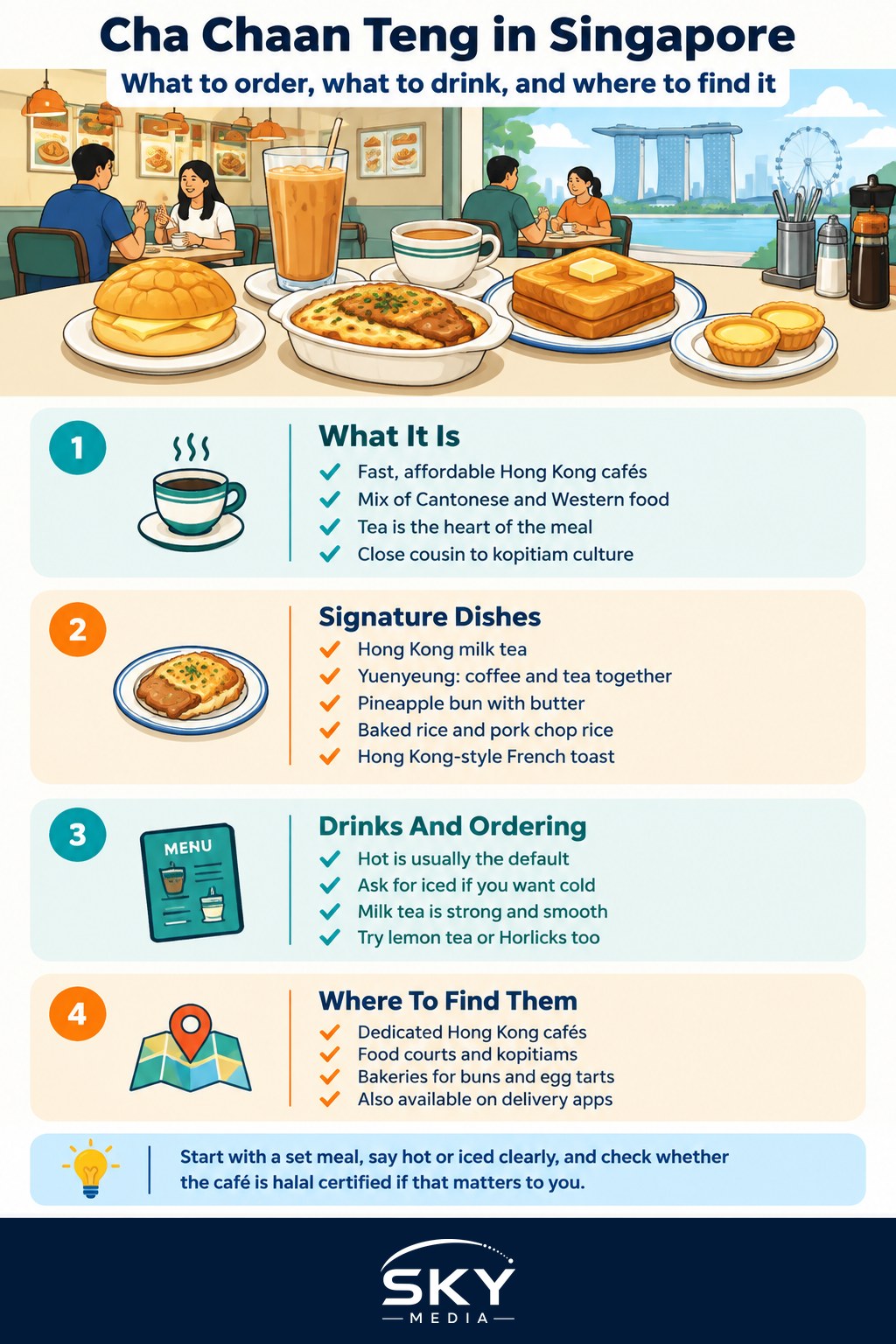
The name translates roughly as “tea restaurant”, and that tea is the point. Cha chaan teng grew up in post-war Hong Kong, when everyday diners wanted Western-style comfort food at prices that suited a working budget. The result is a menu that blends East and West without fuss: strong milk tea, buttered toast, macaroni in soup, rice plates smothered in gravy, and a rotating set of quick dishes chalked on the wall.
Speed and value define the experience. Tables turn quickly, servers move fast, and set meals bundle a main with a drink and sometimes soup or toast. If you enjoy the pace of a busy hawker centre, you will feel right at home. The food is hearty rather than delicate, built for people who want a satisfying meal and a proper cup of tea before getting on with the day.
For Singapore diners, the overlap with kopitiam culture is obvious. We already love kaya toast, strong local coffee and half-boiled eggs, so the leap to Hong Kong milk tea and buttered buns is a short one. Think of a cha chaan teng as a kopitiam that grew up watching British and Cantonese kitchens at the same time.
The Signature Dishes To Know
A few items appear on almost every menu, and they are the best place to start.
- Hong Kong milk tea: black tea brewed strong and pulled through a cloth sieve, then mixed with evaporated or condensed milk. It is bolder and more bitter than teh, with a smooth finish.
- Yuenyeung: a blend of coffee and milk tea in one cup, for people who cannot decide. It is punchy and best drunk hot, though iced versions are common in our heat.
- Pineapple bun: no pineapple inside, just a sweet crackly crust on a soft bun. Order it “bo lo yau” with a thick cold slab of butter tucked in the middle.
- Macaroni in soup: elbow macaroni in a light broth, often topped with ham, luncheon meat or a fried egg. It is a breakfast favourite and gentle on the stomach.
- Baked rice and baked pork chop rice: rice with a savoury sauce and cheese, baked until bubbling. Rich, filling and very popular with younger diners.
- French toast, Hong Kong style: thick toast, sometimes stuffed with peanut butter or kaya, deep-fried and finished with butter and syrup. Share it; it is heavier than it looks.
- Instant noodles with toppings: a humble bowl lifted by fried egg, ham or char siu. Do not underestimate it.
Many stalls also offer congee, wonton noodles, silky steamed egg and stir-fried rice plates, so there is always something for a lighter or heavier appetite.
Milk Tea, Yuenyeung And Reading The Drinks List
The drinks are half the reason to visit, so it helps to know the shorthand. Most orders come hot by default; ask for iced (“dung”) if you want it cold, which many of us do given the climate. A few terms make ordering smoother.
| Order it as | What you get | Best for |
|---|---|---|
| Milk tea, hot | Strong black tea with evaporated milk | A classic, comforting cup |
| Yuenyeung | Coffee and milk tea combined | Big flavour and a caffeine lift |
| Iced lemon tea | Black tea with fresh lemon slices | Cutting through the heat |
| Horlicks or Ovaltine | Malted milk drink, hot or iced | A nostalgic, gentler option |
If you love a strong brew, ask whether the shop pulls its tea through a cloth filter, sometimes called a “silk stocking” method. That slow straining is what gives the tea its signature smooth, almost creamy body. It is a small detail, but it separates a memorable cup from an ordinary one.
Where To Find It In Singapore
You have a few routes to a good cha chaan teng meal, depending on your mood and budget.
- Dedicated Hong Kong cafes: several chains and independent shops around the island specialise in this menu, often in malls and busy neighbourhoods. They tend to be air-conditioned, family-friendly and open through the afternoon lull.
- Food courts and kopitiams: individual stalls sometimes focus on Hong Kong milk tea, baked rice or pineapple buns, giving you a taste without a full sit-down meal.
- Bakeries: pineapple buns, cocktail buns and egg tarts turn up at many local and Chinese bakeries, perfect for a cheap snack on the go.
- Delivery apps: most cafes list on the usual platforms, so a baked pork chop rice can reach your flat on a rainy night.
Prices vary a lot depending on whether you are at a hawker stall, a food court or a sit-down cafe, so check the menu or app for current rates rather than assuming. As a rough guide, a drink and a bun is a light, budget option, while a baked rice set sits closer to a casual restaurant price. Popular spots fill up fast at weekend breakfast, so go early or off-peak if you dislike queues.
Tips For A Great First Visit
A little know-how makes the meal more fun and less rushed.
- Order a set: breakfast and tea sets bundle a drink with a main, and they are usually the best value.
- Say hot or iced clearly: the default is often hot, so specify iced if you prefer it, along with more or less sugar.
- Share the fried items: French toast and baked rice are rich, so split them across the table and add a lighter dish.
- Halal awareness: many dishes use pork, luncheon meat or lard, and most cafes are not halal certified. If this matters to you, check for MUIS certification or ask the staff directly before ordering, as practices vary by outlet.
- Watch the sugar: condensed milk drinks and syrupy toast are sweet, so balance them if you are keeping an eye on sugar.
Cha chaan teng food rewards the curious. Once you have your favourite milk tea order and a go-to rice plate, you will find yourself slipping in for a quick, comforting meal whenever the craving hits.
Explore more
Hungry for more regional comfort food? If you enjoy East Asian cafe cooking, try our guide to Taiwanese food in Singapore for another take on hearty, everyday eats. Wok fans should read our beef hor fun guide, and for a spread of island specialities, browse Indonesian food beyond nasi padang.
Frequently Asked Questions
What does ordering a set meal at a cha chaan teng usually include? A set typically bundles a main with a drink, and sometimes soup or toast, according to the article. Breakfast and tea sets are usually the best value. Check the menu board for exactly what each set includes at that shop.
How is Hong Kong milk tea different from our local teh? Hong Kong milk tea is brewed strong and pulled through a cloth sieve, then mixed with evaporated or condensed milk. The article describes it as bolder and more bitter than teh, with a smooth finish. It suits people who like a strong brew.
Why is it called a pineapple bun if there is no pineapple inside? The name comes from the sweet, crackly crust, which looks a bit like a pineapple’s skin. The bun itself is soft and plain. For the classic treat, order it with a thick slab of cold butter tucked in the middle.
Can I find halal food at a Hong Kong cafe here? Many dishes use pork, luncheon meat or lard, and most cafes are not halal-certified. Look for MUIS certification or ask the staff before ordering. Practices vary by outlet, so verify each time.
What lighter dishes can I order at a cha chaan teng? Congee, wonton noodles, steamed egg and macaroni in soup are lighter choices. Condensed milk drinks and syrupy French toast are sweet, so balance them or share. Ask for less sugar when ordering drinks.