
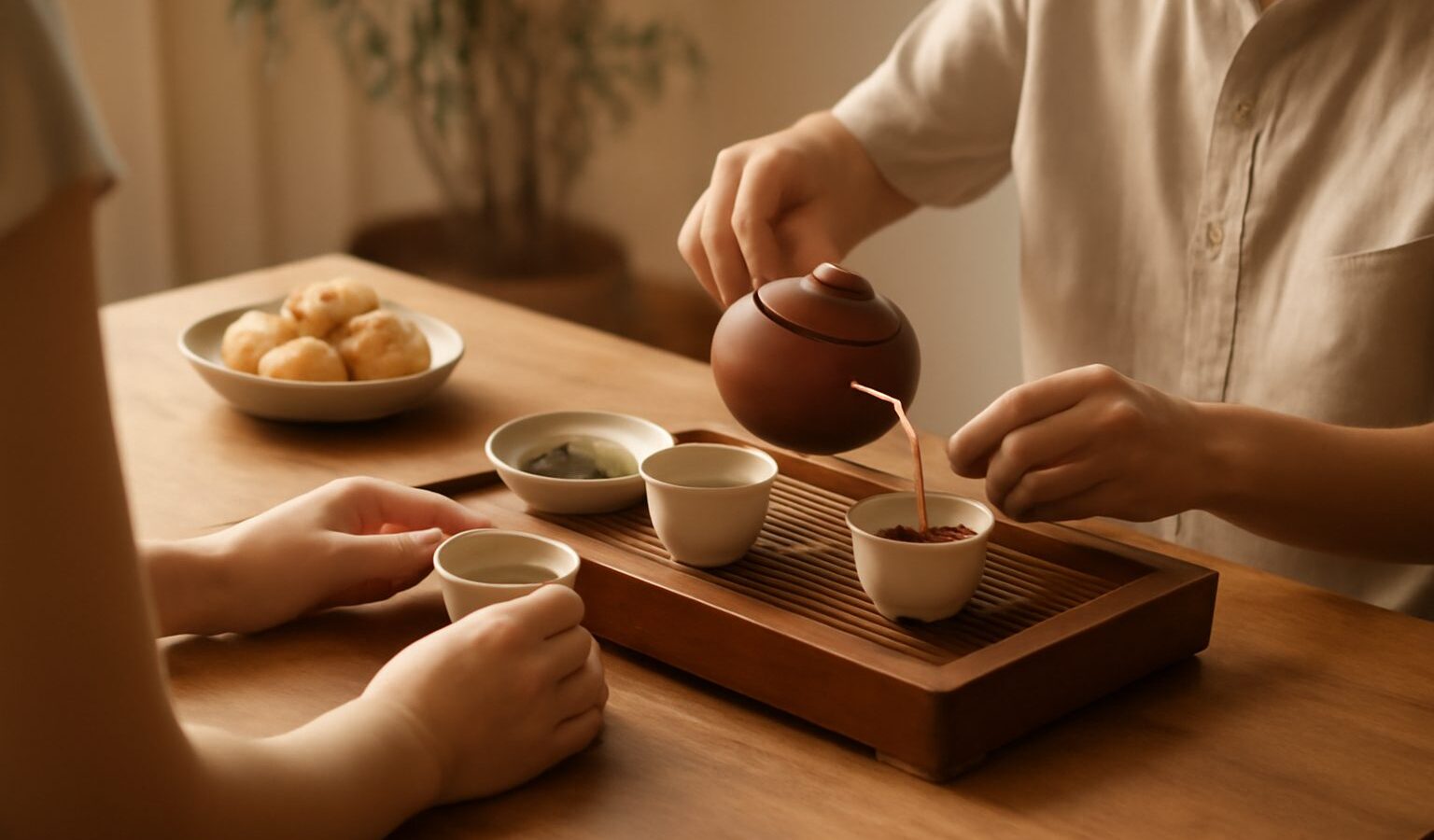
Tea is the world’s most-drunk beverage after water, yet few of us pause to taste it properly. A guided session changes that, teaching you to read the aroma, colour and finish of a single leaf steeped just right. Tea appreciation in Singapore is a calm, welcoming counterpoint to our busy city, and it draws on the deep tea cultures woven into our own heritage. From Chinese gongfu brewing to the quiet focus of a Japanese ceremony to our beloved local styles, there is a whole world in the cup. A tea appreciation workshop in Singapore typically runs one to two hours, is led by a tea master who brews several teas in front of you, and is often available in English or Mandarin. Here is what to expect and how to find a session that suits you.

What to Expect at a Tea Session
Sessions usually last around one to two hours and are led by a tea master, host or seasoned enthusiast who guides you through several teas. You taste them in small servings, often brewed in front of you, so you can watch the leaves unfurl and smell the aroma rise. The host explains where each tea comes from, how it is grown and processed, and what to notice as you sip.
The mood is unhurried and meditative, a genuine antidote to the rush outside. You will learn how water temperature and steeping time transform a brew, why the same leaves can be steeped several times with each round tasting different, and how to slow down and pay attention. Everything happens indoors in a calm, air-conditioned space, so it is an easy plan whatever the weather, and a lovely way to reset. Best of all, tea suits every age and every group, with no age limits to worry about.
The Great Tea Styles You Will Explore
Part of the joy is discovering how varied tea can be. A well-rounded session often touches on several traditions, and understanding them helps you choose what to try.
- Chinese teas: the heart of tea culture, from fresh green and floral oolong to earthy pu-erh, often brewed gongfu style in tiny pots with many short steeps.
- Japanese teas: grassy sencha and vivid matcha whisked to a froth, tied to a ceremony that prizes stillness and precision.
- Local and regional styles: the strong, comforting pulled tea we grow up with, plus the fragrant blends found across the region.
- Other world teas: delicate white teas, brisk black teas and herbal infusions from further afield.
Tasting these side by side is a revelation, since the leaf, the processing and the brewing method each leave their mark on the final cup.
Session Types: Which One Suits You
Tea experiences come in several formats, so it pays to pick the right one. This comparison sums up the common choices.
| Session type | Best for | Focus | Good to know |
|---|---|---|---|
| Intro tasting | First-timers | Broad overview | Relaxed, several styles |
| Gongfu tea session | Chinese tea fans | Traditional brewing | Many small steeps |
| Japanese ceremony | Ritual seekers | Matcha and mindfulness | Slow, meditative pace |
| Tea and food pairing | Foodies, couples | Tea with bites | Sit-down and indulgent |
An intro tasting is the best entry point for newcomers. Gongfu sessions reward those drawn to Chinese tea, while a Japanese-style ceremony suits anyone craving calm and ritual. Pairing sessions, where teas are matched to snacks or sweets, make the most memorable outings for couples and food lovers.
What You Learn to Taste
The core skill is simple attention: look at the colour of the liquor, breathe in the aroma from the cup and the wet leaves, take a small sip and let it wash over your palate, then notice the aftertaste. Over a session you build a vocabulary for what you sense, from floral and vegetal to nutty, roasted, sweet and mineral. You learn why a green tea tastes fresh and grassy while an aged pu-erh tastes deep and woody, and how brewing choices bring out or bury those flavours. You also pick up practical habits, like the right water temperature for delicate teas and how long to steep, so you can brew better at home for years to come.
Who It Suits: Dates, Teams and Gifts
Tea appreciation is one of the gentlest, most inclusive experiences around. For a date, it is a serene, screen-free way to connect, with plenty to talk about and no alcohol required. For friends, it turns an afternoon into a mindful, unhurried treat. For teams, a private session offers calm bonding, and the shared ritual naturally draws people together.
As a gift, a tea session suits the person who values calm over clutter, works across budgets, and gives an experience to remember. It is especially thoughtful for someone who loves ritual, wellness or heritage, and a voucher for two makes a graceful present for an anniversary or a thank-you.
How to Choose and Book
Because smaller tea houses and studios come and go, describe the experience you want rather than fixing on one name. Several teahouses, cultural spaces and specialist studios around the island run regular appreciation sessions, from casual tastings to traditional ceremonies. When comparing options, consider how many teas you will try, which traditions the session covers, the group size, and how beginner-friendly it sounds. Many venues sit in heritage districts or central areas within easy reach of an MRT station, so plan for a short walk and an easy trip home.
Prices vary with the teas served and the format, so treat any figure as a rough guide and confirm the latest cost, dates and details with the venue directly before you book. Weekend slots are popular, so reserve ahead. Arrive with an open mind and a little patience, and you will leave with a calmer pace and a new appreciation for a cup you thought you already knew.
Where Tea Appreciation Workshops Happen in Singapore
The heart of the scene is Chinatown and Tanjong Pagar, where several long-running teahouses occupy restored shophouses and have hosted appreciation sessions for years. Two well-known examples are Tea Chapter on Neil Road and Yixing Xuan Teahouse on Tanjong Pagar Road, the latter listed in the National Heritage Board’s SG Heritage Business Registry. Both have offered guided workshops that walk you through several tea types and the basics of gongfu brewing.
Beyond the teahouses, keep an eye on these other formats:
- Heritage and community events: festivals, cultural centres and visitor centres occasionally run short tea demonstrations, some of them free.
- Specialist masterclasses: longer sessions on a single category such as pu-erh or oolong, aimed at enthusiasts who want to go deeper.
- Corporate and private bookings: many hosts will run a session for a team or family group at their space or yours.
- Japanese tea sessions: matcha whisking and tea ceremony introductions, usually run by cultural groups or specialist cafes.
Schedules, group minimums and languages differ from venue to venue, so check the host’s own booking page for the latest details before you go.
Tea Appreciation in Singapore: Common Questions
Do I need any experience?
No. Introductory workshops assume you know nothing and start with the basics of looking, smelling and sipping. Hosts are used to complete beginners.
How long does a tea appreciation workshop last?
Most introductory sessions run about one to two hours. Specialist masterclasses can stretch to half a day or longer.
Are sessions in English or Mandarin?
Many teahouses offer both, but not every slot, so state your preferred language when you book.
Can children join?
Tea suits all ages and there is no drinking age to worry about, but sessions involve hot water and delicate teaware, so check with the host whether the format suits younger children.
Can I buy the teas afterwards?
Most teahouses sell the leaves you taste, and some also sell teaware, so you can carry on brewing at home.
Explore more
If mindful sipping suits you, there is more to savour. Coffee fans should read our guide to coffee appreciation and cupping in Singapore for the same slow, attentive ritual in another cup. Prefer a hands-on treat? Our guide to chocolate-making experiences pairs beautifully with a pot of tea. And for gift inspiration, browse unique experience gifts in Singapore.
Further reading: Afternoon High Tea Spots in Singapore