
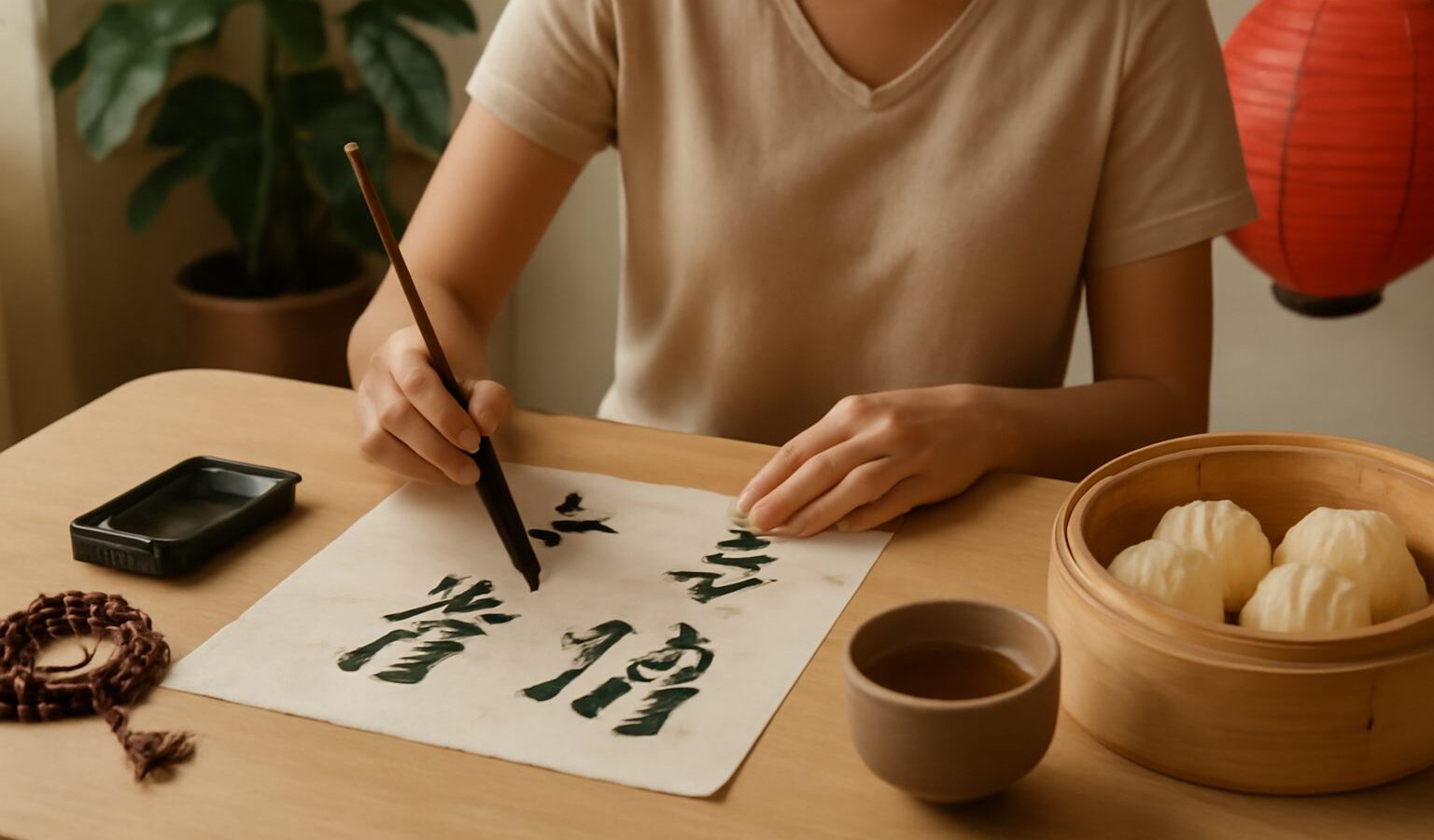
Moving from mainland China to Singapore, you will find a lot that feels familiar: Mandarin on the street, red lanterns at Chinese New Year, mooncakes in autumn. You will also find a Chinese culture that has grown its own way over two centuries, shaped by Hokkien, Teochew, Cantonese, Hakka and Hainanese migrants and by life alongside Malay, Indian and Eurasian communities. Exploring Chinese cultural activities in Singapore is one of the most enjoyable ways to feel at home here while discovering something new.
This guide groups ideas by interest: calligraphy and the arts, music, tea, heritage and festivals, plus ways to join in using Mandarin. Programmes, schedules and fees change, so check current details with the venue or organiser before you go.

Calligraphy, Painting and Traditional Crafts
If you practised calligraphy (书法) at school or always wanted to, Singapore makes it easy to pick up the brush again.
- Community centre classes. Community centres and clubs across the island run courses in Chinese calligraphy, Chinese ink painting and paper cutting, many taught in Mandarin. You can browse and book through onePA, the People’s Association portal for community classes. They are a good way to meet neighbours as well as learn.
- Cultural centre workshops. The Singapore Chinese Cultural Centre, a national body that promotes local Chinese culture, regularly hosts talks, workshops and exhibitions on traditional arts and Singaporean Chinese identity.
- Calligraphy societies and art groups. Several long-standing societies offer lessons and hold exhibitions. Search for calligraphy societies and check how classes are run, the language of instruction and whether beginners are welcome.
- Seasonal crafts. Before Chinese New Year you will see calligraphers writing spring couplets (春联), and workshops on lantern making often appear before the Mid-Autumn Festival.
Chinese Music, Opera and Theatre
Music lovers have plenty to explore.
- The Singapore Chinese Orchestra. This national professional orchestra performs Chinese instrumental music, including pieces that blend Chinese and Southeast Asian influences. Concerts are a relaxed introduction to how Chinese music has developed here.
- Learn an instrument. Classes in guzheng, erhu, pipa and dizi are offered by music schools and some community centres, for both children and adults.
- Chinese opera. Singapore has a living tradition of Cantonese, Teochew and Hokkien opera. You might catch performances at temple celebrations, festivals or heritage events. Do not worry if you do not understand the dialect; the costumes, music and stagecraft are enjoyable on their own.
- Mandarin theatre. Local theatre companies stage plays in Mandarin, from classics to contemporary Singapore stories. Our guide to Chinese language theatre in Singapore covers what to expect and how to find shows.
During the Chinese New Year period, the Esplanade arts centre hosts Huayi, a festival of Chinese arts featuring music, theatre and dance. Look out for its programme each year.
Tea Culture and Food Heritage
Tea is a quieter way into Chinese culture, and Singapore has a varied tea scene.
- Tea appreciation sessions. Some teahouses and cultural groups offer gongfu tea (功夫茶) demonstrations and tasting sessions. When choosing, ask about the type of tea covered, group size, language and price.
- Local tea traditions. You will notice that Teochew-style tea drinking and Hokkien tea culture have shaped local habits. Try comparing them with the tea you know from home.
- Food with a story. Dishes such as bak kut teh, Hainanese chicken rice and Teochew porridge show how southern Chinese cooking changed in Singapore. Hawker centres are the best classroom, and many heritage trails explain the history behind them.
Heritage, Temples and Museums
Singapore’s Chinese heritage is easy to explore on foot, especially around Chinatown.
- Chinatown heritage walks. Walking along the shophouse streets of Chinatown, you can see clan association buildings, old trades and temples close together. Heritage galleries in the area recreate how early migrants lived in cramped shophouses.
- Historic temples. Thian Hock Keng, one of the oldest Hokkien temples in Singapore, and the Buddha Tooth Relic Temple in Chinatown are both popular with visitors. Dress modestly, speak quietly, and follow any signs about photography. Practices vary, so watch how worshippers behave and follow their lead as a respectful guest.
- Museums. The Asian Civilisations Museum has collections on Chinese art and trade across Asia. Smaller heritage centres and the National Heritage Board’s heritage trails tell the stories of different dialect groups and neighbourhoods.
- Haw Par Villa. This unusual park is filled with sculptures and dioramas based on Chinese folklore and moral tales. It is memorable and sometimes startling, so check whether some displays suit younger children.
- Clan associations. These organisations, based on surname or ancestral hometown, were once the centre of migrant life. Some now run cultural classes and events open to the public.
Festivals Through the Year
Festivals are some of the best Chinese cultural activities in Singapore, and many are free to enjoy. Here is how the main ones are often celebrated locally compared with what newcomers may be used to.
| Festival | How it is commonly celebrated in Singapore | What may feel different from mainland China |
|---|---|---|
| Chinese New Year | Chinatown street light-up and bazaar, lion dances, family visits, a large riverside festival | Lo hei, the tossing of a raw fish salad for good luck, is a local custom many newcomers try for the first time |
| Qingming | Family visits to columbaria and memorial halls | Many families visit columbaria rather than graves on hillsides |
| Mid-Autumn Festival | Lantern displays in Chinatown and public gardens, mooncake fairs | Snowskin and creative mooncake flavours are very popular |
| Hungry Ghost Festival | Getai stage shows, roadside offerings, prayers in housing estates | Getai concerts in open spaces are a distinctive local sight |
| Winter Solstice | Families eat tangyuan together | Tangyuan is eaten more widely than dumplings for this festival |
Customs differ between families and dialect groups, so treat this as a general picture. During the Hungry Ghost month, for example, it is polite not to step on or disturb roadside offerings.
Joining In With Mandarin and Making Connections
Cultural activities are also a great way to build a social circle.
- Libraries. Public libraries hold Chinese-language book collections, talks and storytelling sessions, and some branches have a stronger focus on Chinese resources.
- Language and culture groups. Mandarin-speaking interest groups, from book clubs to hiking groups, often organise cultural outings. Our guide to making friends as a Chinese newcomer in Singapore has more ideas.
- Volunteering. Festivals, heritage events and community celebrations often need volunteers, a simple way to meet locals.
- Xiangqi and tai chi. You may see older residents playing Chinese chess at void decks or practising tai chi in the park in the morning. Many groups welcome newcomers who ask politely.
For a wider picture of community life, including associations and support networks, read the Chinese community in Singapore.
Start with one activity that matches an interest you already have, whether that is calligraphy, music, tea or history. You will quickly find that Chinese culture in Singapore is both familiar and full of surprises.
Further reading: Mandarin-Friendly Parent-Child Activities in Singapore · Singapore Chinese Cultural Centre: A Visitor Guide