
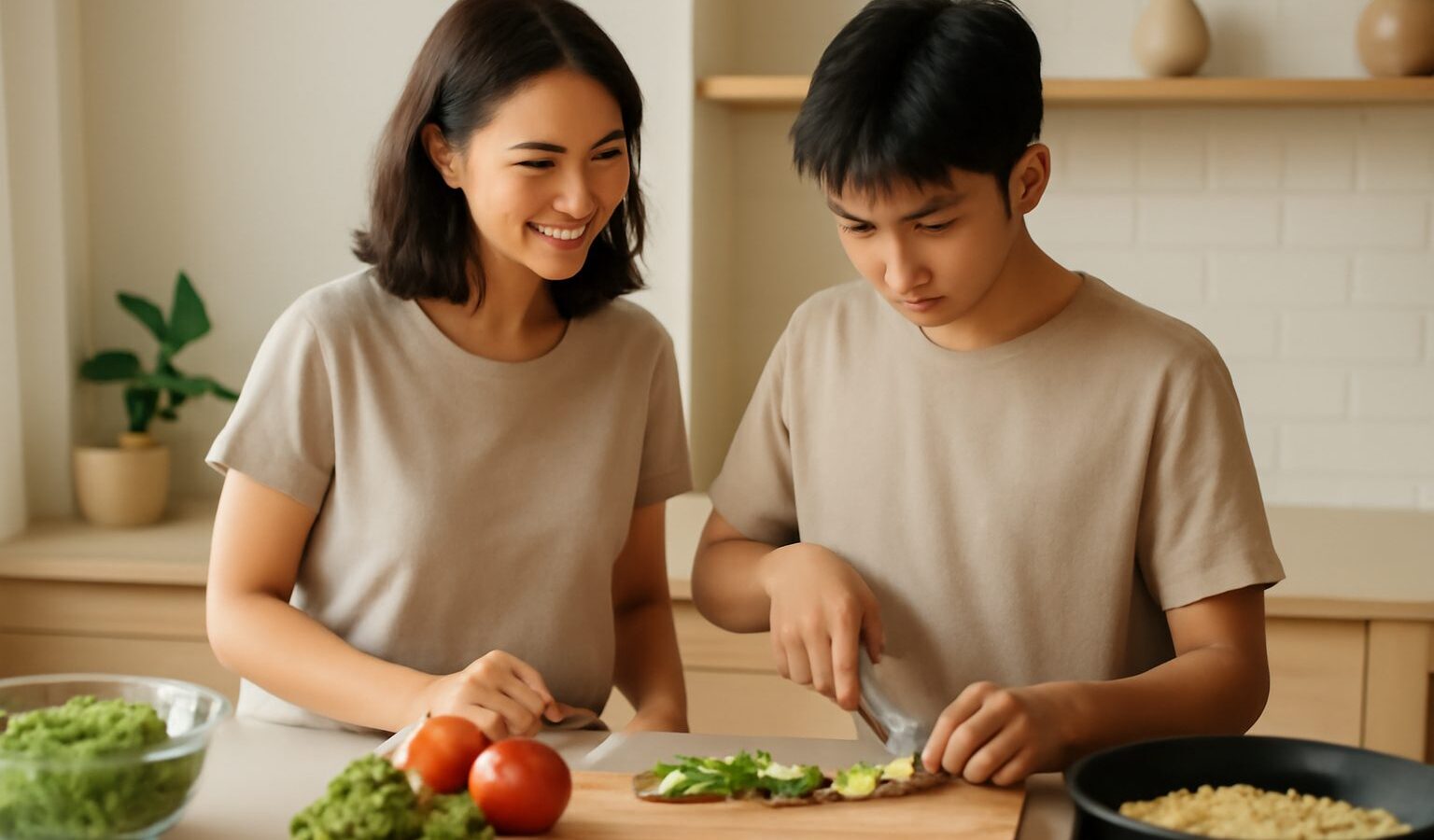
There is a special kind of pride in watching your teenager cook a proper meal, clear up after themselves, and manage a small task from start to finish. Teen cooking singapore families can nurture is about far more than food. It is a gateway to independence, confidence, and the quiet satisfaction of knowing you can look after yourself. In a country blessed with hawker centres and food delivery at the tap of a screen, it is easy for cooking to be one skill our children never quite pick up. With a little intention, we can change that.
This is a warm, practical guide to helping your teen become more self-sufficient in the kitchen and beyond. The goal is not to raise a master chef, but a capable young person who can feed themselves, keep a space tidy, and handle the small tasks of daily life. These skills will serve them at university, in a first rental, and for the rest of their lives.
Why Cooking and Life Skills Matter
Learning to cook teaches a surprising number of lessons at once. Your teen practises planning, following steps, timing, and problem solving, all while making something real and useful. There is also a boost to wellbeing. Being able to prepare a simple, nourishing meal supports healthier eating and a sense of control, and cooking for others is a lovely way to show care.
Beyond the kitchen, self-sufficiency builds genuine confidence. A teenager who can manage laundry, tidy a room, and cook a few meals steps into adulthood feeling capable rather than daunted. Every skill you pass on now is one less thing they will scramble to learn later, often far from home.
Starting in the Kitchen Safely
Safety comes first, and a calm, thorough introduction sets your teen up well. Before they cook alone, walk them through the basics of the kitchen. Show them how to use the stove and oven, how to handle hot pots and pans, and how to hold and store knives properly. Teach them to keep handles turned inwards, to use a chopping board that does not slip, and to cut away from their fingers.
Cover food hygiene too: washing hands, keeping raw and cooked foods separate, storing leftovers promptly, and checking that food is properly cooked. Make sure they know where the fire extinguisher or fire blanket is, never to throw water on an oil fire, and how to switch off the gas. Once these habits are in place, cooking becomes a safe and enjoyable part of home life rather than a worry.
Start small and build up. A confident cook is made through many little successes, not one overwhelming feast.
Simple Meals to Build Confidence
Begin with easy wins that taste good and are hard to ruin. As your teen grows more comfortable, you can add trickier dishes and let them take the lead. Cooking together at first, then stepping back, is a gentle way to hand over the reins.
Here is a simple progression you can follow.
| Stage | Skills to build | Meal ideas |
|---|---|---|
| Beginner | Boiling, toasting, basic hygiene | Instant noodles jazzed up with egg and greens, scrambled eggs, sandwiches |
| Improving | Frying, simmering, basic knife work | Fried rice, simple pasta, stir-fried vegetables, French toast |
| Confident | Timing multiple items, seasoning | A one-pan chicken and rice, soup, a home-style curry |
| Independent | Planning and shopping for a meal | Cooking a full dinner for the family once a week |
Invite your teen to choose dishes they actually want to eat, including family favourites. Let them make mistakes without criticism. A slightly burnt first attempt is part of learning, and your patience keeps the kitchen a happy place. Celebrate their efforts warmly, and enjoy the meals they make for you.
Beyond the Kitchen: Everyday Self-Sufficiency
Cooking is a wonderful starting point, but true self-sufficiency spreads across daily life. The teenage years are the ideal time to hand over more responsibility, little by little, while your teen still has you nearby for support.
Consider teaching your teen to do their own laundry, from sorting and using the machine to hanging and folding. Show them how to keep their room and shared spaces tidy, wash dishes, and take care of simple household chores. Basic money skills matter too, such as budgeting pocket money, comparing prices, and understanding that meals cooked at home cost far less than eating out every day. Everyday tasks like planning their week, packing their own bag, and getting themselves to appointments all add up to a young person who can stand on their own two feet.
Resist the urge to do everything for them because it is faster. Every task you hand over is a gift of competence. It can help to frame chores as a normal part of belonging to a household, something everyone contributes to, rather than a punishment.
Encouraging Independence With Warmth
The heart of raising a self-sufficient teen is a gradual, loving letting go. Offer guidance, then step back. Allow natural consequences, such as an empty lunchbox if they forgot to pack it, so long as they are safe ones. Praise effort and persistence rather than perfection, and expect a few grumbles along the way. Independence is not always welcomed at first, but most teens quietly enjoy the pride that comes with being capable.
Keep the tone patient and encouraging. Your teen will move at their own pace, and some skills will take several tries. What they will remember is not whether the rice was perfect, but that you believed in them, made room for their mistakes, and cheered them on. That confidence, more than any single recipe, is what carries a young person into a capable, independent adulthood.
Explore more
Building Your Child’s Independence and Life Skills
Parenting Teenagers in Singapore
Positive Parenting and Discipline