
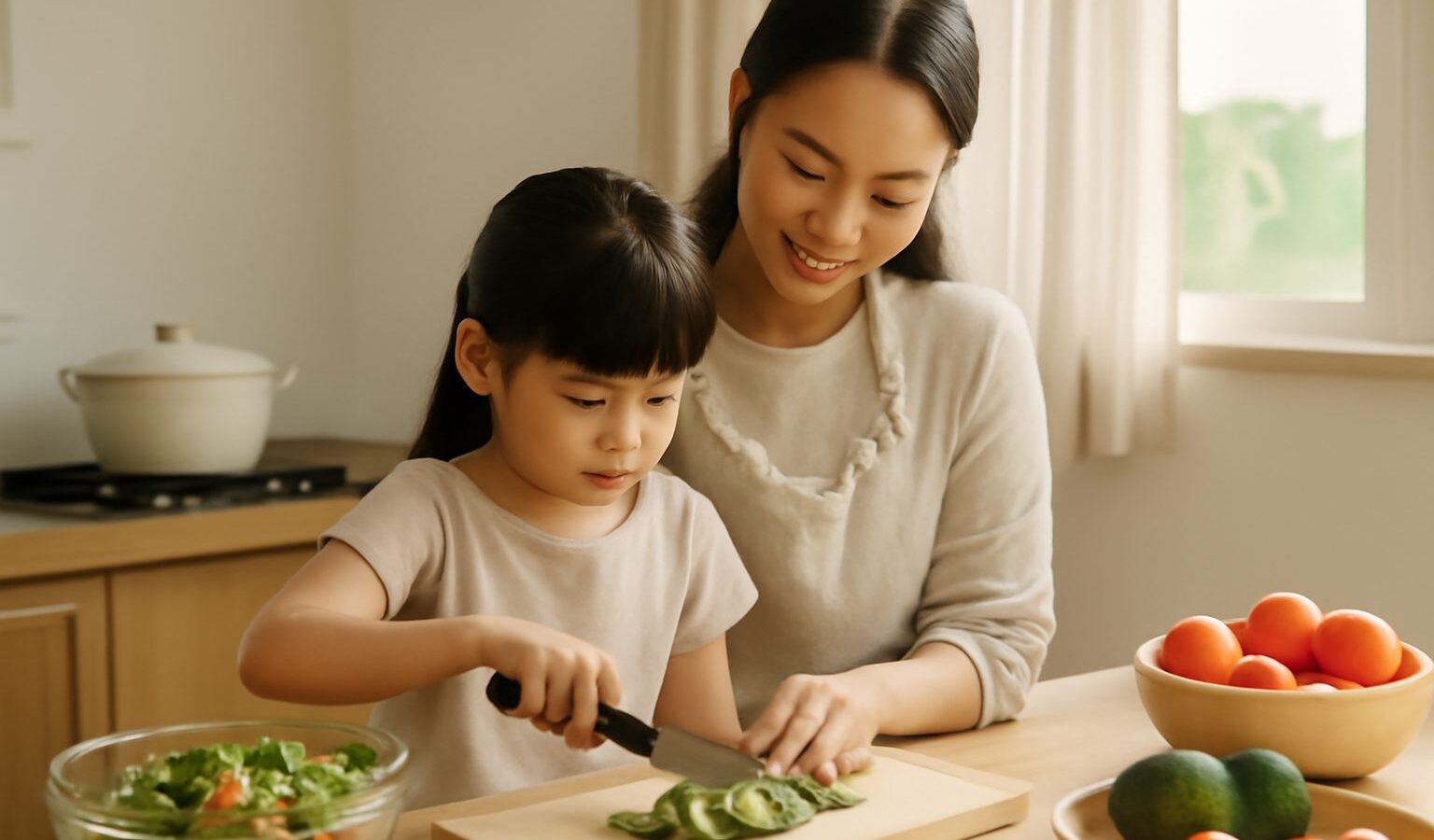
Bringing your child into the kitchen is one of the most rewarding things you can do as a parent. Building kids cooking skills in Singapore homes teaches maths, reading, patience and confidence, all while making something the family can eat together. It can feel messier and slower at first, but the payoff is a child who understands where food comes from, eats a wider range of dishes, and takes real pride in helping out. The trick is to match the task to the age, keep safety front and centre, and treat spills and lopsided sandwiches as part of the learning.
Why Cooking With Your Child Is Worth the Mess
Cooking is a full-body learning experience. Measuring rice and water builds early number sense. Following a simple recipe strengthens reading and sequencing. Kneading, tearing and stirring develop the small hand muscles children need for writing. Just as importantly, a child who helps make dinner is far more likely to try it, which can gently widen a fussy eater’s plate over time.
There is an emotional payoff too. In busy Singapore households, where both parents often work and grandparents or a helper may share the cooking, the kitchen can become a rare pocket of unhurried time together. Chatting while you chop, letting your child choose the vegetables at the wet market, or baking on a rainy afternoon all build connection. Cooking also sits naturally alongside other life-skills work, such as building your child’s independence and life skills, and it gives shy or restless children a hands-on way to contribute.
Go in with realistic expectations. Food will end up on the floor. The pancakes will be uneven. Your child will lose interest halfway through and wander off. All of this is normal and none of it is failure. Praise the effort, not the result, and keep the mood light.
Age-Appropriate Kitchen Tasks
Children can help far earlier than most parents expect, as long as the job suits their stage. Here is a rough guide, though every child is different, so follow your own child’s coordination and attention.
Toddlers (around 2 to 3 years)
- Washing vegetables and fruit in a bowl of water
- Tearing lettuce, herbs or bread
- Stirring cool ingredients in a large bowl
- Pressing buttons on the rice cooker with you
- Carrying unbreakable items to the table
Keep sessions short, five to ten minutes, and expect plenty of tasting along the way.
Preschoolers (around 4 to 5 years)
- Spreading kaya, butter or peanut butter with a blunt knife
- Cracking eggs into a bowl (fishing out shell is part of the fun)
- Measuring and pouring dry ingredients
- Mashing bananas, sweet potato or hard-boiled eggs
- Cutting soft foods such as banana or tofu with a child-safe knife
Lower primary (around 6 to 8 years)
- Peeling with a peeler under supervision
- Cutting softer vegetables with a small, sharp-enough knife and close guidance
- Cracking and whisking eggs independently
- Assembling sandwiches, wraps and simple salads
- Measuring liquids and reading a simple recipe out loud
Older primary and up (around 9 and above)
- Using the stovetop with an adult present
- Simple stir-fries, scrambled eggs and one-pot dishes
- Planning a basic meal and writing a shopping list
- Learning to clean up as they go
As they grow, cooking becomes a genuine self-sufficiency skill. Older children and teens can move towards preparing whole meals, which links neatly to teaching your teen to cook and be self-sufficient.
Kitchen Safety First
Safety is the non-negotiable part of building kids cooking skills. The kitchen has real hazards, so set clear rules from the very first session and repeat them every time.
Supervision is the foundation. A child should never cook alone until you are confident they can handle heat and blades safely, and even then, keep checking in. Stay within arm’s reach whenever knives or the stove are involved.
For knives, start with butter knives and child-safe crinkle cutters, then progress to a small, appropriately sharp knife only when your child can manage it. Teach the “claw grip”, tucking fingertips under and guiding the blade with the knuckles. A blunt knife is actually more dangerous than a sharp one because it slips, so keep blades in good condition and always cut on a stable board that will not slide.
For heat, teach that the stove, oven, kettle, air fryer and freshly cooked food are all hot even when they do not look it. Turn pot handles inwards so they cannot be knocked, and keep hot pans away from the edge. Show your child how to use oven mitts and to lift lids away from the face so steam does not scald. In compact HDB kitchens, space is tight, so agree on who stands where before anything goes on the heat.
Round it out with hygiene and general safety:
- Wash hands before starting and after handling raw egg, meat or seafood
- Tie back long hair and roll up loose sleeves
- Wipe spills off the floor straight away to prevent slips
- Keep raw and cooked foods on separate boards
- Store knives and hot appliances out of reach of younger siblings
Talk through what to do if something goes wrong, such as running a minor burn under cool water, and make sure your family knows the basics of family first aid and emergency preparedness.
Making It a Habit
Little and often beats one big session. Invite your child to help with just one part of dinner a few times a week, rather than saving cooking for special occasions. Let them own a “signature dish” they can make with less and less help, whether that is scrambled eggs, a fruit platter or a simple pasta.
Keep the pressure low. If your child would rather watch today, that is fine. Celebrate small wins, eat what they make together, and let cooking stay something the family enjoys rather than another chore. Over the years, these small moments add up to a capable, confident young cook who can feed themselves well, which is a gift that lasts a lifetime.