
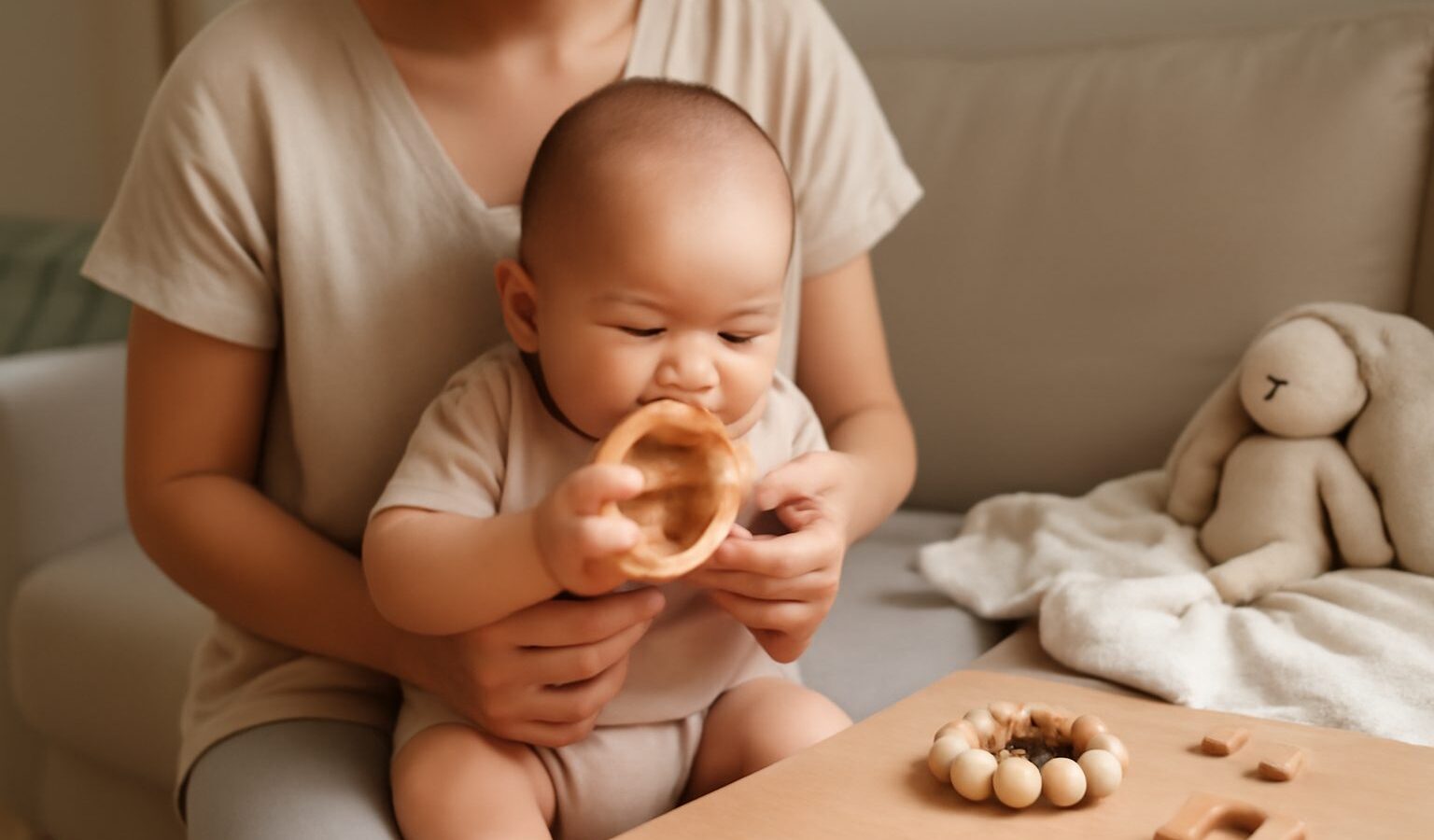
Few things tug at the heart quite like a fretful, dribbling little one who cannot tell you what hurts. If you are caring for a teething baby in Singapore, you are not alone, and the good news is that most of the discomfort is short lived and manageable at home. This is a gentle, supportive overview rather than medical advice, so do speak with your doctor or paediatrician about anything that worries you.
Teething is simply the process of those first tiny teeth pushing through the gums. It can be uncomfortable for your baby and unsettling for you, but with a little patience and a few tried and tested comforts, you will both get through it.
When Teething Usually Starts
Every child follows their own timeline, and there is a wide range of normal. Many babies get their first tooth somewhere in the second half of the first year, though some arrive earlier and some noticeably later. The two bottom front teeth often appear first, followed by the top front teeth, with the rest arriving gradually over the following months and into the toddler years.
Try not to compare your little one too closely with a friend’s baby or a cousin of the same age. A late first tooth is rarely a cause for concern on its own. If you feel your baby’s teeth are very delayed, a quick chat with your doctor at a routine check will put your mind at ease.
Signs Your Baby Might Be Teething
Teething shows up differently from baby to baby, but some common signs include:
- More drooling than usual, sometimes with a mild rash around the chin from all the wetness
- A strong urge to chew or gnaw on hands, toys and anything within reach
- Sore, swollen or tender gums
- More fussing, crankiness or clinginess, especially in the evenings
- Disrupted sleep or shorter naps
- A slightly reduced appetite for a day or two
It is worth knowing what teething does not usually cause. A high or persistent fever, vomiting, diarrhoea or a baby who seems genuinely unwell are not typical of teething. In Singapore’s warm, humid climate it can be tempting to blame every grizzle on new teeth, but if your baby has a fever or seems poorly, please treat it as a separate issue and see a doctor rather than assuming teeth are to blame.
Gentle Ways to Soothe the Discomfort
Most teething discomfort responds well to simple, loving comfort. Here are safe, effective ideas to try.
Cool pressure. Counter pressure on sore gums often brings relief. A clean finger gently rubbed along the gum line can work wonders, and many babies love the chance to chew on something firm and cool.
Chilled, not frozen. A teething ring cooled in the fridge (not the freezer, which makes it hard enough to bruise delicate gums) gives soothing coolness. Always check the ring is intact and one solid piece.
Something to chew. Once your baby is eating solids, a chilled washcloth or a firm, safe teether gives them something satisfying to gnaw on under your watchful eye.
Wipe the drool. Keeping the chin dry with a soft cloth helps prevent that damp teething rash. A thin layer of a gentle barrier cream can protect the skin.
Extra cuddles. Never underestimate the power of being held. Sometimes your calm presence, a feed and a quiet room are the best medicine of all.
If your baby is truly uncomfortable, your doctor or pharmacist can advise on suitable infant pain relief and the correct dose for your baby’s age and weight. Please do not guess at medicines, and always follow professional guidance.
Teething Aids: What Is Safe and What to Avoid
With so many products on shop shelves and online, it helps to know what is genuinely safe. The table below offers a quick, reassuring guide.
| Teething aid | Is it a good idea? | Why |
|---|---|---|
| Solid silicone or rubber teether, chilled in the fridge | Yes | Firm, coolness soothes gums, easy to clean |
| Clean, chilled washcloth | Yes | Cheap, gentle, gives something to chew |
| Your clean finger for gum rubbing | Yes | Always available, lets you feel the gums |
| Amber teething necklaces | No | Choking and strangulation risk, no proven benefit |
| Frozen-solid teethers | No | Too hard, can bruise tender gums |
| Teething aids with liquid or gel filling | With care | Can split and leak, check condition often |
Amber necklaces deserve a special mention because they are widely marketed to parents. Despite the claims, there is no reliable evidence that they ease teething, and they carry a real risk of choking on beads or strangulation if the cord catches. Given a safer alternative sits right in the fridge, it is simply not worth the gamble.
Whatever aid you choose, supervise your baby closely, check regularly for wear or small parts that could come loose, and follow the age guidance on the packaging.
Looking After Those First Teeth
The moment that first tooth appears, gentle care can begin. Wipe it with a soft, damp cloth or a small, soft baby toothbrush. Your dentist and doctor can guide you on when and how to introduce a smear of toothpaste. Building a calm, playful toothbrushing habit early makes life much easier as your child grows.
Try to avoid settling your baby to sleep with a bottle of milk or sweet drink, as pooled liquid around new teeth is not kind to them. A feed followed by a cuddle and a wipe of the gums is a lovely bedtime rhythm.
When to See a Doctor
Trust your instincts. You know your baby best. Please see a doctor if your little one has a high or persistent fever, seems genuinely unwell, is refusing feeds, has vomiting or diarrhoea, or if you are simply worried and want reassurance. Remember, teething itself should not make a baby seriously ill, so these symptoms deserve a proper look rather than being brushed off as “just teeth”.
Teething is one of those small but real challenges of early parenthood. With cool comfort, safe aids and plenty of cuddles, you will help your baby through it, and before long you will be admiring that gummy little smile turned toothy grin.
Explore more
Baby Sleep and Routines
Common Baby Illnesses and When to Worry
Baby Development and Milestones
Baby Gear and Equipment Guide