
Singapore is home to many faiths living side by side, and two of the most moving religious observances a newcomer can witness are thaipusam vesak singapore marks each year with deep devotion. One is a Hindu day of vows and gratitude, the other the holiest day in the Buddhist calendar. Both are sacred to their communities, and both can be observed respectfully by visitors who approach with an open and humble heart. This guide explains what each occasion means and how, as a newcomer, you can appreciate it with the courtesy it deserves.
For residents arriving from mainland China, these festivals may be unfamiliar, and that is perfectly fine. You are not expected to know the rituals. What matters is a respectful attitude, a willingness to observe quietly, and an appreciation for how much these days mean to the people taking part. Understanding a little in advance turns a colourful scene into something genuinely meaningful.
Thaipusam: A Sacred Hindu Observance
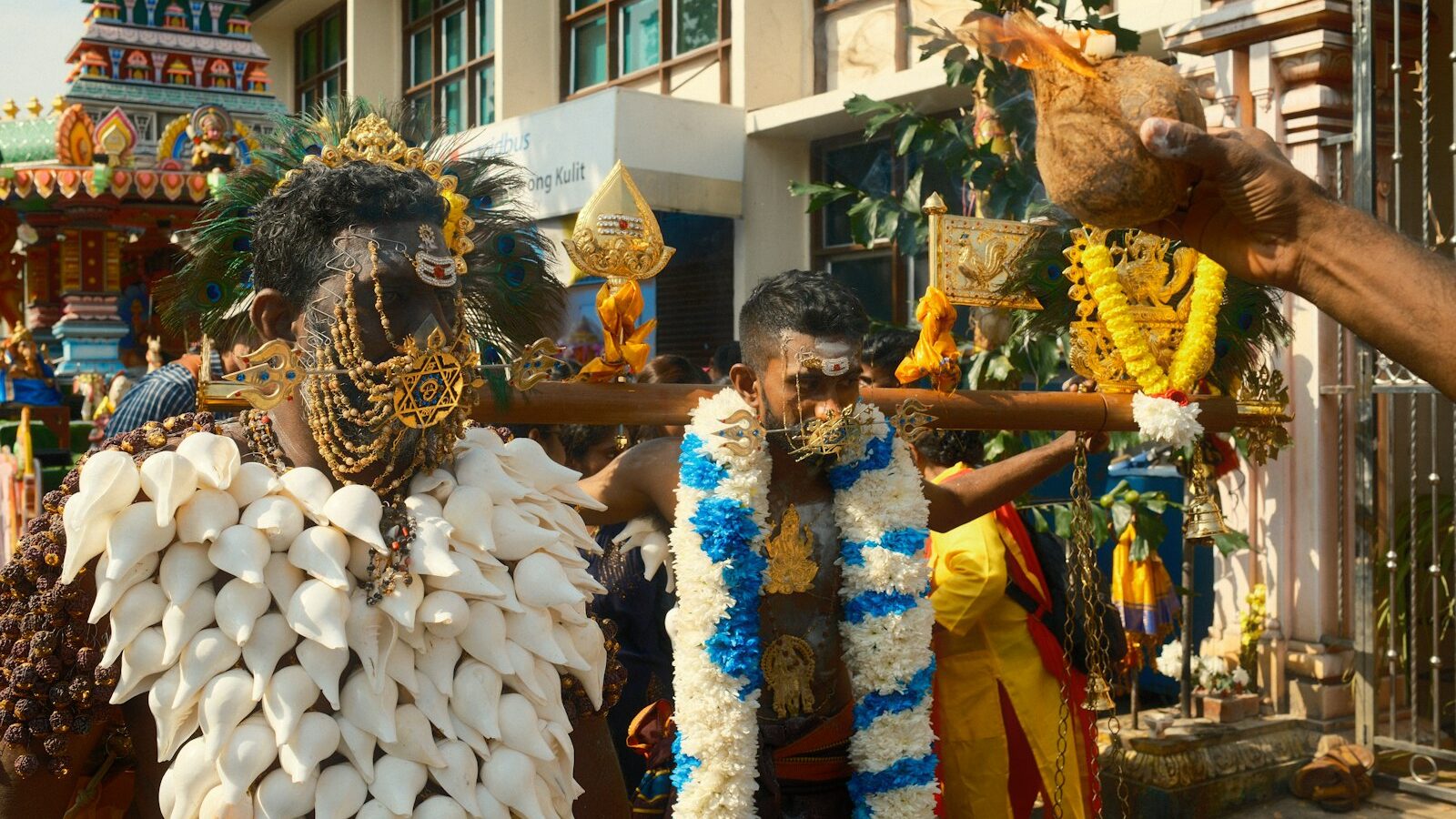
Thaipusam is a Hindu festival dedicated to Lord Murugan, observed with great devotion by the Tamil Hindu community. It falls on a full moon in the Tamil month of Thai, usually in January or February. At its centre is a solemn act of faith and thanksgiving, as devotees fulfil vows made in gratitude or in hope of blessings.
The most striking sight is the kavadi procession. Devotees carry kavadi, which range from simple pots of milk balanced on the head to large, ornately decorated frames borne on the shoulders. Some devotees have their skin pierced as part of their vow, an act undertaken after spiritual preparation, prayer, and fasting. They walk a long route between temples, often accompanied by family and friends who chant, sing, and offer support along the way.
This is not a carnival or a performance. It is a profound spiritual undertaking, physically demanding and deeply personal. In Singapore, the procession traditionally moves between two Hindu temples, drawing devotees and well wishers who line the route in quiet encouragement. Watching the devotion, the concentration on each face, and the care of the accompanying families is genuinely humbling.
Vesak Day: The Holiest Buddhist Day
Vesak Day, sometimes spelled Wesak, is the most sacred day in the Buddhist calendar. It commemorates the birth, enlightenment, and passing of the Buddha, three great events remembered together on a single full moon day, usually in May. For many newcomers from China who have a family connection to Buddhism, this day may feel more familiar, though the customs here blend several traditions.
On Vesak Day, temples across Singapore fill with worshippers. Devotees offer flowers, light candles and incense, and listen to chanting and teachings. A gentle and beautiful custom is the bathing of a small Buddha statue, pouring water over it as a symbol of purifying the heart. Many people take part in acts of kindness and generosity, such as giving to charity, sharing vegetarian food, and the practice of doing good deeds.
The mood is serene and reflective rather than exuberant. Temples may hold candlelight processions in the evening, and the air is scented with incense and flowers. Even as a visitor, standing quietly in a temple courtyard on Vesak Day can be a calming and thoughtful experience.
How a Newcomer Can Observe and Appreciate
You do not need to be Hindu or Buddhist to witness these days with respect. Approach as a considerate guest, and you will be welcome.
For Thaipusam, you can stand along the procession route and observe the devotees as they pass, keeping a respectful distance and letting them and their families move freely. For Vesak Day, you may visit a temple, observe the rituals from a suitable spot, and if you wish, quietly take part in a simple gesture such as offering flowers, always following the lead of those around you and any guidance from the temple.
Take time beforehand to read a little about the meaning of each observance. Understanding why devotees carry kavadi or why worshippers bathe the Buddha statue turns a striking scene into a moment of real appreciation and connection.
Spectator Etiquette to Follow
Respect is the heart of attending any sacred observance. A few simple courtesies go a long way.
| Do | Avoid |
|---|---|
| Dress modestly, covering shoulders and knees | Wearing revealing or beach style clothing |
| Ask before photographing people | Taking close photos of devotees without consent |
| Follow marshals and temple staff | Blocking the route or entering restricted areas |
| Stay quiet and observe calmly | Treating the event as mere entertainment |
| Remove shoes where required | Pointing your feet at shrines or people |
Dress modestly, with shoulders and knees covered, especially inside a temple. At temples you will usually be asked to remove your shoes before entering, so wear something easy to slip off. Keep your voice low, silence your phone, and move calmly.
Photography needs particular care. Many devotees are in a state of prayer or physical effort, and it is only right to ask before taking a close photograph of anyone. If someone declines, accept it graciously. Never obstruct the procession or the flow of worshippers, and always follow the directions of marshals, volunteers, and temple staff, who are there to keep everyone safe and the observance dignified.
If you bring children, explain gently beforehand that these are sacred occasions calling for quiet and good behaviour. A little preparation helps them appreciate what they are seeing.
Witnessing Thaipusam and Vesak Day is one of the quiet privileges of living in Singapore, a chance to see devotion up close and to understand your neighbours a little better. Come with humility, watch with respect, and you will carry away not just a memory of colour and incense, but a deeper feeling for the many faiths that make this island home.
Explore more
Mid-Autumn Festival in Singapore
Chinese Tea Culture in Singapore
Vegetarian Food in Singapore