
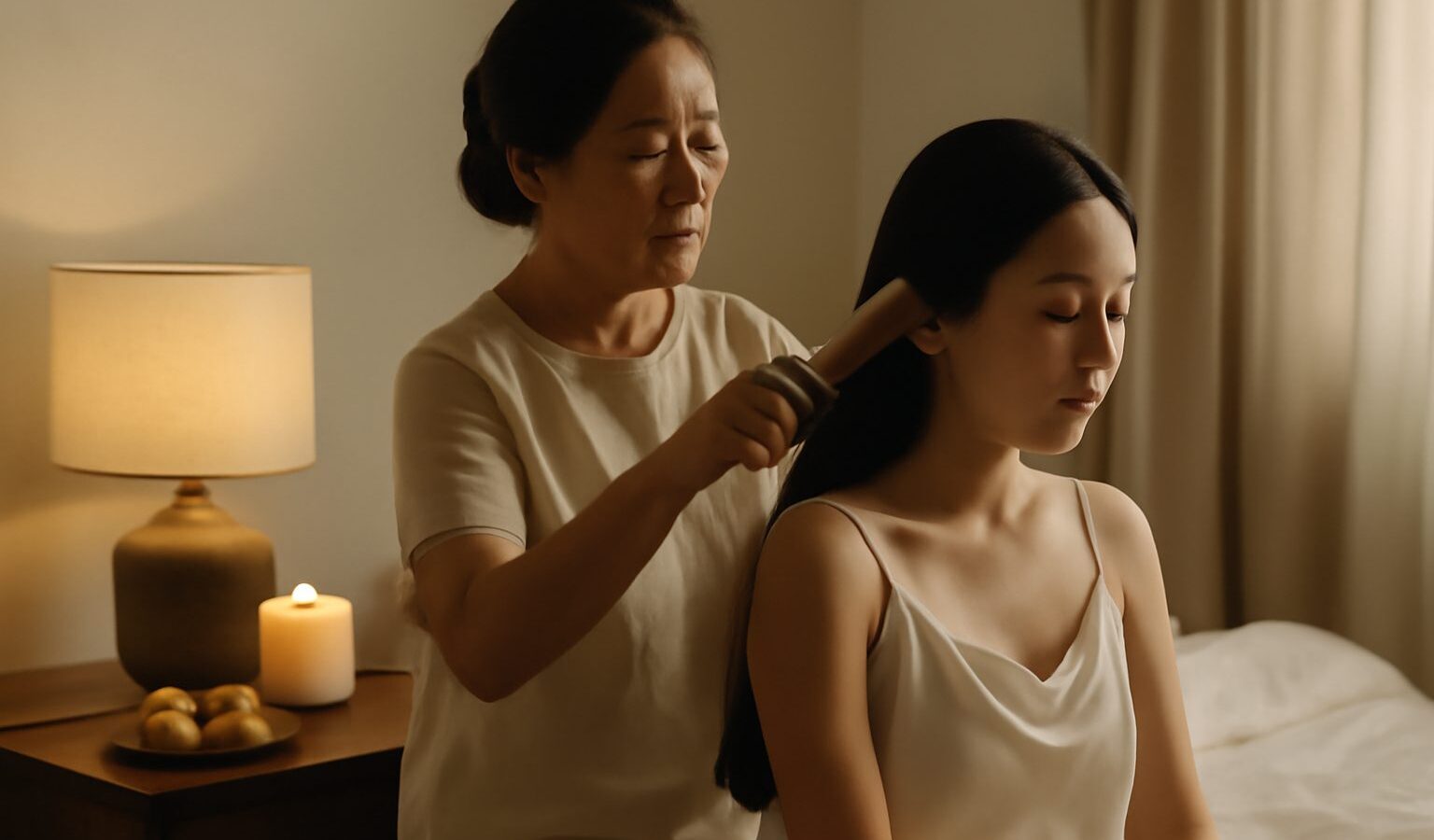
The night before a traditional Chinese wedding, many Singapore families gather for one of the most touching of all pre-wedding rites: the hair combing ceremony, known in Mandarin as shang tou, which means to dress or put up the hair. Once a coming-of-age ritual marking the passage into adulthood, it survives today as a quiet, loving moment in which parents bless a son or daughter on the eve of marriage. This guide explains what the ceremony means, what usually happens, how it varies between families and dialect groups, and how to take part with warmth and respect.
As with all such customs, families keep it to very different degrees. Some observe the full ritual with every symbolic item; others trim it to a few minutes and a heartfelt blessing. Treat the details below as commonly-seen practice rather than a rigid script.

What Shang Tou Means
Historically, putting up the hair signalled that a young person had reached marriageable age and was crossing from childhood into adult life. The comb passing through the hair became a symbol of that transition, and of a parent’s hopes for the child’s future.
The ceremony usually carries a cluster of meanings:
- A coming of age. It marks the bride or groom stepping into a new stage of life and responsibility.
- A parent’s blessing. Elders voice wishes for a long, harmonious and prosperous marriage as they comb.
- Continuity between generations. The rite links the couple to the family that raised them, and to those who will come after.
For many modern couples, the ritual’s real power lies less in its symbolism and more in the rare, unhurried closeness it creates with their parents just before the wedding whirl begins.
The Four Blessings and What Happens
A defining feature of shang tou is the recitation of blessings as the hair is combed, traditionally four strokes, each with its own well-wish. A common version runs like this:
- First comb, from beginning to end, for a marriage that lasts a lifetime.
- Second comb, for harmony and mutual respect until old age, sometimes phrased as growing old together with a full head of white hair.
- Third comb, for a home filled with children and grandchildren, or more broadly a full and happy family.
- Fourth comb, for lasting good fortune, prosperity and a long life.
Around these blessings, a typical ceremony includes several steps:
- Preparation. The bride or groom bathes, often in water infused with pomelo leaves for cleansing and freshness, then dresses in new clothes, frequently in red.
- Facing an auspicious direction. The person may sit facing a window, a mirror or a direction chosen as fortunate, sometimes near a lit candle or lamp.
- The combing. A parent, or a relative regarded as blessed with good fortune, combs the hair while reciting the blessings.
- Symbolic items. A tray may hold a comb, a mirror, red thread, scissors, a ruler and dried fruits such as red dates and longans, each carrying a hopeful meaning.
- A shared sweetness. The ceremony often closes with the couple, separately in their own homes, eating a small sweet dish such as glutinous rice balls, wishing for a sweet and complete union.
Because the bride and groom usually perform shang tou in their own family homes on the same evening, it is a moment each family holds privately before the two households come together.
How Families and Dialect Groups Vary the Ritual
There is no single correct shang tou, and Singapore’s dialect diversity shows in the details. The comparison below sketches broad tendencies, not rules, and any household may follow its own version.
| Element | Commonly seen | Notes on variation |
|---|---|---|
| Who combs the hair | A parent or a fortunate married relative | Some invite both parents; some ask an elder of either side |
| Number of strokes | Four, each with a blessing | Wording and count can differ by dialect and family |
| Preparation bath | Water with pomelo leaves | Some skip it or use another herb; many simplify |
| Sweet dish afterwards | Glutinous rice balls (tang yuan) | Others use sweet soup, dumplings or dates |
| Setting | At home the night before | Timing and direction chosen by custom or convenience |
Hokkien, Teochew, Cantonese, Hakka and Hainanese families may differ in the exact phrases, foods and sequence, and intermarried families often blend practices. For the fuller landscape, our guide to dialect wedding customs in Singapore is a helpful next read.
How Couples and Families Take Part Respectfully
The kindest approach is to plan the ceremony together with parents and elders well ahead of the wedding. Ask what your family has traditionally done, share what matters to you, and shape a version that feels genuine rather than performed.
A few gentle pointers:
- Keep it about the blessing, not perfection. If you forget an item or shorten the wording, the love behind it still counts.
- Choose the comber thoughtfully. Inviting a particular relative is an honour, so offer it warmly and accept a decline gracefully.
- Respect privacy. The moment can be emotional. Check that everyone is comfortable before photographing or filming.
- Adapt with confidence. Using the couple’s own clothes, skipping the herbal bath, or simplifying the tray does not diminish the rite.
- Mind the fertility wishes. Frame blessings about children as goodwill, since whether to have children is entirely the couple’s choice.
Shang tou rarely stands alone. Many couples plan it alongside the an chuang bed-setting ceremony the same evening, and it often connects to the wider work of preparing a bridal trousseau. If jewellery is part of your celebration, our guide to the si dian jin wedding jewellery covers a related custom.
However you keep it, the hair combing ceremony offers a rare pause in a busy season, a few minutes in which a family says, in effect, we have raised you, we love you, and we bless the life ahead. Honour the elders who lead it, keep the intention warm, and let it mean what feels true to you.
Explore more: the an chuang bed-setting ceremony, dialect wedding customs in Singapore, and preparing a bridal trousseau in Singapore.
Frequently Asked Questions
Can we hold the ceremony if a parent has passed away or is not present? Yes. Another relative, an elder or someone the family regards as fortunate can comb the hair, and some people do it themselves with a few words about their parents. What matters is the love and the blessing. Speak gently with the family so that no one feels hurt.
Can a Christian or non-religious family still do shang tou? Many do, treating it as a cultural family blessing rather than a religious act. If your faith community has guidance on traditional rites, you can speak with your pastor or leaders first. Keep the focus on the parents’ blessing, and choose only what sits comfortably with your beliefs.
Where do I get the items for the tray? Wedding supply shops, traditional stores and wet markets often sell the basics such as red thread, dried fruit and sweets. The comb and mirror can be from home. You do not need everything, so ask your elders which items matter most for your family.
Do we need to pick a special time and direction for shang tou? Many families choose an auspicious time and direction, guided by an elder or a Chinese almanac, but plenty simply do it at a convenient time on the eve of the wedding. Decide with your parents what feels right, and do not stress about getting every detail exact.