
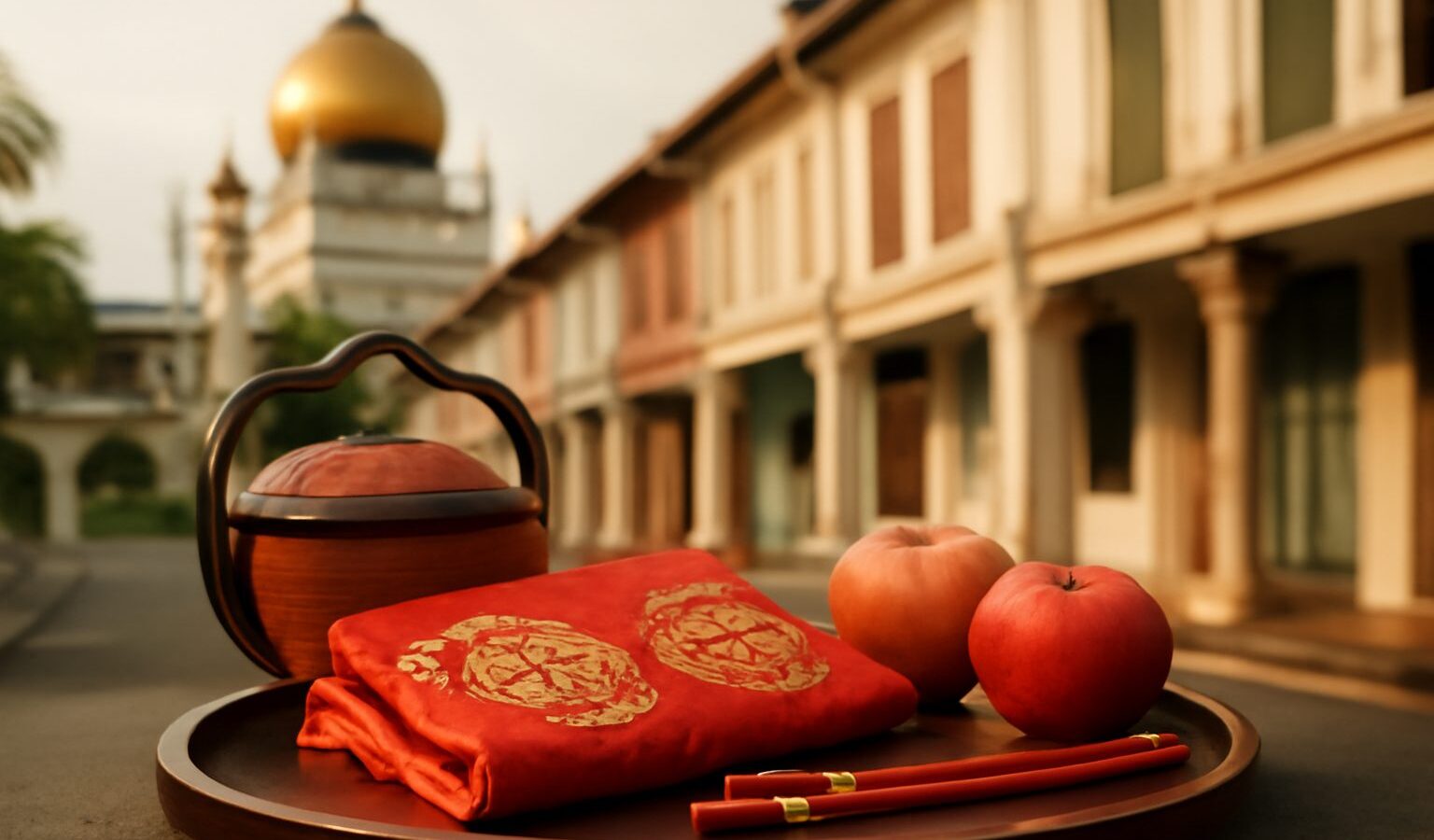
Singapore’s Chinese community is not one culture but many, and nowhere is that clearer than at a wedding. The dialect wedding customs a family keeps often trace back to whether their roots are Hokkien, Teochew, Cantonese, Hakka, Hainanese or another group, each with its own foods, phrases and small rituals. For couples planning a celebration, and for guests attending one, understanding these differences turns a puzzling sequence of steps into something meaningful. This guide explains where the customs come from, how they commonly vary, and how modern couples blend them respectfully.
A crucial caveat first: these are broad tendencies, not rigid rules. Families observe traditions to very different degrees, dialect lines have blurred over generations, and intermarriage is common. So treat what follows as a friendly map, not a checklist, and always defer to what a couple’s own elders say their family does.
Where Dialect Customs Come From
The Chinese who settled in Singapore came from several regions of southern China, each with distinct spoken languages and local traditions. Over generations, those communities kept elements of their home customs even as they adapted to life here, so a wedding often reflects a family’s ancestral roots.
A few forces shaped what survives today:
- Migration and settlement. Different dialect groups arrived at different times and clustered in particular trades and neighbourhoods, preserving their own practices.
- Language and wordplay. Many customs rest on puns that only work in a specific dialect, which is why the same symbolic food can carry different meaning across groups.
- Local adaptation. Limited space, mixed marriages and busy schedules have simplified many rites, so a modern Singapore wedding may keep a few signature customs rather than the full sequence.
- Shared core, local flavour. Most groups share the big milestones, such as the betrothal, the tea ceremony and the wedding-day fetching of the bride, while differing in the details.
Knowing this helps couples decide what to keep, adapt or set aside without feeling they are getting anything wrong.
Customs That Commonly Differ by Dialect
Across dialect groups, you will often see variation in betrothal gifts, symbolic foods, the dowry, and small ritual touches. The comparison below sketches some broadly associated tendencies. Please read it as illustrative, since real families vary widely and many blend elements.
| Custom | Broad tendencies seen across groups | Notes |
|---|---|---|
| Betrothal gifts (guo da li) | Traditional pairs of items, sweets, and symbolic foods exchanged before the wedding | Exact items and quantities vary by family and group |
| Symbolic foods | Different sweet soups, cakes and dried fruits, chosen for local wordplay | Meaning often depends on the specific dialect pun |
| Dowry (jia zhuang) | Household items or symbolic goods the bride’s family prepares | Scale and contents differ by family means and custom |
| Tea ceremony order | Serving tea to elders by seniority | Address terms and sequence can differ by group |
| Auspicious details | Colours, numbers and timing chosen as fortunate | Preferences vary and are often set by an elder |
Guo da li, a Mandarin term for the formal presentation of betrothal gifts, is a good example: the ritual is widely shared, but what fills the baskets, and what each item is meant to signify, can shift from one family to the next. Rather than memorise lists, couples do better to ask both sets of parents what their families expect.
How Specific Groups Are Often Characterised
With the caveat that individual families vary enormously, here are some tendencies people commonly associate with particular groups. None of this defines anyone, and plenty of families will recognise little of it.
- Hokkien families are often associated with particular betrothal foods and a strong emphasis on auspicious dates and symbolic pairings.
- Teochew families are frequently linked with distinctive sweet items and their own betrothal-gift conventions.
- Cantonese families are commonly associated with roast pig in some betrothal or post-wedding customs, and with particular sweet soups and cakes.
- Hakka families, historically more rural in origin, are sometimes associated with simpler, practical customs.
- Hainanese families are often linked with their own foods and a reputation for particular betrothal practices.
Again, these are cultural generalisations, not rules about individuals. The respectful move is always to ask, listen and follow the specific family’s lead rather than assume.
How Modern Couples Blend Traditions
Today, many Singapore weddings bring together partners from different dialect groups, and increasingly from different cultures altogether. That makes some negotiation normal, and it can be a lovely part of the planning rather than a problem.
Some practical ways couples navigate it:
- Start with a family conversation. Ask each set of parents which customs matter most to them, and why, before deciding what to include.
- Choose signature rituals. Rather than attempting everything, many couples keep a handful of meaningful rites, such as the tea ceremony and one or two symbolic customs from each side.
- Split by household. Some rituals, such as the hair-combing and bed-setting, happen separately in each family’s home, so both traditions can be honoured on their own terms.
- Explain to guests. A short note in the programme, or a word from the emcee, helps mixed-background guests follow along and feel included.
- Let go without guilt. Simplifying or omitting a custom because it does not fit your home or beliefs is entirely reasonable.
Several of these customs have their own deeper stories. If you want to go further, our guides to the an chuang bed-setting ceremony, the Chinese hair-combing ceremony and the si dian jin wedding jewellery each explore a single tradition in detail, while our guide to preparing a bridal trousseau covers the dowry side of the picture.
Ultimately, dialect wedding customs are less a test to pass than a heritage to draw on. Understand where they come from, ask the elders who hold them, keep what feels meaningful, and let your celebration reflect the particular families you are joining together.
Explore more: the an chuang bed-setting ceremony, the Chinese hair-combing ceremony, the si dian jin wedding jewellery explained, and preparing a bridal trousseau in Singapore.
Related across Sky Media: Singapore Wedding Customs by Community