
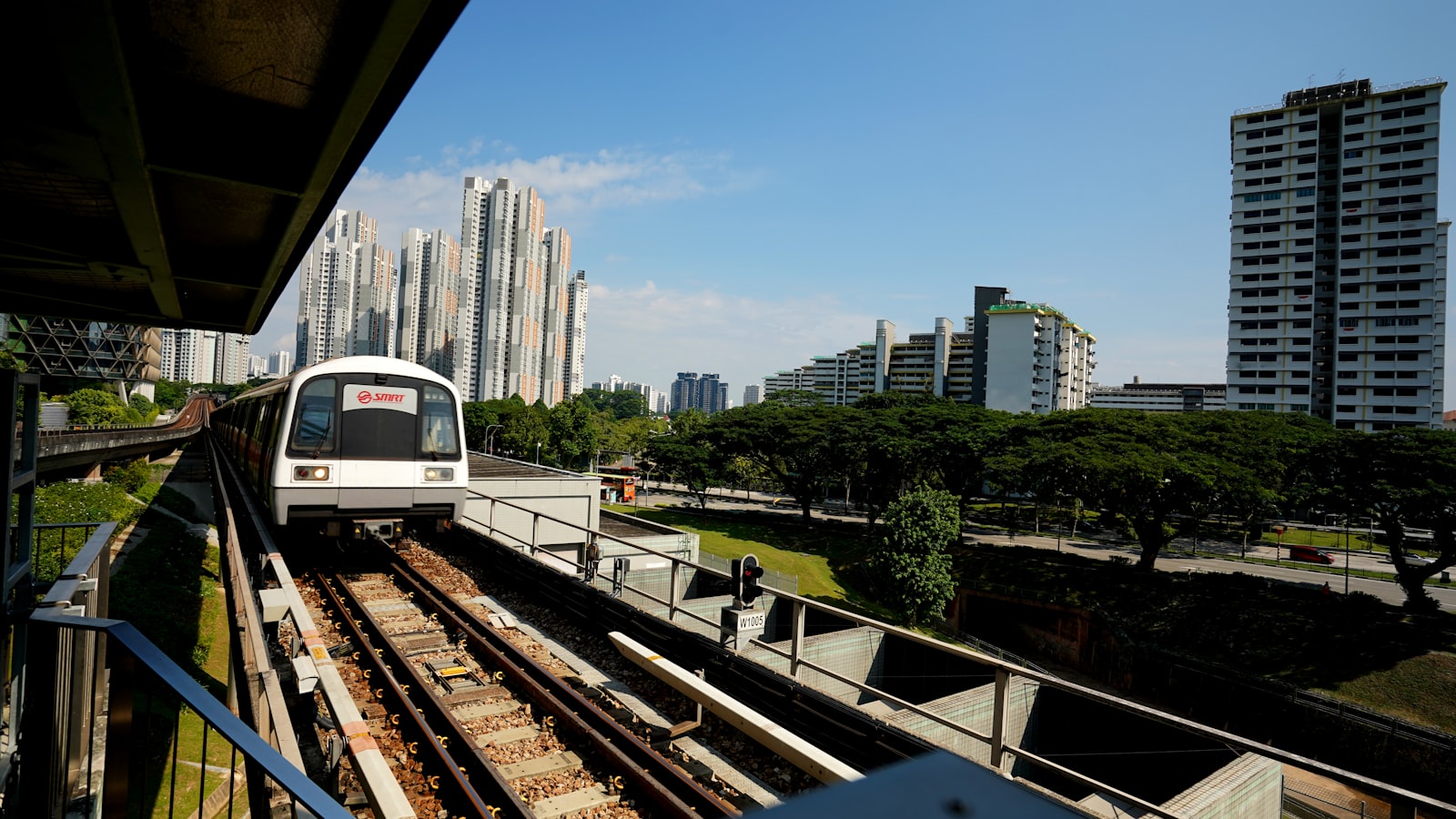
For most people living in or visiting Singapore, the Mass Rapid Transit system is the fastest and most reliable way to move around the island. The mrt network Singapore has built over the decades now reaches almost every corner of the country, from the city centre to the heartlands, and it keeps growing. If you are new to the system, the tangle of coloured lines and interchange names can look confusing at first. This guide explains how the network is put together, who runs it, how fares and interchanges work, and what the planned future lines will add.

Who Runs the MRT and How It Is Organised
The MRT is planned and owned by the Land Transport Authority, the government agency responsible for Singapore’s roads and public transport. The LTA builds the tracks, tunnels and stations, then contracts private operators to run the trains and maintain the system.
Day to day services are provided by two main operators, SMRT and SBS Transit. Between them they run the passenger trains, staff the stations and keep the network moving, while the LTA sets the overall direction, plans new lines and regulates fares through the Public Transport Council. For passengers, the split between operators is largely invisible. You use the same fare card and the same rules across the whole system, and you can transfer between lines run by different operators without leaving the paid area.
The network is built around colour coded lines. Each line has a name, a colour and a two letter code used on station signs, which makes it easier to navigate even if you do not read every station name.
The Existing Lines, Line by Line
Singapore’s rail system has grown from a single spine into a dense web of interconnecting lines. Here is what each one broadly serves.
- North-South Line (red). One of the two original lines, it runs in a long loop from the city up through the central and northern towns such as Ang Mo Kio, Yishun and Woodlands, linking the Marina Bay area with the north.
- East-West Line (green). The other founding line, it stretches across the island from the far east near Pasir Ris and Changi towards the west at Tuas, passing through the city and Jurong. A short branch connects it to Changi Airport.
- North East Line (purple). A fully underground, driverless line running from the Harbourfront area in the south through the city and up to the north east towns of Hougang, Sengkang and Punggol.
- Circle Line (orange). A loop that arcs around the city fringe, connecting many radial lines without forcing passengers to travel through the centre. It is very useful for cross town journeys.
- Downtown Line (blue). A long driverless line that threads from the north west through Bukit Timah, into the city and out to the east, serving many areas that earlier lines missed.
- Thomson-East Coast Line (brown). One of the newer lines, running from the north through the Thomson corridor, down into the city and along the east coast, with further stages planned to extend its reach.
Alongside the MRT, Singapore also runs the Light Rail Transit, or LRT. These are smaller, driverless people mover systems in Bukit Panjang, Sengkang and Punggol that connect housing estates to nearby MRT stations, acting as feeders that close the last stretch of many journeys.
How Fares, Cards and Interchanges Work
MRT fares in Singapore are distance based rather than flat rate. You pay according to how far you travel, not per line or per train, so a short hop costs less than a cross island trip. Fares are reviewed periodically by the Public Transport Council, so check the current fare details on the LTA or operator sites rather than relying on a fixed figure.
To pay, you tap in at the start of your journey and tap out at the end using a contactless card. Most travellers use a stored value or account based card under the SimplyGo system, and many bank issued contactless cards and mobile wallets also work directly at the gates. Tourists can buy a pass designed for visitors if they prefer.
The system is designed around free and seamless transfers.
- Rail to rail. At an interchange station you can switch between lines without tapping out, as long as you stay within the paid area. You are charged for the total distance of the trip, not for each line separately.
- Rail and bus. Because fares are calculated across your whole journey, transferring between the MRT and a bus within a set time is treated as one trip, which avoids paying a fresh boarding charge each time.
- Interchanges. Major interchange stations such as those in the city and at key heartland hubs let you move between two or more lines. Clear signage, colour coding and station codes guide you to the right platform.
Accessibility and Comfort
The MRT is built to be usable by as many people as possible. All stations are step free, with lifts connecting the street, concourse and platform levels, so travellers with prams, luggage, wheelchairs or mobility aids can move through without stairs. Tactile guidance strips help passengers with visual impairments find their way, and platform screen doors improve safety at the platform edge.
Trains and stations include priority seats and spaces for wheelchairs, and announcements and displays show the next stop in multiple forms. Larger interchanges connect directly to malls, bus interchanges and covered walkways, which makes moving around in Singapore’s hot and rainy climate far more comfortable.
The Future Lines and Extensions
The network is still expanding. Two major new lines are being built to fill in the remaining gaps.
- Jurong Region Line. A new line in the west, designed to serve the Jurong area, upcoming developments and the growing population and industry in that part of the island.
- Cross Island Line. A long orbital line intended to run across Singapore, connecting many existing lines and giving passengers more direct routes without having to travel through the centre.
Alongside these, existing lines such as the Thomson-East Coast Line and others are being extended in stages, and further connections are planned over the coming years. Because construction timelines can shift, treat any opening year you hear as provisional and check the LTA website for the latest schedule.
MRT Lines at a Glance
| Line | Colour | Broadly serves |
|---|---|---|
| North-South Line | Red | City centre up to the northern towns |
| East-West Line | Green | Far east and Changi across to the west and Jurong |
| North East Line | Purple | Harbourfront through the city to the north east |
| Circle Line | Orange | A loop around the city fringe linking other lines |
| Downtown Line | Blue | North west through the city out to the east |
| Thomson-East Coast Line | Brown | Northern Thomson corridor down to the east coast |
| LRT systems | Grey | Feeder loops in Bukit Panjang, Sengkang and Punggol |
Explore more
For how the system is paid for and how fares are set, read our guide to public transport fares and policy in Singapore. If you drive as well, see ERP and road pricing explained, and for the bigger picture of how the city is run, try Smart Nation Singapore explained.
Frequently Asked Questions
What time do MRT trains start and stop running? First and last train times differ by line, station and direction, so there is no single answer. Check the timetables posted at stations or the operators’ and LTA’s official sources. On special occasions, operating hours may be extended, so look up the arrangements before a late night out.
What should I do if there is an MRT disruption? Listen to station announcements and check updates from the operator and LTA. Operators often arrange free bridging buses along the affected stretch, and you can use alternative lines or buses. Give yourself extra time and have a backup route in mind.
Can I eat or drink on the MRT? Generally no, eating and drinking is not allowed in trains and stations, and there are other rules too, such as for certain smelly foods. Rules can carry fines, so check the official signage and LTA guidance and finish your snack before tapping in.
When is the MRT busiest, and how can I avoid the crush? Weekday morning and evening peaks are usually the most crowded, particularly on lines linking residential areas to the city. Travelling a little earlier or later, or choosing a quieter route such as a cross-town line, can help. Weekend and event crowds can also build at certain stations.
Do children and seniors pay less on the MRT? Concession fares are generally available for groups such as children, students and seniors, usually through a concession card or the appropriate account. Eligibility and rates are set by the Public Transport Council and LTA, so check their official sites for current details.
Official sources: Land Transport Authority (LTA)