
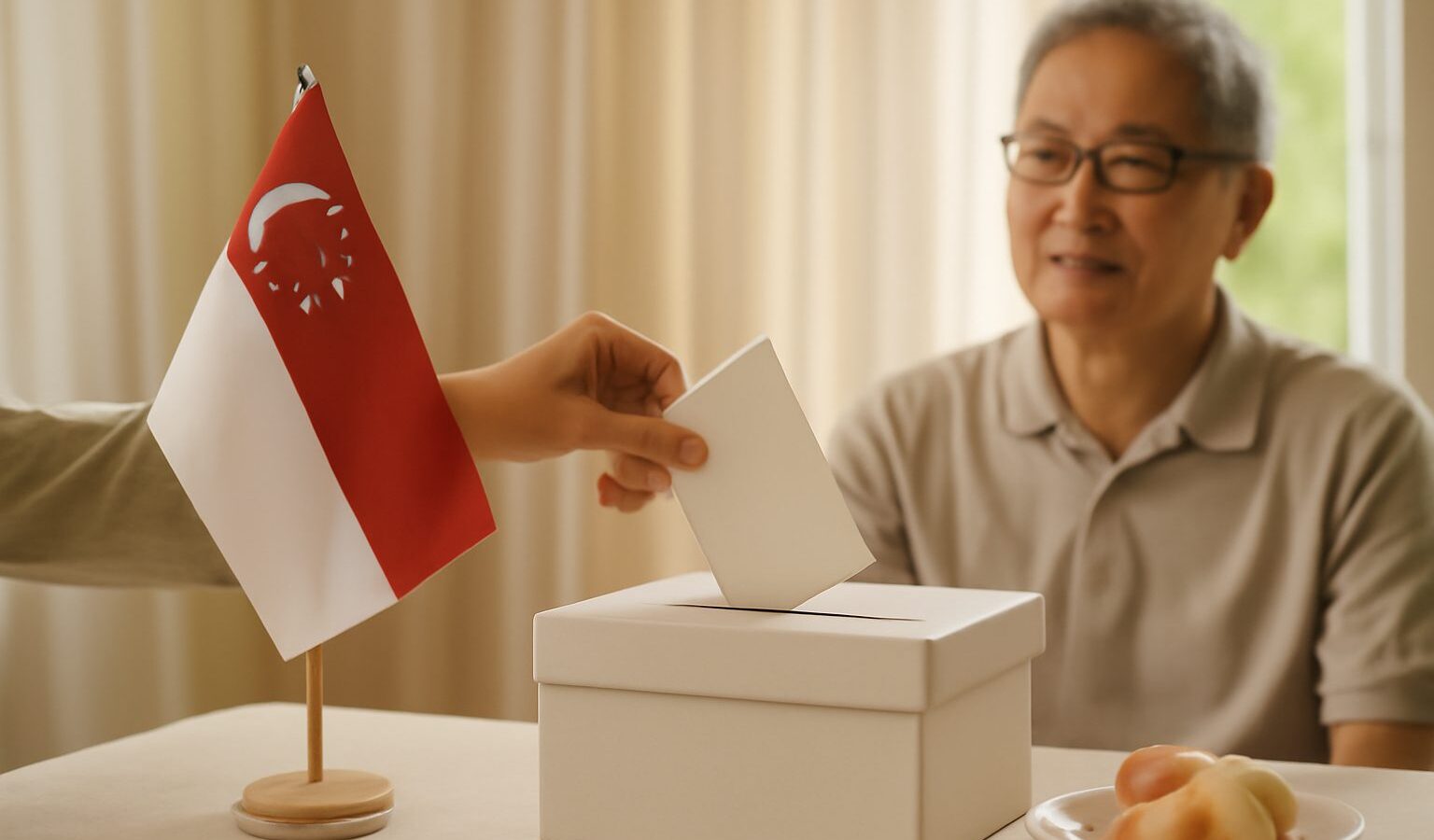
Every so often Singaporeans are asked to elect a head of state, and the contest looks different from a general election. There are no party manifestos in the usual sense, the qualifying rules are unusually strict, and the office being filled has a specific, mostly custodial job. To make sense of it, here is the Presidential Election Singapore explained: how the Elected Presidency came about, who is allowed to run, how the vote works, and what the President actually does.
This is general information about how the system works, not legal or political advice. For the binding rules on eligibility and procedure, refer to the Constitution on Singapore Statutes Online and to the Elections Department (ELD).
From Appointed To Elected
For Singapore’s early decades, the President was chosen by Parliament and the role was largely ceremonial. That changed with constitutional reforms that created the Elected Presidency, giving the office a popular mandate for the first time and adding specific custodial powers over the nation’s reserves and key public appointments. The first popular election for the office followed in the 1990s.
The reasoning behind an elected, rather than appointed, President was to give the holder the independent standing needed to act as a check in defined areas, particularly to safeguard past reserves accumulated by earlier governments. An office with real custodial powers, the thinking went, should carry a direct mandate from voters.
Who Can Qualify To Run
The Presidential Election is unusual for how demanding its eligibility criteria are. The Constitution sets out qualifications a candidate must meet, and a dedicated committee assesses whether each aspirant satisfies them. In broad terms, a candidate must:
- Be a Singapore citizen.
- Be at least a minimum age set in the Constitution.
- Be on the register of electors and resident in Singapore as required.
- Not be a member of any political party on the date of nomination, reflecting the office’s non-partisan character.
- Satisfy a public sector or private sector service requirement that shows experience running a large, complex organisation.
The service requirement is the criterion that draws the most attention. A person can qualify through senior public office, or through the private sector by having held a top executive role in a company that meets a high financial threshold, for example a large amount of shareholders’ equity. Because that threshold and the exact wording are specified in the Constitution and can be revised, check the current figure and criteria on Singapore Statutes Online rather than relying on a remembered number.
Aspirants who wish to stand apply for a Certificate of Eligibility. It is issued by the Presidential Elections Committee, which decides whether a person meets the constitutional requirements. Only those granted a certificate may be nominated.
The Reserved Election Rule
Singapore’s framework includes a provision designed to ensure the presidency is, over time, held by members of the country’s different communities. Under this rule, an election can be reserved for a particular community, defined as Chinese, Malay, or Indian and other communities, if no one from that community has held the office of President for a set number of the most recent terms.
In a reserved election, only candidates from the specified community who also meet all the ordinary eligibility criteria may stand. Candidates seeking to run in such an election apply for a community certificate confirming they belong to the relevant community. In an open election, candidates from any community may stand. The purpose stated for the mechanism is multiracial representation in the highest office of state over the long run. The precise trigger and definitions are set out in the Constitution.
How The Vote Works
Once eligibility is settled, the election itself follows a familiar structure, administered by the Elections Department. A writ of election is issued, followed by Nomination Day. If more than one qualified candidate is nominated, the contest goes to a poll on Polling Day, with a Cooling-off Day beforehand. Voting is by secret ballot and is compulsory for eligible voters.
If only one qualified candidate is nominated, that candidate is declared elected without a poll, a situation that has occurred in some past presidential elections. The President is elected for a fixed term set by the Constitution, after which a further election is held.
| Feature | General Election | Presidential Election |
|---|---|---|
| What is chosen | Members of Parliament and the government | The head of state |
| Party role | Candidates usually stand for parties | Candidates must not belong to a party on nomination |
| Eligibility | Ordinary candidacy requirements | Strict criteria plus a Certificate of Eligibility |
| Special rule | Group Representation Constituencies | Elections can be reserved for a community |
The table simplifies a detailed framework; the Constitution and the Elections Department set out the precise rules.
What The President Does
The President is Singapore’s head of state and carries out ceremonial and unifying duties. In most matters of day-to-day government, the President acts on the advice of the Cabinet. The distinctive part of the modern office is its custodial function.
In defined areas, the President exercises discretionary custodial powers, most notably a safeguard role over the past reserves and a say over certain key public service appointments. This works through a two-key idea: on protected matters, both the elected government and the elected President must, in effect, agree before action is taken. Before exercising these powers, the President is required to consult the Council of Presidential Advisers, an expert body created for the purpose. The Constitution also provides, in some situations, for Parliament to overrule a presidential decision by a large majority.
Where To Confirm The Details
The Presidential Election sits at the intersection of constitutional law and electoral procedure, and its rules have been revised over the years. Eligibility thresholds, the reserved election trigger, term length and the scope of custodial powers are all defined in the Constitution, while polling procedure comes under the Elections Department. Because figures and provisions can change, treat this explainer as an overview and confirm the current details with those official sources before drawing firm conclusions.
Explore More
The presidency is supported by a specialist advisory body, explained in our guide to the Council of Presidential Advisers. To understand how Parliament fills a seat that falls empty between general elections, see by-elections in Singapore explained.