
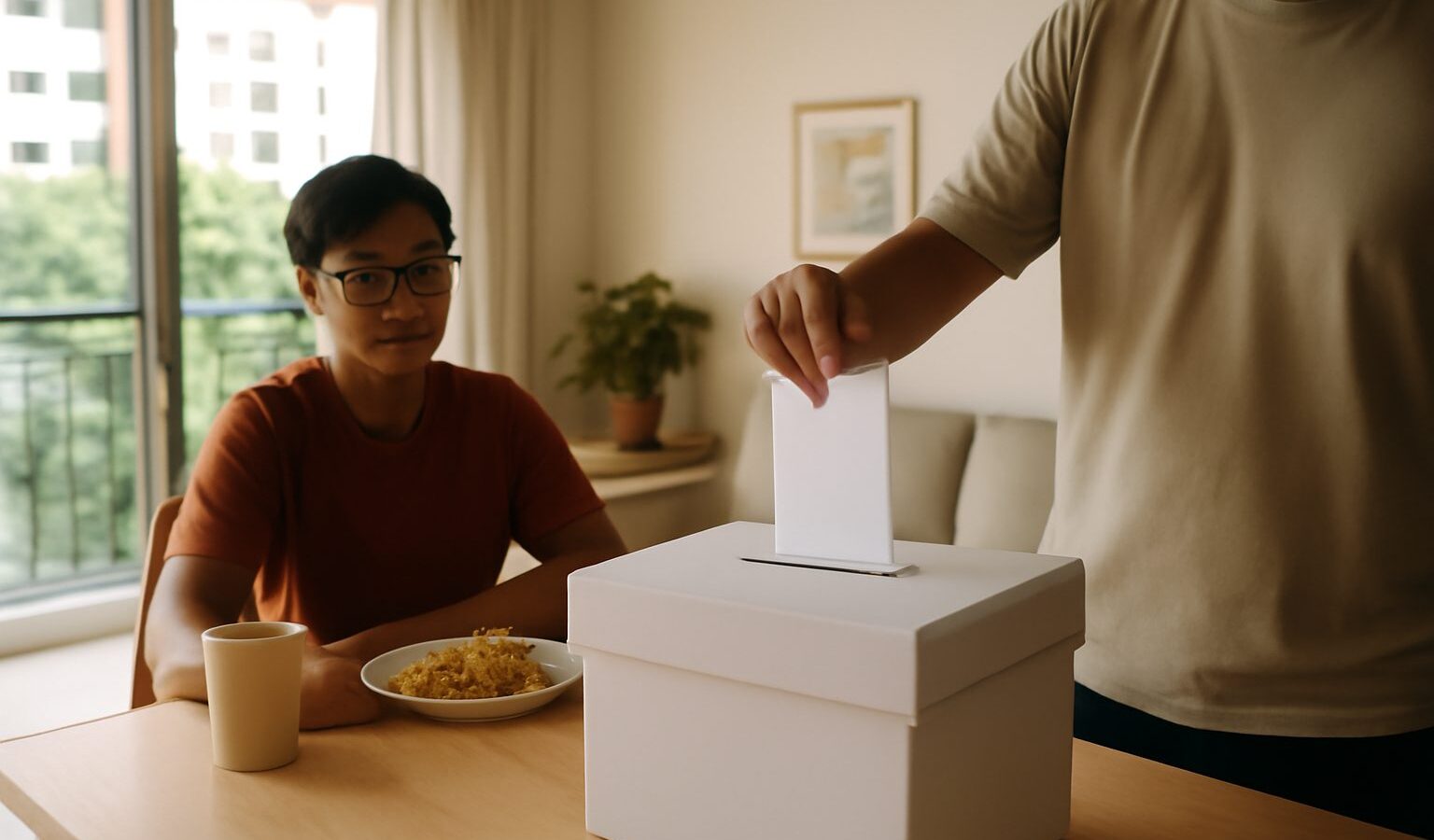
Most people follow the general election, when every seat in Parliament is contested at once. Far fewer know what happens when a single seat falls empty in between. That is where by-elections in Singapore come in. A by-election is a vote held to fill a vacancy in Parliament that arises before the next general election, usually because a sitting Member of Parliament has died, resigned or been disqualified.
This guide explains, in plain terms, when a by-election can happen, the special rule that applies to Group Representation Constituencies, and how the poll itself is run. It is general information about how the system works, not legal or political advice. For the authoritative rules, refer to the Constitution, the Parliamentary Elections Act on Singapore Statutes Online, and the Elections Department (ELD).
What A By-Election Is
A by-election is simply an election held in one constituency to fill a seat that has become vacant, rather than a nationwide contest for all seats. The rest of Parliament carries on as normal; only the affected constituency votes.
The starting point in law is the Constitution. It provides that when the seat of an elected Member of Parliament becomes vacant for a reason other than the dissolution of Parliament, the vacancy is to be filled by election. In other words, seats emptied mid-term are not simply left open or handed to the runner-up. They are filled through a fresh vote of the affected voters, subject to the rules described below.
By-elections are administered by the Elections Department, the same body that runs general elections. The mechanics of nomination, campaigning and polling are broadly the same, only on a smaller scale.
What Triggers A Vacancy
A parliamentary seat can become vacant during a term for several reasons. Common ones include:
- The death of a sitting Member of Parliament.
- A Member resigning their seat.
- A Member being disqualified, for example through bankruptcy or certain criminal convictions, under the conditions set out in the Constitution.
- A Member ceasing to be a member of, or being expelled from, the political party for which they stood.
- Prolonged absence from Parliament without permission, in the circumstances the rules specify.
When one of these events occurs, the Speaker of Parliament formally records that the seat has become vacant. Whether that vacancy leads to a by-election then depends on the type of constituency involved, which is the key point many people miss.
The Rule For GRCs Versus SMCs
Singapore has two kinds of constituencies, and the by-election rules are not the same for both.
A Single Member Constituency, or SMC, returns one Member of Parliament. If that seat becomes vacant, it stands empty and a by-election is the way to fill it.
A Group Representation Constituency, or GRC, returns a team of Members who are elected together, with at least one member from a minority community. The position under the Parliamentary Elections Act is that the vacancy of a single GRC seat does not, on its own, require a by-election. The remaining team members continue to serve the constituency. A by-election to fill GRC seats is called for only if all the Members for that GRC have vacated their seats.
This distinction is a frequent source of confusion, so it is worth stating plainly in a comparison.
| Feature | Single Member Constituency | Group Representation Constituency |
|---|---|---|
| Members returned | One | A team, including a minority member |
| One seat falls vacant | Seat is empty, to be filled by election | Remaining members continue to serve |
| When a by-election is required | To fill the vacant seat | Only if all the team’s seats are vacant |
| Who votes | Voters in that SMC | Voters in that GRC, if triggered |
For the exact wording and any updates to these provisions, always check the Parliamentary Elections Act and the Elections Department rather than relying on summaries.
Timing And The Writ Of Election
A by-election does not happen automatically the moment a seat falls empty. The process begins when a writ of election is issued for the affected constituency. The writ is issued by the President, acting on the advice of the Prime Minister, and it sets the date for Nomination Day.
The timing of a by-election has been the subject of legal proceedings in Singapore, and the courts have considered the extent of the discretion involved in calling one to fill a vacant SMC seat. The broad position that emerged is that a vacancy in an elected SMC seat is to be filled, while the choice of when to call the by-election involves discretion exercised within legal limits. Because this is a technical area of constitutional law, readers who want the precise current position should refer to the Constitution and reported case law rather than to any single summary.
Once the writ is issued, the timeline mirrors a general election in miniature: Nomination Day, a campaign period, a Cooling-off Day and then Polling Day, all within the single constituency.
How The Vote Is Run
On Nomination Day, candidates file their papers. If more than one candidate or team is validly nominated, the contest proceeds to a poll. If only one candidate or team is nominated, that candidate is declared elected without a vote, which is sometimes called a walkover.
Where there is a contest, the campaign and polling follow the familiar pattern. Voting in Singapore is compulsory for eligible voters in the constituency, so registered electors there are expected to cast a ballot. Ballots are secret, counted after polls close, and the Returning Officer declares the result. The winner takes up the seat for the remainder of the current Parliament, not for a fresh full term.
A few practical points help set expectations:
- Only voters in the affected constituency take part; the rest of the country does not vote.
- The result changes the make-up of one constituency, not the government as a whole.
- The newly elected Member serves until the next general election, when all seats are contested again.
Why By-Elections Matter
By-elections keep constituencies represented between general elections and give voters in one area a direct say when their seat unexpectedly falls empty. Because they turn on specific constitutional and statutory rules, especially the GRC provisions and the issuing of the writ, the details reward careful reading of the primary sources. The Elections Department publishes guidance on voter eligibility, registration and polling, and the Constitution and Parliamentary Elections Act on Singapore Statutes Online set out the binding rules. When a vacancy actually arises, those official sources, rather than commentary, are the ones to follow.
Explore More
Elections are only one part of how Singapore chooses its office-holders. To see how the head of state is chosen, read our guide to the Presidential Election explained, and for the advisory body that supports the President, see the Council of Presidential Advisers explained.