

Planning for kids at wedding banquet dinners in Singapore takes a little more thought than most couples expect. A typical Chinese banquet or hotel dinner starts in the evening, runs through eight or more courses, pauses for march-ins, speeches, videos and the yam seng toast, and can easily stretch past three hours. Adults pace themselves with conversation and wine. A four-year-old has neither.
The good news is that a few simple decisions, made early, keep young guests settled, give their parents a better night and protect the moments you care about most. This guide focuses on the practical setup: kids’ tables, activity packs, menus and seating. If you are still deciding whether to invite children at all, settle that first, then come back here.
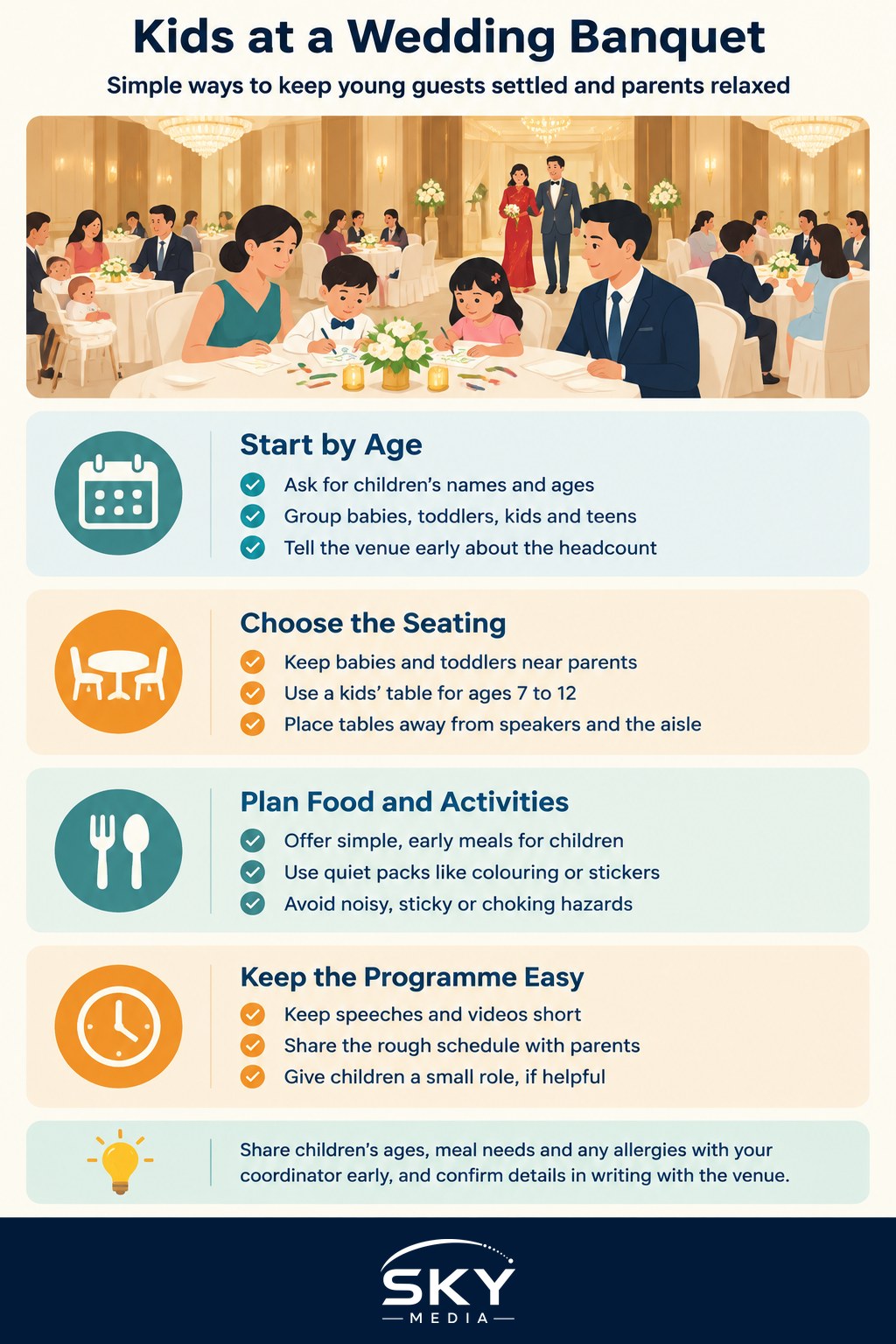
Start With a Headcount by Age
Before you plan anything, find out how many children are coming and roughly how old they are. A wedding with three toddlers needs a very different plan from one with fifteen primary school kids.
When you send invitations or follow up on RSVPs, ask families to list children’s names and ages. Then group them loosely:
- Babies (under 2): stay with parents, need high chairs or space for a pram, and a quiet corner for feeding or naps.
- Toddlers and preschoolers (2 to 6): usually happier seated with or right beside a parent, need simple food early and short, hands-on activities.
- Primary school kids (7 to 12): often love a kids’ table of their own, can handle longer activities and enjoy being given a small “job”.
- Teens: treat them as adult guests, but a seat beside cousins or friends their age makes a big difference.
Share these numbers with your banquet coordinator early. Hotels and restaurants can tell you how many high chairs they have, whether a kids’ menu is available and whether a small side room can be set aside.
Kids’ Table or Family Seating: Choosing the Right Setup
There is no single right answer. The best layout depends on the ages you counted and the shape of your ballroom or restaurant. Here is how the common options compare.
| Setup | Works best for | What to watch out for |
|---|---|---|
| Children seated with their own parents | Babies, toddlers, shy kids | Parents get little rest; keep these tables away from speakers and the stage |
| A dedicated kids’ table | Ages 7 to 12, groups of cousins | Place it near parents’ tables, not at the far end of the hall; brief an adult to check in |
| A “family zone” of several tables | Weddings with many young families | Seat it near an exit or corridor so parents can step out with a restless child |
| A supervised kids’ corner or side room | Big guest lists with many under-6s | Needs a reliable adult minder and the venue’s agreement on space and safety |
A few placement tips apply whatever you choose. Keep children’s tables away from the main aisle used for the march-in, so no one runs into the couple or servers carrying hot dishes. Avoid putting them right beside large speakers, which can upset small children and drown out conversation. And make sure parents can see their kids from where they sit.
Activity Packs That Actually Get Used
A small activity pack at each child’s seat buys you a surprising amount of calm, especially in the long gap between arrival and the first course. Keep it simple, quiet and mess-free.
Ideas that tend to work well:
- Colouring sheets with a wedding or couple theme, plus a few crayons rather than markers, which can stain tablecloths.
- Sticker books or reusable sticker scenes, which hold attention for toddlers.
- Simple puzzles and word searches using the couple’s names, for older kids.
- A “wedding bingo” card with items to spot: the cake, a red packet, a camera, a yam seng. This keeps older children watching the programme instead of wandering.
- Small card games or a pack of playing cards for the 8 to 12 crowd.
Skip anything noisy, sticky or easy to swallow. Bubbles, slime, glitter, balloons and toy whistles look fun in a shop but cause trouble in a ballroom. For babies and toddlers, rely on parents to bring their own familiar comfort items, and simply let them know in advance that there will be space for a pram.
If your programme includes games, you can involve older children directly. Our guide to wedding banquet games and entertainment has ideas you can adapt so kids feel part of the celebration.
Children’s Menus and Meal Timing
Hunger is the biggest cause of meltdowns at a long banquet. Many children will not eat cold dishes, shark-fin-style soups or whole steamed fish, and the course that finally appeals to them may arrive two hours in.
Talk to your venue about these options during planning or at your wedding banquet food tasting:
- A separate kids’ meal, such as fried rice, noodles, chicken or fish fingers, served early. Many hotels offer a children’s set; ask what it includes and how it is priced.
- Serving children first, before the formal courses begin, so they are fed before the march-in.
- Adjusting the shared menu at family tables, for example swapping one course for something milder.
- Drinks: plain water, juice or milk instead of fizzy drinks, which can mean a sugar spike right when you want quiet.
Check for allergies and dietary needs when you collect ages. Nut, seafood and egg allergies are common, and some families keep halal or vegetarian diets. Pass this list to your coordinator in writing, and ask the venue to label kids’ meals clearly.
Prices and policies on children’s meals vary between venues and change over time, so confirm the details in your contract rather than assuming.
Managing the Long Programme
Even with good food and activities, a three-hour evening is a lot for young children. A few programme choices help everyone.
- Keep speeches and videos tight. Every extra ten minutes of talking is felt most by the youngest guests.
- Let parents know the rough schedule ahead of time, so they can plan naps and decide when to leave.
- Seat families with young children near exits, and do not take it personally if they slip out early. A tired toddler going home happy is better than a crying one staying for dessert.
- Make a quiet space available if the venue allows: a side room or a corner with a sofa where a parent can feed or settle a baby.
- Brief your emcee that children are present, so jokes and games stay family-friendly.
If you are holding the dinner in a restaurant rather than a hotel, space for prams and side rooms can be tighter. Weigh this up when comparing venues; our guide to hotel vs restaurant wedding banquets covers the trade-offs in more detail.
Giving Kids a Role in the Day
Children behave better when they feel included. Giving a few of them a role turns them from bored guests into proud helpers.
- Flower girls and page boys for the march-in, with a short rehearsal so they know where to walk and where to sit afterwards.
- Guestbook helpers who remind adults to sign.
- Photo assistants with a list of shots to find.
- Favour helpers who hand out door gifts at the end, with an adult nearby.
Keep roles short and clearly ended, so each child knows when to return to their parent.
Supervision and Safety
Ballrooms have hot dishes, busy servers, heavy doors, staircases and sometimes a pool or road just outside. Ask the parents to take ultimate responsibility for their own children, and say so kindly in your wedding information.
For larger groups, some couples ask a trusted relative or friend to keep an eye on the kids’ table, or hire a professional child minder through an agency. If you do, check the minder’s experience, agree on clear duties and confirm with your venue that the arrangement is allowed. Do not leave children unsupervised in a side room, and make sure every child knows where their parent is sitting.
With some planning, children can become one of the warmest parts of your celebration. For a fuller picture of how the evening flows, read the wedding banquet explained.
Further reading: The Second March-In at Singapore Wedding Banquets