
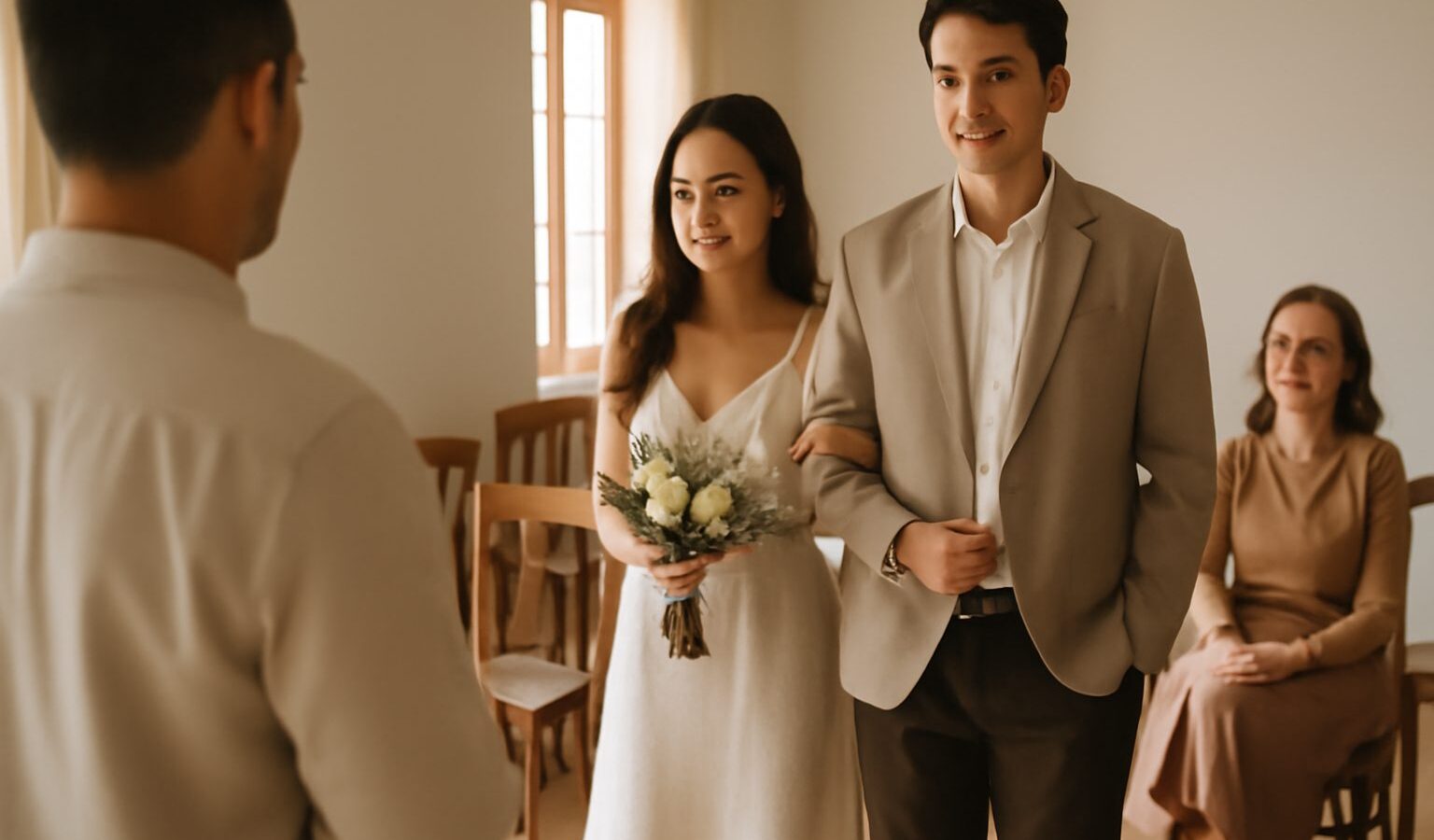
A wedding rehearsal is a short, practical walkthrough of your ceremony, done before the big day so the key people know where to stand, when to move and what happens next. It is not a full dress performance, and in Singapore it is often a relaxed hour rather than a formal event. Yet a good rehearsal removes a surprising amount of day-of anxiety, because everyone arrives on the morning already knowing their part. This guide explains what a rehearsal is, who needs to be there, what to practise and how to keep it light.
What a Rehearsal Actually Is
Think of the rehearsal as a live read-through of the most choreographed part of your wedding, usually the solemnisation or religious ceremony. The banquet that follows is guided by an emcee and needs less rehearsing, but the ceremony has moving parts and emotional weight, so a practice run pays off.
A typical rehearsal covers:
- Where each person enters, walks and stands.
- The order and pace of the processional, the walk down the aisle.
- Cues for music, readings, ring exchange and the signing.
- The recessional, the walk back out, and where everyone goes next.
It is deliberately low-key. People wear everyday clothes, the couple often skips saying the actual vows to keep them fresh, and the mood is closer to a friendly briefing than a performance. The point is confidence, not perfection.
Who Should Be There
Keep the guest list for the rehearsal tight. You want the people with an active role, not every invited guest.
- The couple, obviously, as you set the pace for everyone else.
- The officiant or solemniser if they are available, since they lead the actual ceremony. If they cannot attend, get their order of service in writing.
- The bridal party, meaning your best man, maid of honour, groomsmen, bridesmaids and anyone escorting family.
- Parents and any family members with a role, such as those giving a blessing or being escorted in.
- The flower children or ring bearer, plus a parent to guide them.
- Key helpers such as the person cueing music or your day coordinator.
If some people cannot make it, brief them separately with a clear written note. For a religious ceremony, the place of worship may have its own rehearsal slot and rules, so ask them first, as customs and timings vary by faith and venue.
What to Practise, Step by Step
Run the ceremony in order, pausing to sort out anything clumsy. A calm, unhurried pass or two is plenty.
- Set the scene. Mark where the couple, officiant and party will stand, and check sightlines so guests and any camera can see.
- Walk the processional. Practise the order of entry and a slow, steady pace. People almost always walk too fast when nervous.
- Rehearse the handover. If a parent is escorting the bride or groom, practise the moment they take their seat.
- Block the key actions. Walk through the ring exchange, any readings, the signing of the register and where documents and rings will be kept.
- Practise the recessional. Decide who exits with whom and in what order.
- Confirm what happens next. Point everyone to where photos, the tea ceremony or the next segment will take place.
Keep notes on your phone as you go, then share a tidy summary with the group afterwards. This walkthrough dovetails neatly with your wedding day run of show, which maps the entire day rather than just the ceremony.
Rehearsal Versus Full Wedding Day
It helps everyone to understand how the rehearsal differs from the real thing, so expectations stay realistic.
| Element | Rehearsal | Wedding Day |
|---|---|---|
| Dress | Everyday clothes | Full wedding attire |
| Vows | Usually skipped or summarised | Spoken in full |
| Pace | Stop and start to fix things | One continuous flow |
| Guests | Only those with a role | All invited guests |
| Mood | Relaxed briefing | Emotional and formal |
Seeing the contrast reassures nervous participants that the rehearsal is about learning the moves, and that the feeling and formality arrive naturally on the day itself.
Fitting It Into a Singapore Timeline
Local logistics shape when and how you rehearse. Many couples hold the rehearsal the evening before, but that only works if the venue is free and your key people are not travelling in last minute. If the ceremony is at a hotel or restaurant with tight turnaround, you may not get access the night before, so ask early and have a backup.
Practical options include:
- A short rehearsal at the actual venue the day before, if access allows.
- A walkthrough at a similar space, such as a void deck or a function room, focusing on order and pace rather than the exact spot.
- A relaxed talk-through in a living room with people physically walking the sequence, which is better than nothing.
Many couples follow the rehearsal with a casual meal, sometimes called a rehearsal dinner, though in Singapore this is often just supper with the bridal party rather than a formal event. Use it to thank your helpers and calm any nerves. Coordinating all these moving people is far easier when you are already planning your wedding as a team, so divide the briefing and follow-ups between you.
Keeping the Nerves in Check
The quiet gift of a rehearsal is emotional, not just logistical. Walking the space once means your body already knows the route, so on the day your mind is free to feel the moment rather than worry about missing a cue. Encourage your party to ask their questions at the rehearsal, when there is time to answer, rather than in a whispered panic minutes before you walk in.
Do not over-rehearse to the point of stiffness. Two clean passes are enough, and chasing a flawless run only breeds anxiety. If something small goes wrong on the day, and something usually does, the people around you will improvise gracefully precisely because they understand the shape of the ceremony.
A wedding rehearsal is a small investment of one relaxed hour that buys a calmer, warmer wedding day. Gather the right people, walk the ceremony in order, keep the mood light and share a clear summary afterwards, and you will step into your celebration knowing exactly where to stand and free to simply enjoy it.