
Children outgrow toys fast. A baby gym that seemed essential at three months is ignored by six, and a ride-on car takes up half the living room for one short season. Toy rental in Singapore offers another way: borrow or rent toys for the stage your child is in, then swap them for something new. It saves space in small homes, cuts waste and can save money too.
This guide explains how toy libraries and rental subscriptions generally work, what to check before signing up, and when buying still makes sense. If you are clearing out toys you already own, our guide on where to donate or recycle old toys covers that side.
Why Rent or Borrow Toys at All
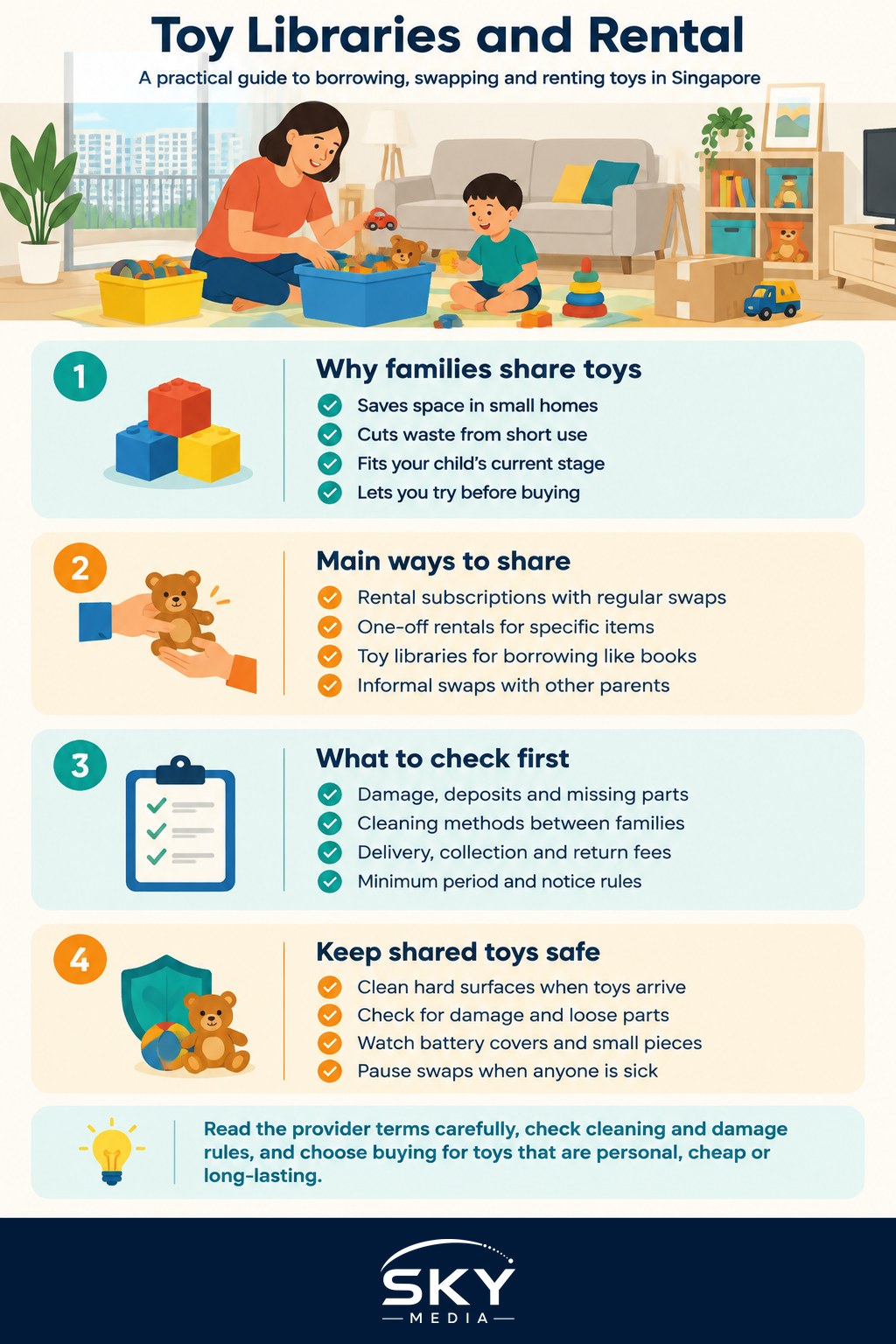
Most toys have a short useful life in any one household, even though they are built to last much longer. Renting lets several families share the same well-made toy.
- Less waste. Fewer toys bought means fewer ending up in the bin, many of which are plastic and hard to recycle.
- Less clutter. In HDB flats and condos, storage is precious. Rotating a few toys keeps play areas manageable.
- Better matched to development. You can choose toys suited to your child’s current stage, then move on when they are ready.
- Try before you buy. Renting a pricey item, such as a balance bike or a large construction set, shows whether your child will actually use it.
- Fresh interest. Children often play more with fewer toys that change regularly than with a crowded toy box.
The Main Options Compared
Toy sharing comes in a few forms. Availability changes over time, so search for current providers and community groups near you.
| Option | How it works | Good for | Things to watch |
|---|---|---|---|
| Rental subscription | Pay a regular fee, receive a set of toys, swap them at intervals | Busy parents who want curated, delivered toys | Commitment period, damage terms, delivery fees |
| One-off rental | Rent a specific item for a fixed period | Big items for a short phase, such as baby gear or party equipment | Deposit, collection and return logistics |
| Toy library | Join as a member and borrow toys, much like books | Families who like browsing and community | Opening times, limited stock, volunteer-run hours |
| Informal swaps | Exchange toys with other parents through groups or swap events | Very low cost, community connection | No quality check, cleaning is your job |
How Toy Rental Subscriptions Usually Work
Subscription services differ, but most follow a similar pattern:
- Sign up and set preferences. You share your child’s age and interests, and sometimes choose toys yourself from a catalogue.
- Receive a box or bundle. Toys arrive cleaned and checked, usually delivered to your door.
- Play for a set period. This might be a few weeks or a month, depending on the plan.
- Swap. Return the toys and receive the next set. Some services let you keep a favourite by paying extra or buying it at a reduced price.
- Pause or cancel. Read the terms on notice periods and minimum commitments.
Before committing, read the terms carefully. Key questions to ask:
- What happens if a piece goes missing or a toy breaks? Is there a deposit or a damage waiver?
- How are toys cleaned between families, and with what?
- Are delivery and collection included, or charged separately?
- Can you choose toys, or are they picked for you?
- Is there a minimum subscription period?
Do not rely on any figure you see quoted second-hand. Prices and terms change, so check directly with the provider.
Using a Toy Library
A toy library is a collection of toys members can borrow, usually run by a community group, charity, preschool network or volunteers. They work much like book libraries: you join, borrow a few items, and return them by a due date.
Toy libraries in Singapore tend to be small and run on limited hours, so they can come and go. Ask at your child’s preschool, community centre or parent networks, or search online for current ones. If you cannot find one nearby, a group of families can start an informal toy library together, sharing a simple sign-out list.
Public libraries are a natural partner here, offering free books and children’s programmes. See the most beautiful public libraries in Singapore for ideas on family visits, and families who game together can apply the same sharing idea through game sharing and family libraries.
Hygiene and Safety Checks for Shared Toys
Shared toys pass through many small hands, so a few habits help.
- Clean on arrival. Even if the provider cleans toys, wipe hard surfaces yourself, especially for babies who mouth everything.
- Check for damage. Look for loose parts, sharp edges, cracked plastic and frayed strings before giving a toy to your child.
- Watch small parts. Make sure toys suit your child’s age, as items for older children can be choking hazards for toddlers.
- Check batteries. Battery covers should be secured. Button batteries are especially dangerous if swallowed, so keep toys with these out of young children’s reach if the cover is loose.
- Avoid sharing when sick. Hold off on swaps during illness, and clean toys before returning them.
If your child has allergies or a medical condition, ask your doctor about any precautions.
When Buying Still Makes Sense
Renting does not suit every toy.
- Comfort items. A favourite soft toy or blanket is personal and not something to swap.
- Cheap, everyday items. Crayons, play dough and bath toys are low-cost and hard to clean, so buying is simpler.
- Long-life classics. Good wooden blocks or a quality construction set may be used for years, making ownership worthwhile.
- Sentimental gifts. Some toys carry family meaning that matters more than the space they take.
A balanced approach works well for many families: own a small core of open-ended favourites, rent or borrow the rest, and pass on what you no longer need.
Making Toy Sharing a Habit
- Rotate at home. Store part of your toy collection away and swap it out every few weeks, even without a rental service.
- Set expectations. Explain to older children that some toys go back, which can be a nice lesson in sharing and caring for things.
- Track returns. Keep a list or photos of borrowed items so nothing is lost.
- Keep packaging tidy. A labelled box for rented toys makes returns easier.
For space-saving ideas, see our guide to kids’ toy storage and organisation.