
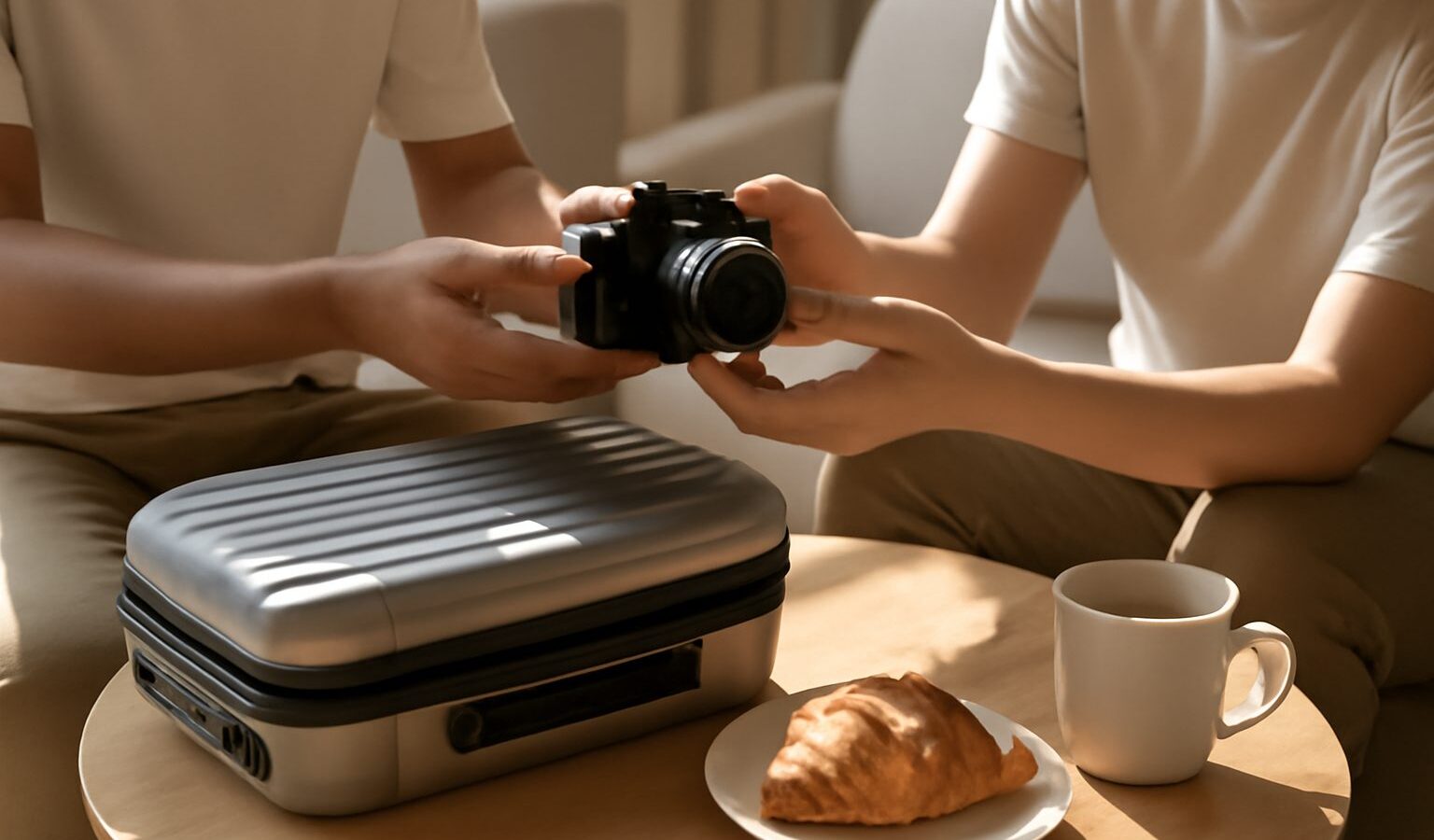
How often do you actually use that drill, that pressure cooker, that party marquee? For most of us the honest answer is “a handful of times a year,” yet these things sit taking up precious cupboard space in a small flat. Borrowing instead of buying in Singapore flips the default: instead of owning every item you might need one day, you get access to it only when you need it. It saves money, frees up space, and quietly cuts the demand for stuff that ends up as waste.
Why Access Beats Ownership For Occasional Things
Every product you buy carries a hidden environmental cost long before it reaches you: raw materials, factory energy, shipping and packaging. When an item is used a few times and then stored or binned, that whole footprint is spread across almost no use. Sharing a single drill among ten neighbours means one drill does the work of ten, which is a huge reduction in what needs to be made in the first place.
In land-scarce Singapore the space argument lands hard. HDB and condo homes are compact, and storage is a luxury. Every appliance you do not own is a shelf you keep free, a store room that stays walkable, and a bit less clutter to clean around. Borrowing and renting are a natural fit with the “reduce” spirit of the Singapore Green Plan 2030, because the greenest product is often the one nobody had to manufacture for you at all.
There is a money angle too. Renting a carpet cleaner for a weekend costs a fraction of buying one, and you skip the maintenance, the repairs and the eventual disposal. For things you use rarely, access almost always wins on both cost and clutter.
What Is Worth Borrowing Or Renting
Not everything suits this model. The trick is to sort your possessions by how often you truly use them.
- Occasional-use tools: drills, sanders, ladders, tile cutters and other DIY gear that come out once or twice a year.
- One-off event items: party tents, extra chairs and tables, sound systems, coolers and serving dishes for a big gathering.
- Seasonal and travel gear: luggage, camping tents, baby equipment for visiting relatives, or a car boot box for a single trip.
- Try-before-you-commit purchases: a bread maker or air fryer you are not sure you will keep using.
- Formalwear and costumes: outfits for a wedding, a dinner and dance, or a themed party you will not repeat.
Things you use weekly, or that need to be scrupulously personal for hygiene reasons, are usually better owned. The point is not to borrow everything, just to stop buying the occasional stuff by reflex.
Where To Borrow And Rent In Singapore
You have several routes, and they suit different needs. This table lays out the trade-offs so you can pick the right one for the job.
| Option | Best for | Watch out for |
|---|---|---|
| Neighbours and family | Quick, free, occasional loans | Return it clean and on time |
| Community sharing groups | Tools and household gear locally | Availability varies by estate |
| Public library services | Books, and increasingly other items | Loan periods and reservations |
| Commercial rental firms | Events, appliances, big-ticket gear | Deposits, delivery and damage fees |
| Buy-and-return-later resale | Try items, then resell if unused | Time spent listing and meeting |
Start with the free and local options. A quick message in your block or estate chat group asking to borrow a ladder often works, and it builds the kind of neighbourliness that makes sharing sustainable. Public libraries increasingly lend more than books, so it is worth checking what your branch offers. For events and pricier gear, commercial rental firms are reliable, just read the terms on deposits and damage before you sign.
How To Borrow Well And Keep Trust
Sharing only works if borrowers are considerate, so a few simple manners keep the whole system running.
- Ask clearly and early. Say exactly what you need, for how long, and when you will return it. Vague requests make lenders nervous.
- Treat it better than your own. Clean it, keep it dry in our humidity, and store it safely while it is with you.
- Return on time, in good condition. If you damage something, own up and offer to repair or replace it. Trust is the currency of sharing.
- Offer to lend back. The easiest way to borrow freely is to be known as someone who shares generously too.
- Check safety on rented gear. For anything electrical, inspect the cord and plug and follow the instructions, and do not use a tool you are unsure how to operate.
A shared spreadsheet or group chat listing what people are happy to lend can turn a single block into a mini library of drills, coolers and folding tables.
Making Borrowing Your New Default
The shift is really a habit, not a sacrifice. Before your next purchase of something you will rarely use, pause and run through a quick mental checklist: How often will I really use this? Do I have space to store it? Could I borrow or rent it for the one time I need it? More often than not, borrowing wins, and you keep both cash and cupboard space.
You do not need to overhaul your life overnight. Pick one upcoming task, maybe a bit of DIY or a birthday party, and try borrowing or renting instead of buying just this once. Notice how much you save and how little you miss ownership. Over a year, a handful of these small choices adds up to real money kept, real clutter avoided, and real waste prevented. No one is a perfect minimalist, and progress here is measured in the things you happily did not buy.
Explore More
Borrowing pairs beautifully with other reuse habits. When you do need to own something, start with second-hand furniture or refurbished electronics rather than new. And when an item has served its purpose and you no longer need it, pass it on through our guide to selling your preloved items online so it can be borrowed, used and loved all over again.