
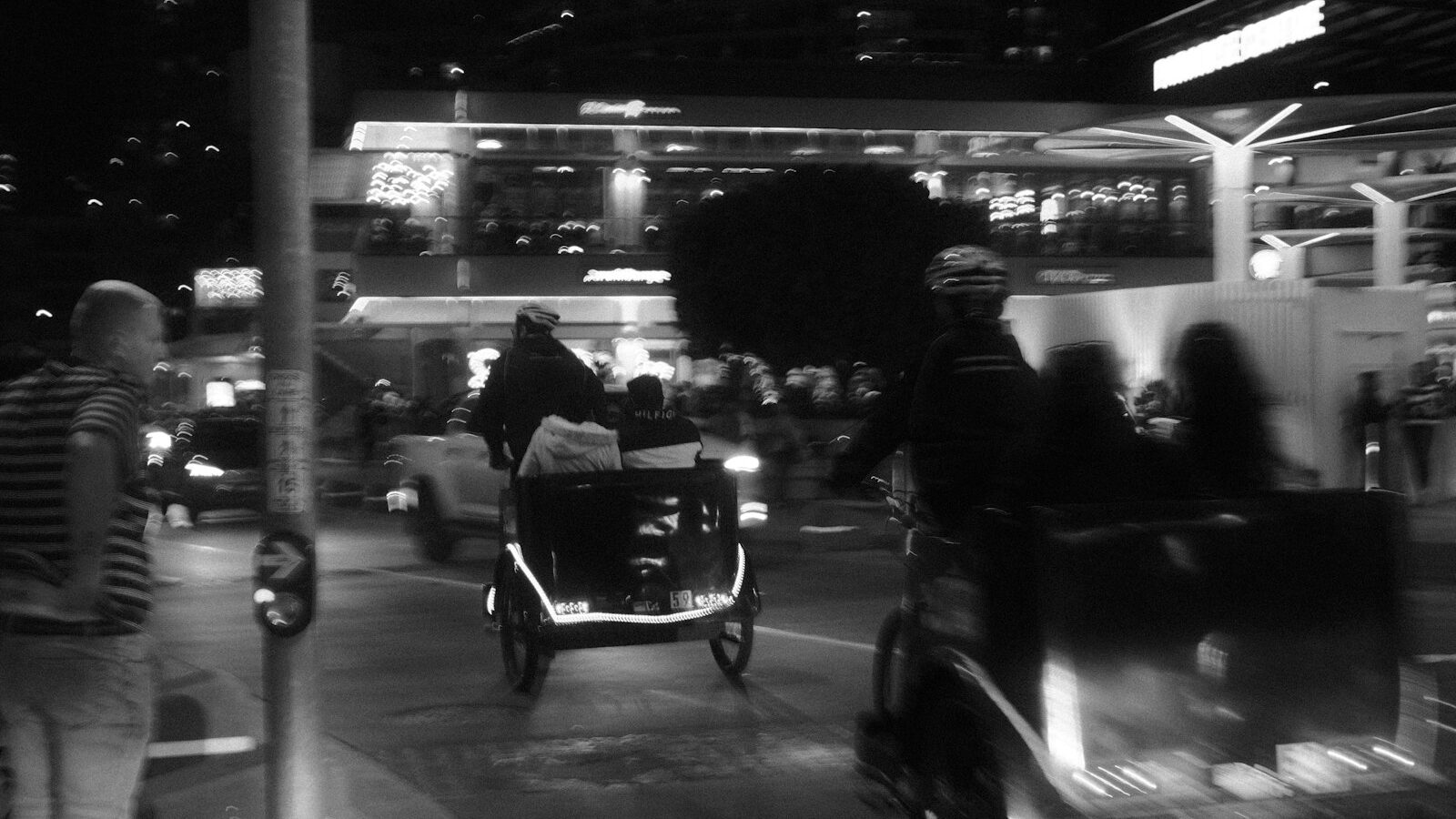
A trishaw ride is one of the gentlest ways to see the older parts of the city. You sit back in a bicycle-powered carriage while a rider pedals you past shophouses, temples and five-foot ways, often with a bit of commentary along the way. A trishaw ride in Singapore today is mainly a heritage experience for visitors and locals hosting guests, rather than everyday transport, so it helps to know where rides start and how to book one.
This guide focuses on practical booking: where to find rides, typical routes around Bugis and Chinatown, and what to check before you hop in. For the story of how trishaws came to Singapore, read the history of trishaws and rickshaws.
Where Heritage Trishaw Rides Start
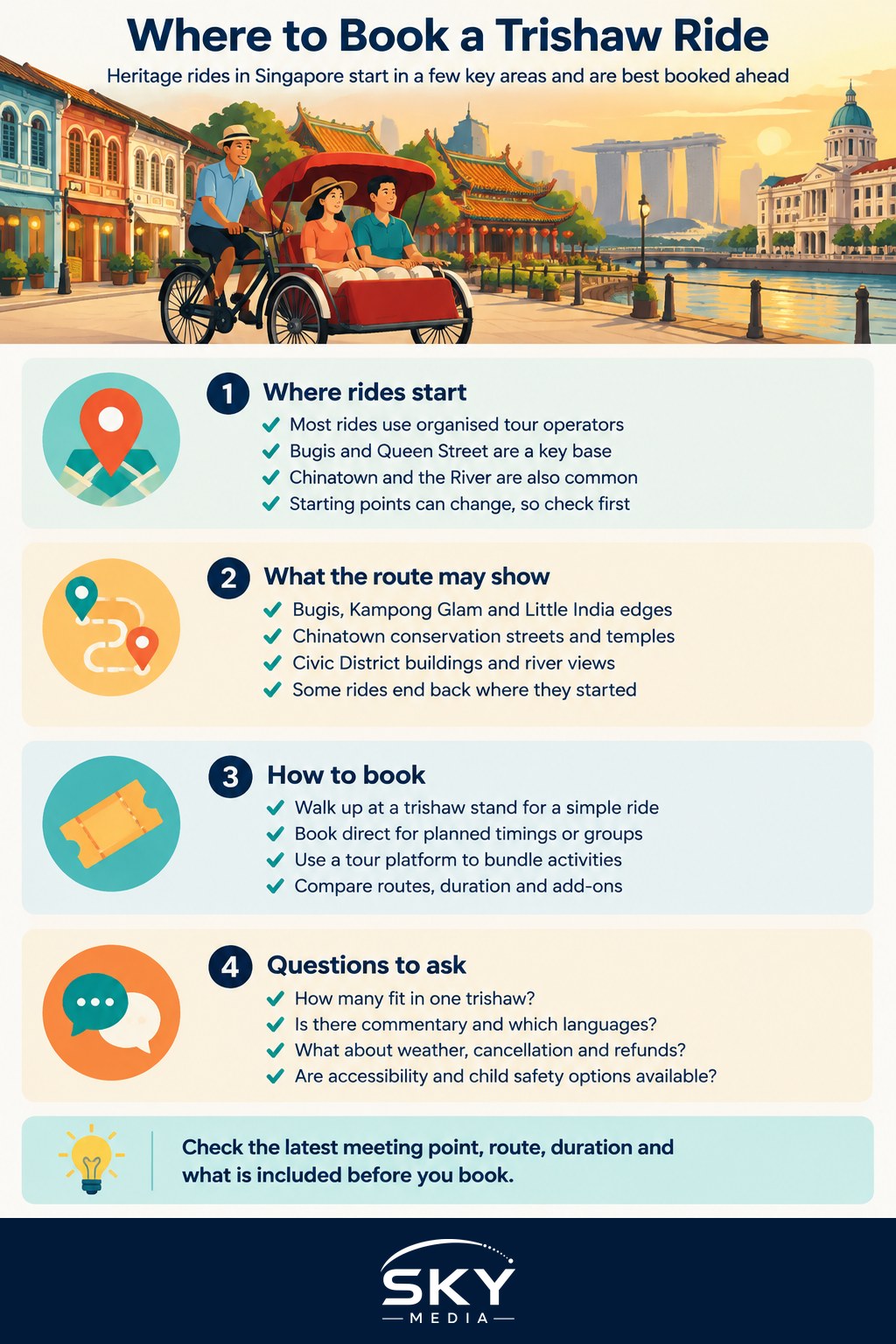
Trishaw rides are concentrated in a few heritage areas, and you will mostly find them through organised tour operators rather than by flagging one down on the street.
- Bugis and Queen Street area. This is the best-known base for trishaw tours. Riders often gather around the Albert Street and Queen Street side of Bugis, close to the Bugis MRT station and the Bugis Street shopping area. Many tour routes begin here.
- Chinatown. Some operators run routes through Chinatown’s conservation streets, or link Chinatown to the Singapore River.
- Civic District and Singapore River. Some rides pass colonial buildings, bridges and riverside quays, either on their own or as part of a longer loop.
Starting points and routes can change, so check the operator’s latest meeting point before you go.
Popular Routes and What You Will See
Routes differ between operators, but these are the kinds of sights a heritage ride commonly includes.
Around Bugis, Kampong Glam and Little India:
– Shophouse rows and temples along Waterloo Street.
– Glimpses of Kampong Glam, with Sultan Mosque’s golden dome in the distance.
– Some routes extend towards Little India’s edge.
Around Chinatown:
– Conservation shophouses on streets such as Pagoda Street and Temple Street.
– Temple facades and traditional trades.
– Some routes cross towards the river and Boat Quay.
Around the Civic District and river:
– Colonial-era buildings, museums and riverside bridges.
– Views across the water at dusk, when the city lights come on.
Trishaws move slowly, so routes are short and loop back to the start. Rides commonly run from around half an hour to an hour, but confirm the actual duration with the operator.
Ways to Book a Trishaw Ride
| Booking method | Best for | What to check |
|---|---|---|
| Walk-up at a trishaw stand | Spontaneous rides on a quiet day | Price, route and duration agreed before you board |
| Booking direct with a tour operator | Planned outings, groups or specific timings | Meeting point, cancellation terms, number of passengers per trishaw |
| Through a travel or tour platform | Visitors who want to bundle with other activities | Whether the ride is the full tour or just a short segment |
| Combined packages with a meal or river cruise | Hosting guests or special occasions | What each part includes and the timing between them |
Operators usually publish their routes and options on their own websites. Prices differ by route, duration and whether commentary or add-ons are included, so compare a few before booking. We do not list specific operators or prices because these change.
Questions to Ask Before You Book
- How many people fit in one trishaw? Usually two adults, sometimes with a small child. Groups need multiple trishaws.
- Is there commentary? Some riders share stories along the way, and some tours come with recorded audio. Ask which languages are available if you are hosting overseas guests.
- What is the cancellation and weather policy? Rides may pause during heavy rain or thunderstorms. Find out whether you can rebook or get a refund.
- Is the route accessible? If someone in your group has limited mobility, ask how easy it is to get in and out, and whether a folded wheelchair or stroller can be carried.
- Are child seats or belts available? Ask about safety for young children.
- What is included in the price? Check whether photo stops, a drink or entry to an attraction is part of the ride.
Tips for a Comfortable Ride
- Go early morning or evening. Singapore’s afternoons are hot and humid. A ride at dusk is cooler and the streets look beautiful as lights come on.
- Bring water and sun protection. Trishaws usually have a canopy, but you will still feel the heat.
- Hold on and stay seated. Trishaws share the road with cars and buses on some stretches. Keep arms and bags inside, and follow the rider’s instructions.
- Respect places of worship. If the route stops near temples or mosques, be quiet and dress modestly if you plan to step inside.
- Tip if you wish. Tipping is not expected in Singapore, but some passengers choose to tip riders who give a great tour.
- Plan connections. If you are hiring a car or taxi afterwards, see our guide to taxis and ride-hailing in Singapore.
Who Trishaw Rides Suit Best
A trishaw ride works well for:
- Visiting relatives and overseas friends who want a gentle introduction to old Singapore.
- Families with older children, who can enjoy the novelty without long walks in the heat.
- Older guests, who might find a full walking tour tiring.
- Photographers, since the low speed makes it easy to take street shots.
- Couples marking a special occasion, especially on an evening ride.
If your group loves wheeled exploring at its own pace, you could follow the ride another day with a guided cycling night ride in Singapore, which covers some of the same heritage areas at a faster clip.
Making It Part of a Heritage Day Out
A trishaw ride fits neatly into a half-day itinerary. You might start with breakfast at a nearby hawker centre, take a morning ride from Bugis, then walk to Kampong Glam or the museums in the Civic District. In Chinatown, a ride pairs well with a temple visit and a stroll through the heritage centre. Keep the ride as the centrepiece and leave time for unhurried walks, because the slow pace is the whole point.
Frequently Asked Questions
How long does a heritage trishaw ride around Bugis usually last? Most heritage rides run from about half an hour to an hour, looping back to the starting point because trishaws move slowly. Duration depends on the route and operator, so confirm it when you book.
Is a trishaw ride suitable for toddlers or someone using a wheelchair? It can be, but ask first. Usually two adults fit in one trishaw, sometimes with a small child, and getting in and out is a step up. Check about child belts, and whether a folded wheelchair or stroller can be carried.
What happens to my trishaw booking if it rains? Rides may pause during heavy rain or thunderstorms, and the canopy only helps with light showers. Ask the operator before paying whether you can rebook or get a refund when the weather turns.
Is a trishaw ride better than a walking tour of Chinatown or Kampong Glam? It depends on your group. A trishaw suits older relatives and guests who tire in the heat, while walking lets you stop at shops and temples. Many visitors ride first for an overview, then explore on foot.
Do I need to tip my trishaw rider? No, tipping is not expected in Singapore. Some passengers choose to tip a rider who gives a lively tour, and it is entirely optional. Agree the price and route before boarding.