
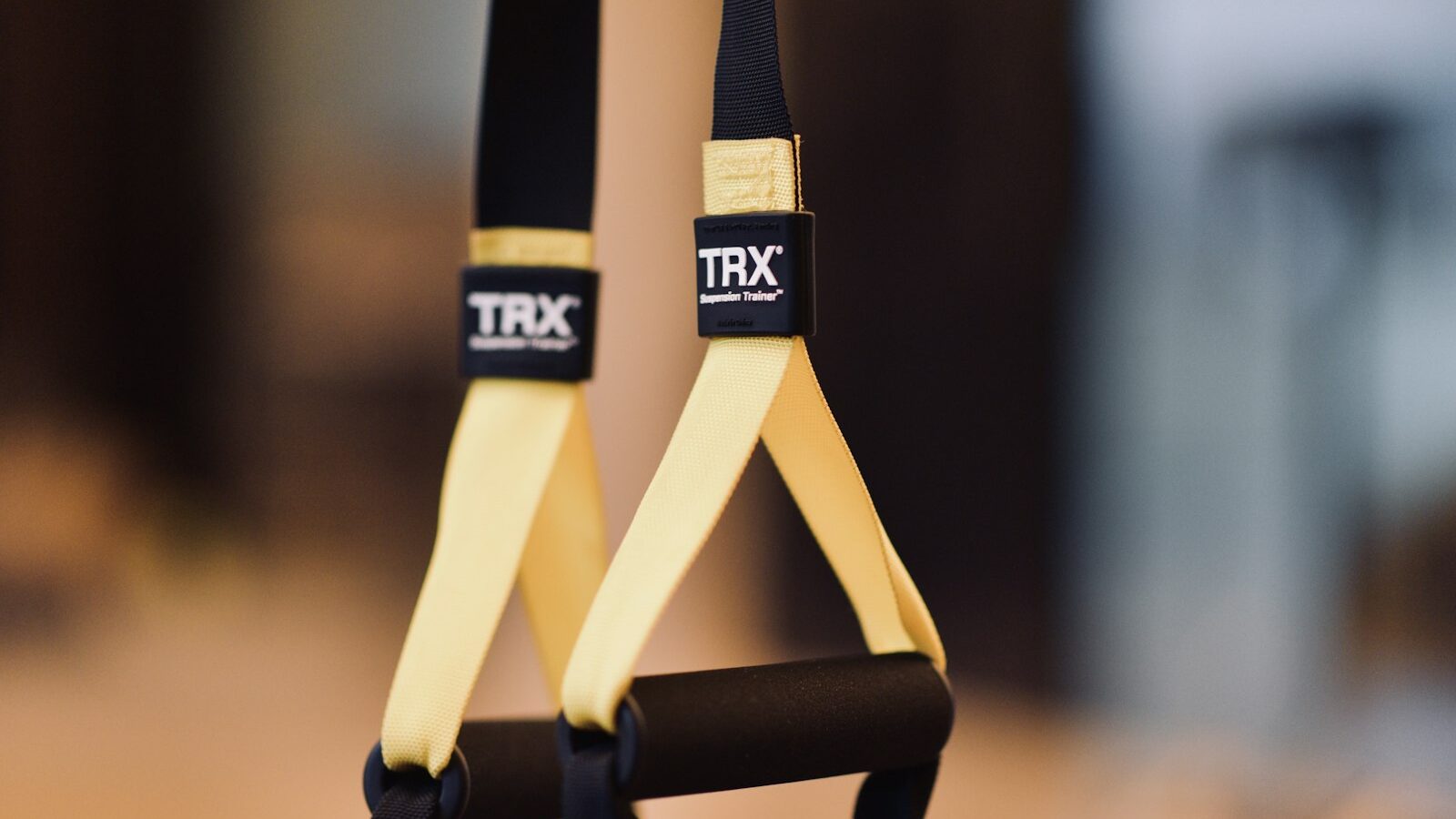
If you want a workout that packs into a small bag and turns almost any doorway, pull-up bar, or sturdy anchor point into a full gym, suspension training is worth a serious look. Suspension training in Singapore has quietly become a favourite for people living in compact HDB flats, travelling often for work, or wanting to train at the void deck or a park connector without hauling heavy equipment. The best known system is TRX, but the principle is the same across brands: two adjustable straps with handles, anchored above you, that let you use your own bodyweight and gravity as resistance.
This is general fitness information rather than personalised or medical advice. Warm up first, focus on good form, start with easier angles and progress gradually, and stop if you feel actual pain rather than normal muscle effort. If you have a health condition, an injury, are pregnant, or are new to exercise, check with a doctor before starting, and see a physiotherapist or qualified coach if you want hands-on help with your technique.
How Suspension Training Works
A suspension trainer hangs from a single anchor point overhead. You hold the handles or place your feet in the foot cradles, then lean or angle your body so that gravity provides the load. Because your feet or hands are the only points touching the ground, your core has to work constantly to keep you stable. That is the real magic of the tool: even a simple row or squat becomes a whole-body exercise because you are fighting to stay balanced the entire time.
The resistance is not fixed like a dumbbell. Instead, you change difficulty by changing your body angle. Stand more upright and a move becomes easier. Walk your feet forward so you lean further back, or step further under the anchor, and the same move becomes much harder. This makes one set of straps suitable for a complete beginner and an advanced trainee alike, which is part of why it suits shared households where people of different fitness levels train from the same kit.
Because you control the load through position rather than plates, suspension work tends to be joint-friendly and easy to scale. You can dial an exercise back the instant it feels too much, simply by stepping your feet back towards the anchor and standing taller.
Setting Up Safely
Your anchor point is everything. It must be genuinely solid and rated to take well above your bodyweight, because you will load it dynamically as you move. A proper pull-up bar, a certified ceiling or wall mount, a thick, stable tree branch, or the sturdy frames at some ActiveSG and park fitness corners can all work. Many straps come with a door anchor that hooks over the top of a closed, inward-opening door. Test any anchor gently with your full weight before you trust it with a fast movement, and never anchor to something you are unsure about.
Set the straps to the length the exercise calls for, then check the buckles are locked before each set. Keep the straps either side of your body without letting them rub against your neck or armpits. Clear the space around you so you will not clip furniture or a wall if you swing. In our hot, humid climate, sweaty hands can slip, so a towel nearby and a good grip check between sets are sensible. If you train outdoors, go early or late to avoid the worst heat, and stay hydrated.
Key Exercises To Learn
- Rows: Face the anchor, hold the handles, lean back with a straight body, then pull your chest to your hands. This is one of the best beginner moves for the back and is a natural partner to strength training for beginners.
- Chest press: Face away from the anchor, lean forward onto the straps, and press yourself back up like a standing push-up.
- Squats and split squats: Hold the handles for light support and balance while you build lower-body strength and control.
- Hamstring curls: Lie on your back with heels in the foot cradles and curl the straps towards you.
- Planks and fallouts: Feet in the cradles for a genuinely demanding core challenge that ties in well with core and ab training that works.
Start with rows and squats, keep the range of motion controlled, and only add harder angles once your form holds up.
Progressing Over Time
The simplest way to progress is to change your angle. Once a move feels manageable for the reps you are aiming for, adjust your foot position to increase the lean and the load. You can also slow the lowering phase, pause at the hardest point, or move towards single-limb versions. These are the same principles behind progressive overload, just applied through body position instead of extra weight.
Suspension training pairs nicely with other minimal-equipment tools. If you are building a compact setup, it sits well alongside resistance band workouts and bodyweight training for a full home routine that fits a small flat.
A Practical Wrap-Up
Suspension trainers are portable, scalable, and genuinely effective for building strength, control, and core stability. Anchor them properly, learn a handful of core moves with clean form, and progress by adjusting your angle rather than rushing. Two or three sessions a week is plenty to start. Keep the effort honest but the form strict, rest when you need to, and see a physiotherapist or qualified coach if anything hurts or you want your technique checked in person.