
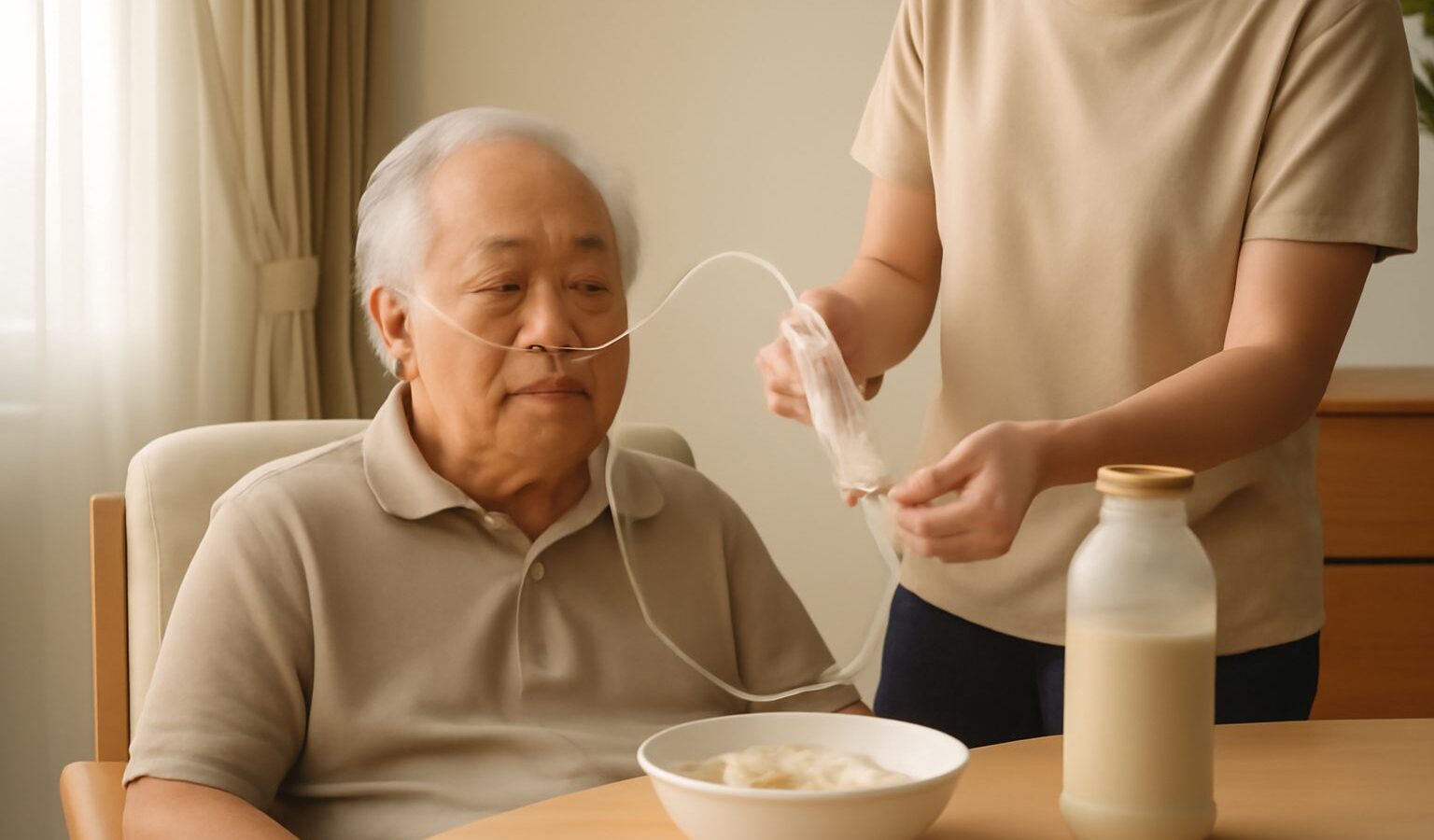
When a parent comes home from hospital with a feeding tube, many families feel a mix of relief and worry. Tube feeding at home is common in Singapore, especially after a stroke, with advanced dementia, or when swallowing becomes unsafe, and with the right training most caregivers, including family members and domestic helpers, learn to manage it confidently.
This guide explains what daily care usually involves, the hygiene habits that matter most, which warning signs to act on, and where caregivers can get proper hands-on training. It is general information, not medical advice. Your parent’s doctor, nurse and dietitian will give instructions specific to their tube, feed and condition, and those instructions always come first.
Understanding the Common Types of Feeding Tube
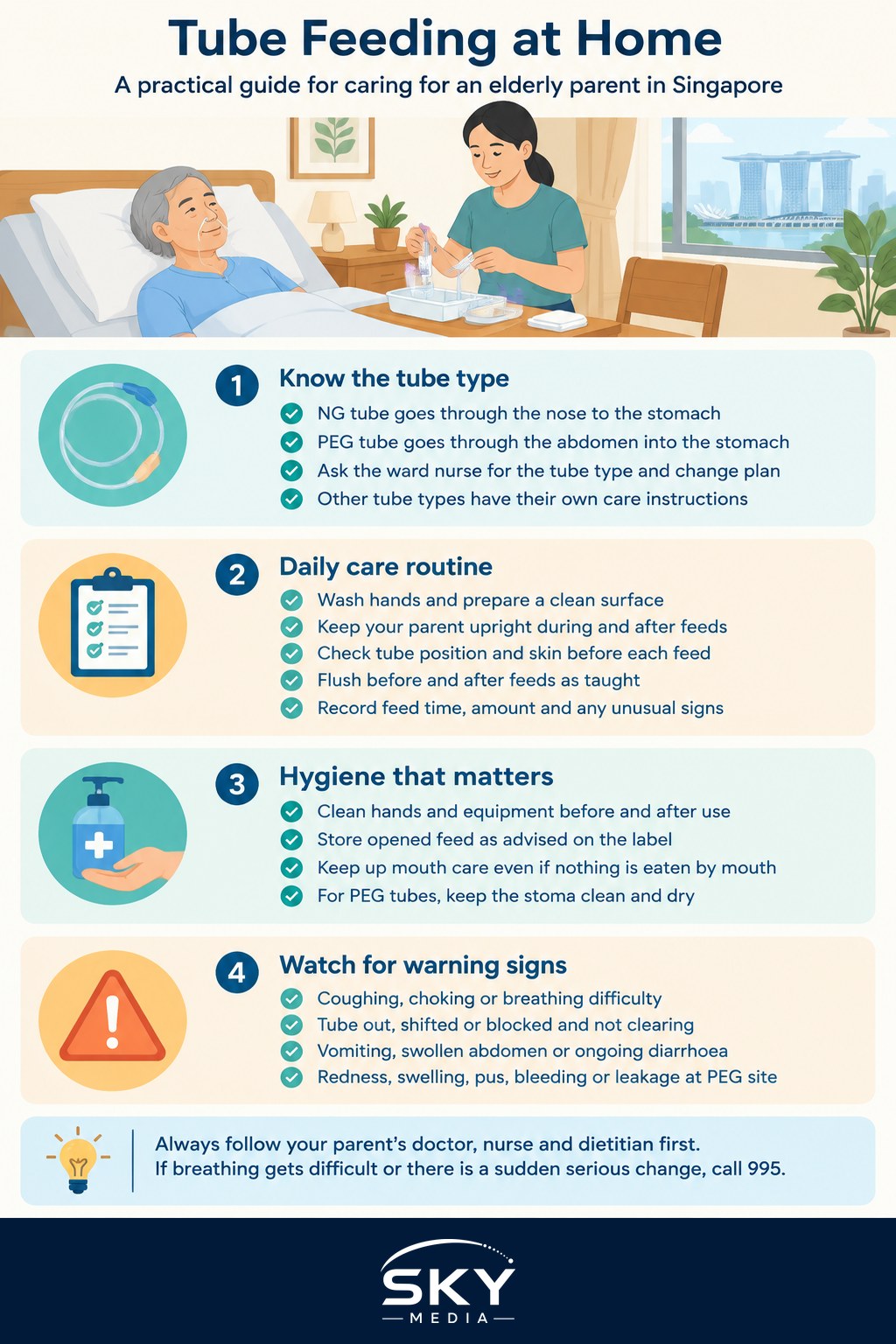
Your parent’s care team will explain which tube they have and why, but it helps to know the two types most families meet at home:
- Nasogastric (NG) tube. A thin tube passes through the nose and down into the stomach. It is often used for shorter periods and needs to be changed at intervals set by the care team. Because it can shift, caregivers are taught how to check that it is still correctly placed before each use.
- Gastrostomy tube, often called a PEG tube. This goes directly through the abdominal wall into the stomach and is placed through a procedure. It is generally used when tube feeding is expected to continue longer term. Care focuses on keeping the site around the tube (the stoma) clean and healthy.
There are other types, such as tubes that go into the small intestine, which have their own care instructions. Ask the ward nurse to write down the type, size and change schedule for your parent’s tube before discharge.
The table below shows how daily care tends to differ between the two common types.
| Care area | NG tube | PEG or gastrostomy tube |
|---|---|---|
| Before each feed | Check placement as taught by the nurse | Check the site and tube look normal |
| Main hygiene focus | Nose and cheek skin where the tube is taped | Skin around the stoma, kept clean and dry |
| Common daily issue | Tube being pulled or shifting | Redness, leakage or irritation at the site |
| Replacement | At intervals set by the care team, usually by a nurse | Less often, arranged by the hospital or clinic |
A Typical Daily Routine
Every routine is different, but most follow a similar pattern. Your parent’s dietitian will specify the feed, how much and how often, and the nurse will show you the method (syringe, gravity bag or pump).
- Wash your hands and prepare a clean surface with the supplies you need.
- Position your parent upright, usually sitting or with the head of the bed raised, as instructed by the nurse. Keeping them upright during and for a period after the feed reduces the risk of feed going into the lungs.
- Check the tube using the method you were taught, and look for any changes in its position or the skin around it.
- Flush the tube with water as instructed, give the feed at the recommended pace, then flush again. Flushing helps prevent blockages.
- Give medicines only as instructed. Some medicines cannot be crushed or mixed. Always check with the doctor or pharmacist how each one should be given through the tube.
- Record the feed in a simple notebook or phone log: time, amount, how your parent tolerated it, and anything unusual. This record is very useful at follow-up appointments.
Never change the type of feed, the amount or the schedule on your own. If your parent seems hungry, full, bloated or is losing weight, speak to the dietitian.
Hygiene Habits That Make the Biggest Difference
Good hygiene prevents most of the everyday problems with tube feeding at home.
- Hands and equipment. Wash hands before and after handling the tube. Clean syringes and reusable equipment as instructed, and replace items at the intervals the care team recommends.
- Feed storage. Follow the label and the dietitian’s guidance on how long opened feed can be kept and whether it needs refrigeration. Do not leave feed hanging longer than advised.
- Mouth care. Even when your parent eats nothing by mouth, mouth care remains important. Brushing teeth or gently cleaning gums and tongue keeps the mouth comfortable and reduces infection risk. Ask the nurse which method is safe for your parent.
- Skin care. For NG tubes, change the tape regularly and move it slightly to avoid sore spots. For PEG tubes, clean around the stoma as taught and keep it dry.
- Comfort and dignity. Explain what you are doing as you go, even if your parent has dementia. Calm, familiar routines reduce distress and the urge to pull at the tube.
Warning Signs and When to Get Help
Ask the care team to give you a clear list of what to watch for and who to call, including after office hours. Commonly mentioned signs to act on include:
- Coughing, choking or breathing difficulty during or after a feed
- The tube coming out, moving noticeably, or becoming blocked and not clearing with the flush you were taught
- Vomiting, a swollen or painful abdomen, or persistent diarrhoea
- Redness, swelling, pus, bleeding or leakage around a PEG site
- Fever, unusual drowsiness or signs of dehydration
Do not try to push a dislodged tube back in unless you have been specifically trained to do so. For breathing difficulty or a sudden serious change, call 995 for an emergency ambulance. For less urgent concerns, contact the hospital ward, home nursing provider or your family doctor as advised at discharge.
Where Caregivers Get Training in Singapore
The most important training happens before your parent leaves hospital. Ask the ward nurse to let the main caregiver, and the helper if you have one, practise the full routine under supervision until they are confident. Ask questions and take notes or short videos where permitted.
After discharge, these are the usual sources of support:
- Hospital and polyclinic nurses and dietitians. Follow-up appointments are the time to review weight, the feed plan and any problems.
- Agency for Integrated Care (AIC). AIC is the national agency that coordinates eldercare services. Its website and AIC Links offices list caregiver training courses and home care services. AIC has also administered schemes such as the Caregivers Training Grant, which can help defray course fees for eligible caregivers. Check the AIC website for current eligibility and approved courses.
- Home nursing services. Community providers can send nurses to your home to change NG tubes, review PEG sites and coach caregivers. Your hospital’s medical social worker or AIC can help with referrals.
- Financial help with consumables. Some schemes administered through AIC, such as the Seniors’ Mobility and Enabling Fund, have covered certain home healthcare consumables for eligible seniors. Coverage and criteria change, so confirm the current details with AIC or a medical social worker.
If you are hiring or already have a helper, make sure she attends training too, and that the routine is written out in a language she reads comfortably. Our guide to hiring a helper to care for elderly parents covers other skills worth building.
Looking After the Caregiver
Tube feeding adds structure to every day, and it can feel relentless. Share the routine among family members, so no single person carries every feed. Keep a spare set of supplies so a shortage never becomes a crisis, and make time for your own rest. Caregiver support groups, often listed through AIC and community organisations, can be a real help.
For the wider picture of costs and planning, see our articles on budgeting for elderly care at home and caring for an elderly parent in Singapore. With good training and a steady routine, many families find tube feeding becomes a manageable part of caring for someone they love.
Frequently Asked Questions
Can my parent still eat or drink by mouth while tube-fed? It depends on their swallowing ability, which the doctor or a speech therapist assesses. Some people are fed fully by tube, while others may be allowed small tastes. Never offer food or drink by mouth on your own, as feed or fluid going into the lungs is dangerous.
Can I blend home-cooked food for tube feeding? Only if your parent’s dietitian specifically approves it. The type of feed, the amount and the schedule should never be changed on your own, and thick or poorly prepared blends can block the tube or be unsafe. Ask the dietitian what is suitable and how to prepare it.
Does tube feeding mean my parent is near the end of life? Not necessarily. Tube feeding is used for many reasons, including recovery after a stroke or when swallowing is unsafe, and some people use it for a long time. Ask the doctor what it means for your parent’s condition and goals of care, and consider talking about advance care planning together.
What should I do if the feeding tube blocks and will not flush? Do not force water or push anything into the tube. Try only the steps the nurse taught you, and contact the hospital ward, home nursing provider or family doctor if it stays blocked. Regular flushing as instructed helps prevent blockages in the first place.
What should I keep ready at home for tube feeding? Keep a spare set of supplies so a shortage never becomes a crisis, plus a written note of the tube type, size and change schedule. Add a list of who to call, including after office hours, and the feeding log. Keep 995 in mind for breathing difficulty or a sudden serious change.
Official sources: HealthHub
Further reading: Stoma Care at Home for Older Adults and Their Caregivers