
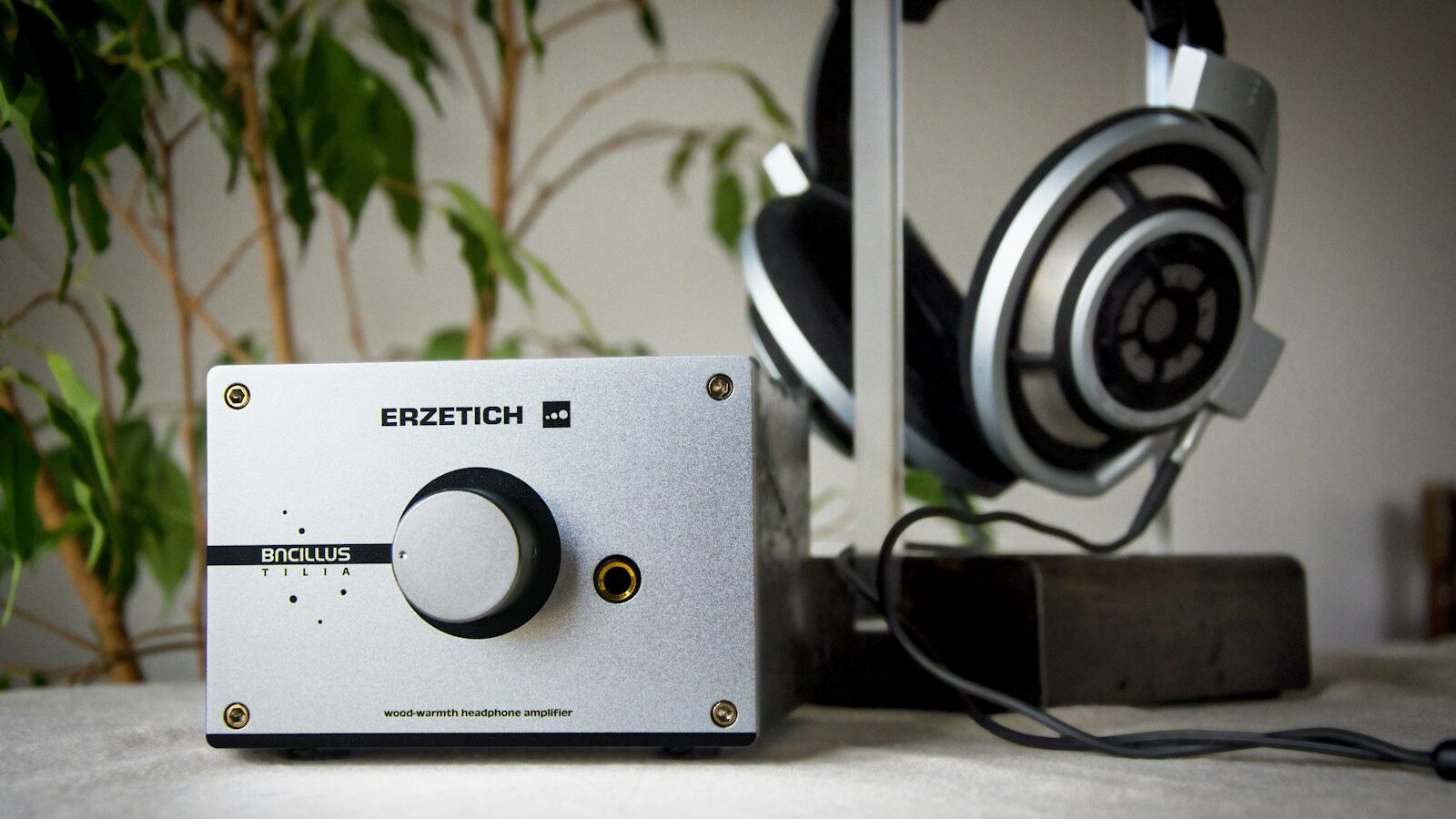
If you have started reading about better sound, you have probably run into two bits of jargon that sound far more intimidating than they are: headphone amps and DACs. People online talk about them as if they are essential, and it is easy to feel that your music is somehow broken without them. The good news is that these are simple ideas once someone explains them plainly, and plenty of listeners in Singapore get wonderful sound without ever buying either. This guide walks a curious beginner through what each device does, when it genuinely helps, and how to spend your money wisely.
Let us start with the two words themselves. A DAC is a digital-to-analogue converter. A headphone amp is a headphone amplifier. Every phone, laptop and streaming device you own already contains both in some form, so you are almost certainly using them right now without realising it.
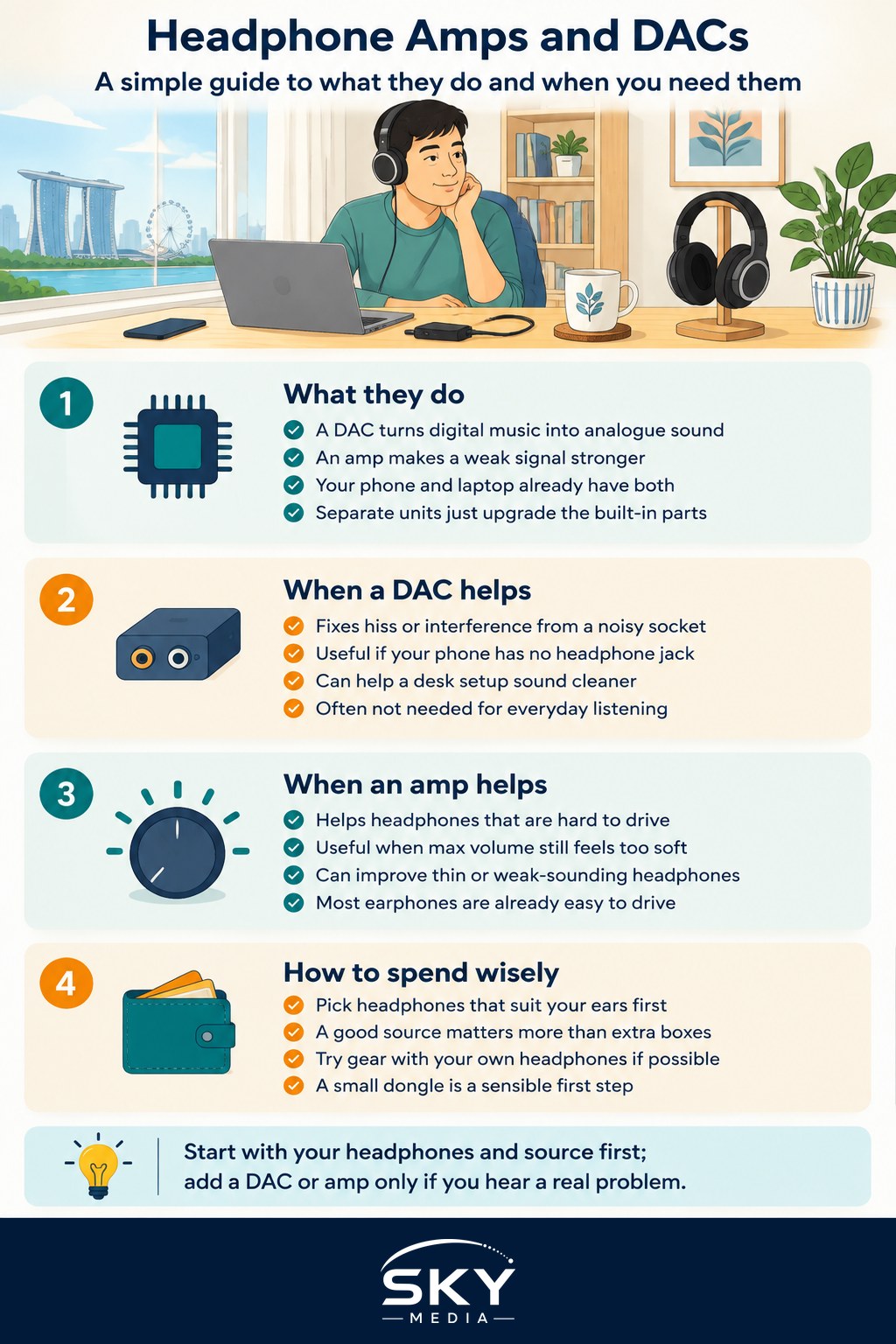
What a DAC Actually Does
Your music files, whether streamed or stored, are digital. They are just long strings of numbers. Your ears, however, only understand analogue sound, which is a smooth wave of air pressure. Something has to translate those numbers into a wave your headphones can play, and that translator is the DAC, the digital-to-analogue converter.
Because every device that plays music needs to do this, a DAC is built into your phone, your laptop, your tablet and your hi-fi. The question is never whether you have a DAC, but whether the built-in one is good enough for you. In most cases it is perfectly fine. A separate DAC, sometimes a small box or a tiny plug-in dongle, simply replaces the built-in chip with a dedicated one that may sound a little cleaner or drive better with certain gear.
Where a separate DAC can help:
- Your laptop has a noisy headphone socket that hisses or picks up interference.
- Your phone has dropped the headphone jack and you want good wired sound.
- You want a fixed part of a desk setup that you can improve independently later.
For a lot of people none of these apply, and that is completely normal.
What a Headphone Amp Adds
An amplifier takes a weak audio signal and makes it stronger, so it can move the small speakers inside your headphones with enough force. Once again, your phone and laptop already have a tiny headphone amp inside. The question is whether it is powerful enough for the headphones you own.
This is where a term called impedance comes in. Impedance, measured in ohms, is roughly how much electrical resistance a pair of headphones puts up. Most earphones and everyday wireless-style headphones are low impedance and easy to drive, so your phone handles them without breaking a sweat. Some larger over-ear headphones, often the open-back models favoured by enthusiasts, are higher impedance or simply less sensitive, and a phone may struggle to make them loud enough or to sound their best. A dedicated headphone amp gives them the extra push.
Signs your headphones might want more power:
- You turn the volume almost to maximum and still want more.
- The sound feels thin, weak or lacking in bass at listenable volumes.
- The maker describes them as hard to drive or aimed at desktop use.
If your headphones already go plenty loud and sound full on your phone, an amp will not magically transform them. It mainly rescues gear that is being starved of power.
Do You Actually Need One in Singapore
Honestly, many listeners do not. If you use wireless earbuds or headphones, the DAC and amp live inside the earbuds themselves, so an external box does nothing for you. If you use modest wired earphones with a phone, the built-in electronics are usually a fine match. It is worth being a little sceptical of the idea that everyone needs to buy more equipment.
A separate DAC or amp starts to make sense when you own demanding wired headphones, when you are building a proper desk listening setup, or when your device’s own socket is genuinely noisy. Even then, start small. A modest plug-in dongle DAC, which combines a small converter and amp in something the size of a lighter, is an inexpensive first step and easy to carry on the MRT. You can always move up later if you catch the bug.
One local note worth remembering: our humidity is hard on electronics and cables. Keep any little box or dongle somewhere dry, avoid coiling cables too tightly, and wipe away condensation if you carry gear between an air-conditioned office and the street. Small habits like these protect an audio purchase far more than chasing another upgrade.
Combined Units, Dongles and Stacks
Because the two devices work in sequence, the DAC first and the amp second, manufacturers often sell them together. Understanding the common formats helps you shop without being dazzled. The table below compares the everyday options in plain terms so you can match one to your situation rather than to the loudest online opinion.
| Option | What it is | Best for | Keep in mind |
|---|---|---|---|
| Built-in (phone or laptop) | The DAC and amp already inside your device | Most casual and wireless listeners | Costs nothing extra and is often good enough |
| Dongle DAC and amp | A tiny combined unit on a short cable | Phones without a jack, easy first upgrade | Small power, but very portable and cheap |
| Desktop combined unit | A single box with a DAC and stronger amp | A fixed desk setup with wired headphones | Needs a spot on the desk and mains or USB power |
| Separate DAC and amp stack | Two dedicated boxes joined together | Enthusiasts who want to upgrade in stages | Costs more and adds cables and clutter |
For most beginners the first two rows are the whole story. There is no shame in stopping there, and no rule that says a bigger stack sounds better for the headphones you actually own.
How to Spend Your Money Sensibly
The single most important thing to understand is the order of priority. Your headphones and the quality of your music make by far the biggest difference to what you hear. A DAC or amp is a supporting act, not the star. If your budget is limited, put it into better headphones or a proper streaming source before you think about extra boxes.
A sensible path looks like this:
- Get headphones that suit your ears and the way you listen.
- Use a decent source, such as a clean streaming service or good files.
- Listen for a while and notice whether anything genuinely bothers you.
- Only then, if a real problem like weak volume or socket hiss remains, add a modest DAC or amp to fix it.
Try before you buy where you can, since local audio shops often let you audition gear with your own headphones. Trust your own ears over specifications and reviews, because your comfort and taste matter more than numbers on a page. Prices and models change constantly, so check current options rather than relying on old figures. Approached this way, headphone amps and DACs stop being mysterious status symbols and become what they really are: simple, occasionally useful tools that you buy only when they solve a problem you can actually hear.
Explore more
- Headphones for Audiophiles Explained
- Hi-Res and Lossless Audio Explained
- Understanding Audio File Formats and Quality
- Building a Hi-Fi System on a Budget
- Caring for Your Audio Gear in the Humidity
Frequently Asked Questions
Will a DAC or amp improve Bluetooth earbuds? No. Wireless earbuds have their own DAC and amplifier built in, so an external box has nothing to plug into and cannot change their sound. A separate DAC or amp only helps with wired headphones. For wireless earbuds, a better pair or a higher-quality streaming setting is the real upgrade.
How do I connect a DAC to my phone or laptop? Most small DACs connect by USB, either straight into a laptop or through the right adaptor for a phone, then your headphones plug into the DAC. Check that your device and the DAC use compatible connectors. Many dongle types work with a plug and play setup, with no extra software.
Can a DAC or amp make cheap headphones sound premium? Not really. Extra power or cleaner conversion cannot add detail the headphones cannot produce. A good headphone and a decent source matter most, with the DAC or amp supporting them. If your budget is tight, spend on better headphones before adding another box.
Is an amp or a DAC dongle safe to use with a phone battery? Dongles draw power from your phone, so battery drains faster during long sessions, but it is generally safe. Powerful models may need more energy than a phone can comfortably provide. Check the maker’s guidance, and consider a powered desktop unit for demanding headphones at home.
How do I know if my headphones are hard to drive? Check the maker’s specifications for impedance and sensitivity, and see how the headphones behave with your phone. If maximum volume still sounds quiet or thin, they may want more power. Descriptions such as “desktop use” are another hint. Easy-to-drive models need no extra box.
Further reading: Understanding Headphone Impedance and Sensitivity