
If you have ever bought a lovely pair of headphones only to find they sound quiet or lifeless from your phone, you have run into impedance and sensitivity. These two specifications explain how easy a pair of headphones is to drive, and understanding headphone impedance Singapore buyers see on spec sheets can save you disappointment and help you get the sound you paid for. This guide keeps it simple and practical, so you know what these numbers mean before you buy.
Impedance and sensitivity together tell you how much power headphones need and how loud they will get from a given source. They are not about sound quality in a straightforward way, but they do affect whether your device can drive your headphones properly. Getting this right is the difference between headphones that sing and headphones that leave you turning the volume all the way up and still wanting more.
Please protect your hearing first
Before the technical detail, a genuinely important point. Because impedance and sensitivity affect how loud headphones get, it is easy to compensate for quiet headphones by pushing the volume dangerously high. Loud or prolonged listening can cause permanent hearing damage that does not heal. Keep the volume at a comfortable, moderate level, follow the sensible rule of not listening loud for long stretches, and take regular breaks to rest your ears. If you often find yourself needing to crank the volume, the answer may be better-matched gear or an amplifier, not simply more volume. Safe listening should always come before any spec.
Impedance explained simply
Impedance is measured in ohms and describes how much a pair of headphones resists the electrical signal driving them. Lower-impedance headphones, often in the range you find on everyday consumer models, are generally easy to drive and will play loudly enough from a phone, laptop, or tablet. Higher-impedance headphones, which are more common among studio and audiophile models, resist more and therefore need more voltage to reach the same loudness.
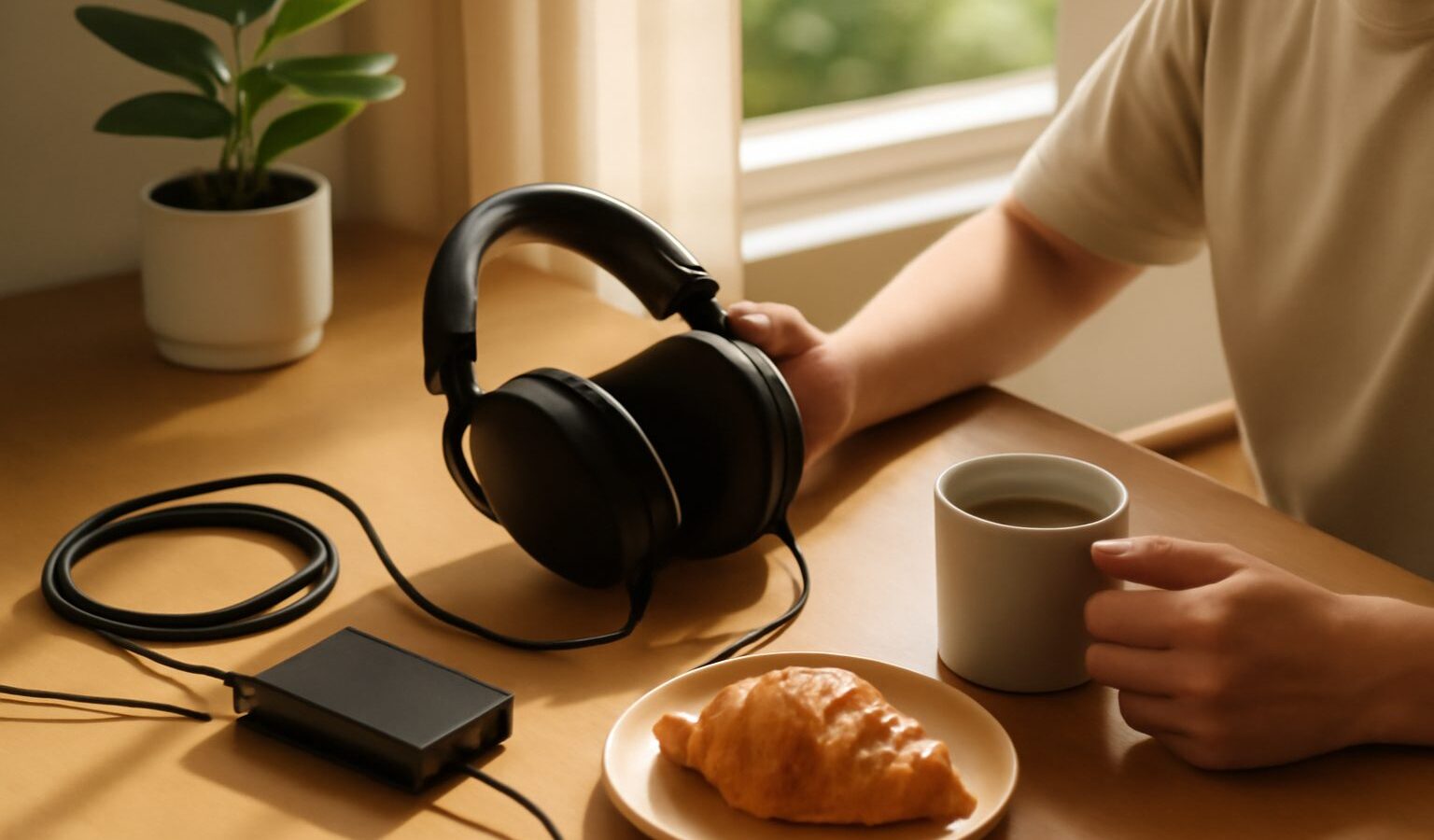
This is why a demanding pair of headphones can sound weak straight from a phone. The phone simply cannot deliver enough to drive them well, so you get low volume and sometimes a thin, underpowered sound. It does not mean the headphones are faulty. It means they were designed for a source with more power behind it. That is where a headphone amplifier comes in, giving high-impedance models the drive they need. Our guide to understanding headphone amps and DACs explains when an amp is genuinely worth it.
Sensitivity and how loud headphones get
Sensitivity, sometimes shown as efficiency, tells you how loud a pair of headphones will play for a given amount of power. Higher sensitivity means they reach a satisfying volume more easily, while lower sensitivity means they need more to get there. You can think of impedance and sensitivity as a pair. Together they decide whether your source has enough in the tank.
In practice, a pair with easy impedance and high sensitivity will sound loud and lively from almost anything, including a modest phone. A pair with high impedance and low sensitivity may sound polite and quiet unless you give it more power. Neither is automatically better. What matters is matching your headphones to the devices you actually use. If you mostly listen on your phone, easy-to-drive headphones make life simple. If you have or plan to buy an amplifier, more demanding models open up.
Comfort, fit, and the sound signature you enjoy matter just as much as these numbers, so treat impedance and sensitivity as one part of the picture rather than the whole story. Our overview of headphones for audiophiles explained puts these traits in context, and if in-ear options appeal to you, in-ear monitors explained is a helpful read.
Practical advice for buyers
When shopping, think first about what you will plug into. For everyday use with a phone, choose headphones that are easy to drive so you get full, satisfying sound without needing extra hardware. If you are drawn to a high-impedance studio or audiophile model, plan for an amplifier or a source that can drive it, and try before you commit if you can. Trust your ears over the spec sheet, and read current reviews rather than relying on numbers alone, since real-world performance depends on the whole design.
Whatever you choose, look after your gear so it keeps performing. Singapore’s humidity is tough on electronics and ear pads, and our guide to how to clean and maintain your headphones offers simple habits that extend their life.
The reassuring truth is that you do not need to memorise numbers to buy well. Match your headphones to your device, keep the volume sensible for your hearing, and prioritise comfort and a sound you enjoy. Do that and impedance and sensitivity become useful guides rather than confusing jargon, helping you pick headphones that truly sing on the gear you own.