
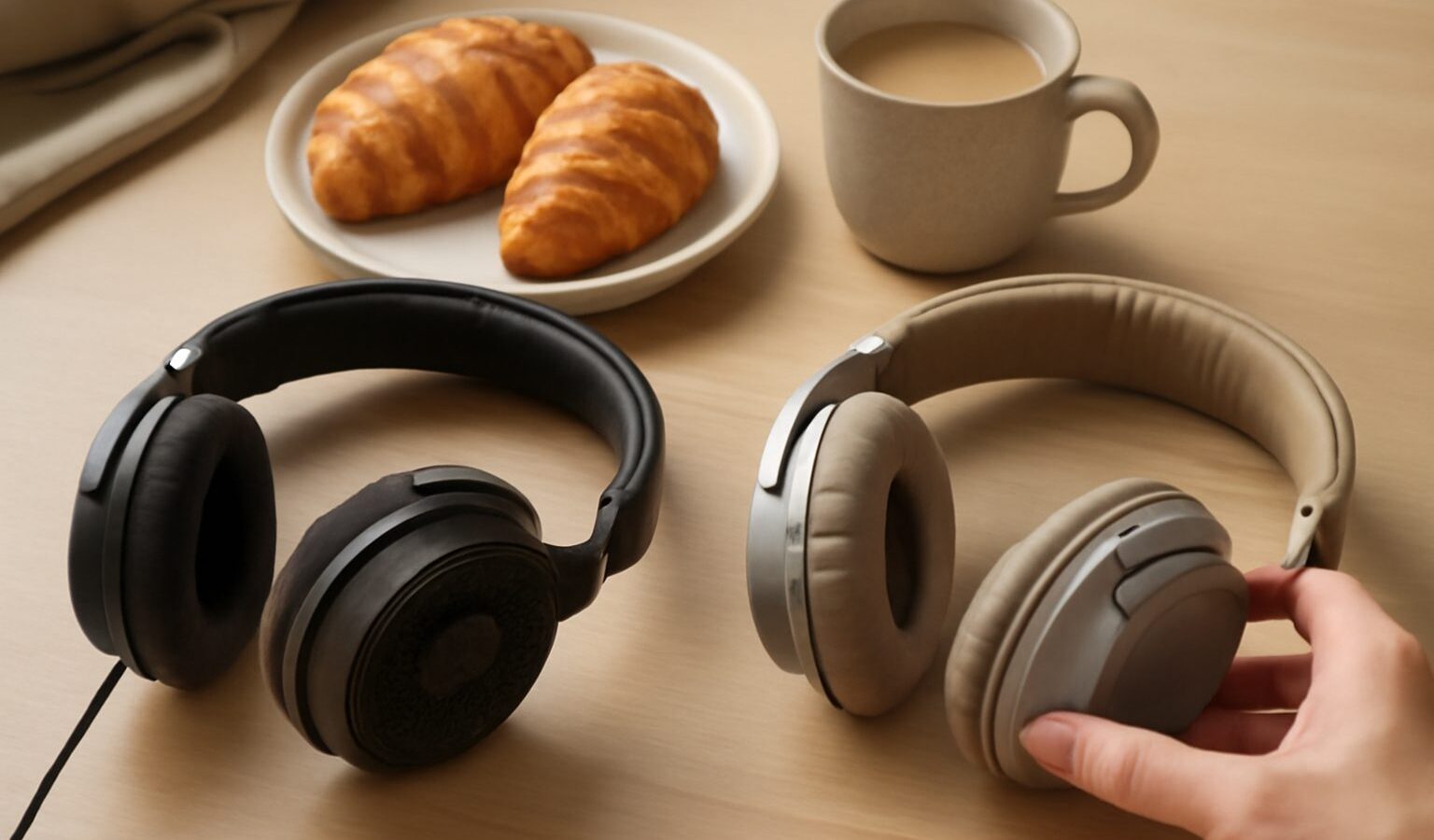
Deciding between open vs closed back headphones is one of the first real forks in the road for any listener building a proper setup. The two designs are not simply better or worse than each other; they are tuned for different situations, and the right pick depends on where you listen and what you value. This guide walks through the trade-offs in plain terms so you can spend confidently.
What the Two Designs Actually Are
The difference sits in the ear cups. A closed-back headphone seals the back of each driver behind a solid housing. An open-back headphone leaves the rear of the driver exposed through a grille or perforated panel, letting air and sound pass freely in both directions.
That single structural choice ripples through everything you hear. A sealed cup keeps sound in and blocks noise from getting out or in. An open cup lets the driver breathe, which changes how the music feels in your head but removes almost all of the isolation.
How They Sound
The most talked-about difference is soundstage, the sense of space and width in a recording. Open-back headphones tend to sound larger and more natural, as if the music sits slightly outside your head rather than pressed against your ears. Instruments feel more separated and easier to place.
Closed-back headphones usually sound more intimate and direct. Bass can hit harder because the sealed cup pressurises the air behind the driver. Many people find closed designs punchier, while open designs feel airier and more relaxed. Neither is objectively correct; they simply present music differently.
Isolation and Leakage
This is where the practical choice is usually made, and it matters a lot in Singapore.
Closed-back headphones block a good deal of outside noise and keep your music from spilling out. They suit the MRT, a shared office, a HDB living room with family nearby, or a hawker centre where you want to tune out the bustle.
Open-back headphones do neither. People beside you will hear your music, and you will hear the aircon, the traffic and your flatmates. They are built for a quiet room where you listen alone. Wearing them on a bus is inconsiderate and frustrating for you both.
Comfort and Heat
Our climate deserves a mention. Sealed cups trap heat against your ears, and long sessions in a warm room can get sweaty. Open designs ventilate far better and often feel cooler and lighter over long listening. If you run a fan or sit in air conditioning, the gap narrows, but on a humid afternoon the difference is real.
Open-Back vs Closed-Back at a Glance
| Factor | Open-Back | Closed-Back |
|---|---|---|
| Soundstage | Wide and spacious | Intimate and direct |
| Isolation | Very little | Good to strong |
| Leakage | Leaks freely | Contained |
| Bass character | Natural, less forceful | Punchier, more pressurised |
| Heat build-up | Cooler, ventilated | Warmer against the ears |
| Best setting | Quiet room, solo listening | Commuting, shared spaces |
| Typical use | Critical home listening | Everyday and travel |
How to Choose
Start with honest questions about your life, not the spec sheet.
Where will you listen most?
If the honest answer is trains, buses, a shared desk or a busy flat, closed-back is the sensible default. Isolation is not a luxury there; it is the whole point. If you have a quiet room to yourself and mostly listen alone in the evening, open-back rewards you with a more open, lifelike presentation.
What do you listen for?
If you love picking apart layers in acoustic, jazz or orchestral recordings, open designs make that easier and more enjoyable. If you want energy, impact and a bit of thump for electronic music or gaming, a good closed pair delivers that with more slam.
Do you need one pair or two?
Many keen listeners eventually own both: a closed pair for out and about, an open pair for the quiet listening chair. If your budget stretches to only one, let your environment decide rather than chasing the wider soundstage you may rarely get to enjoy.
Practical Buying Tips
A few pointers that apply to either type:
- Set a clear budget tier first. Budget, mid and premium pairs all exist in both designs, so you are not forced to overspend to get the style you want.
- Prioritise fit and clamp. A headphone that pinches will not get worn, whatever it sounds like.
- Check whether you need extra amplification. Some open-back pairs, especially higher-impedance ones, sound their best with a dedicated headphone amp.
- Try before you buy where possible. Comfort and tuning are personal, and a short listen tells you more than any chart.
Caring for Them in Our Climate
Humidity is the quiet enemy of headphones. Earpads absorb sweat, and foam and leatherette can degrade if left damp in a warm cupboard. Wipe pads down after long sessions, store your headphones somewhere dry and consider a dry box for premium pairs. Open-back grilles can gather dust, so a gentle brush now and then keeps them tidy.
The Bottom Line
There is no universal winner in the open vs closed back headphones debate. Closed-back designs earn their place through isolation and versatility, making them the safe everyday choice for most Singaporean listeners. Open-back designs trade that practicality for a more spacious, natural sound that shines in a quiet room. Match the design to your space and your habits, and you will enjoy the pair far more than if you simply chased the label with the better reputation.
Explore more: Headphones for Audiophiles Explained · Understanding Headphone Amps and DACs · Caring for Your Audio Gear in the Humidity