

Every driver here has to buy motor insurance, but few people understand why they pay what they pay. Motor insurance premiums singapore drivers face can vary widely from one person to the next, even for the same car, and the difference is rarely random. Insurers are pricing risk, and once you understand the levers behind that price, you can make choices that keep your premium sensible without leaving yourself underinsured.
This article explains, in general terms, how premiums are built and what tends to raise or lower them. It does not quote prices, because rates differ by insurer and change over time. For an actual figure, get quotes from insurers or a licensed broker and check the fine print.
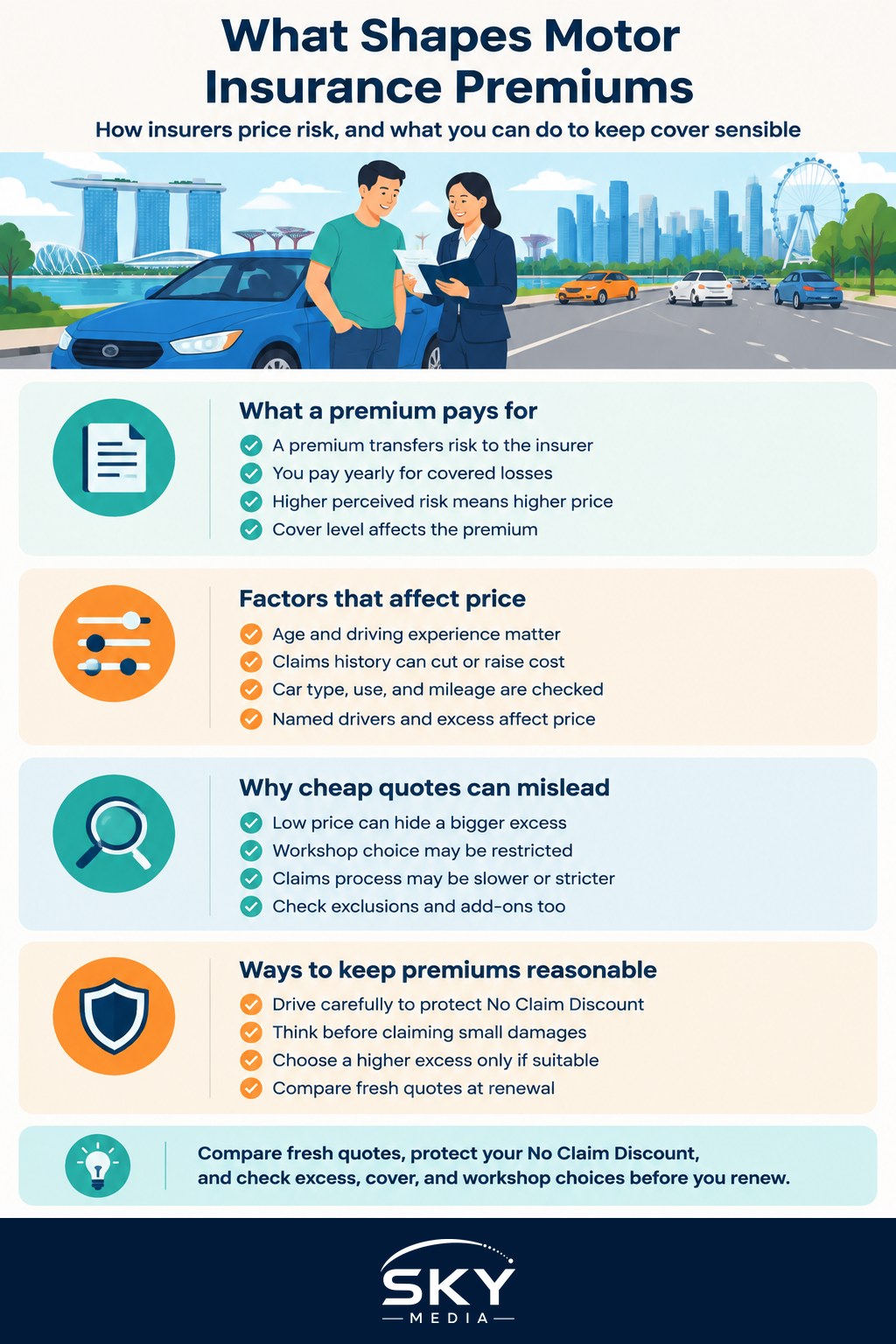
What a premium is actually paying for
A premium is the price of transferring risk. You pay the insurer a yearly sum, and in return the insurer agrees to cover certain losses if something goes wrong. The higher the risk the insurer thinks you represent, the more it charges. Everything that follows is really about how insurers estimate that risk.
At a minimum, the law requires you to have cover for injury or damage you cause to other people. Beyond that, the level of cover you choose changes the price. Comprehensive cover, which also pays for damage to your own car, costs more than third party cover. If you are weighing which level suits you, our guide to comprehensive vs third party car insurance in Singapore breaks down the trade-offs.
What pushes your premium up or down
Insurers look at a long list of factors. No single one decides the price, but together they shape the quote you get. The main ones include:
- Your age and driving experience. Younger and newer drivers are generally seen as higher risk, so they usually pay more.
- Your claims history. A clean record earns you a No Claim Discount, which builds up over years without a claim and can cut your premium substantially. Make a claim and you can lose part or all of it.
- The car itself. A powerful, expensive, or easily stolen car costs more to insure than a modest, common model. Repair costs and the price of parts matter here.
- How and where you drive. Some insurers consider mileage and usage. A car used lightly may be cheaper to cover than one on the road all day.
- Named drivers. Adding a young or inexperienced driver to your policy can raise the price, because the insurer is now covering that person too.
- Your excess. This is the amount you agree to pay out of pocket on a claim. A higher voluntary excess usually lowers your premium, but it means you carry more of the cost if you do claim.
Your No Claim Discount and your excess are two of the biggest levers you control. It is worth understanding both properly, and our notes on No Claim Discount explained and understanding your insurance excess go deeper than we can here.
Why the cheapest quote is not always the best
It is tempting to sort quotes by price and pick the lowest, but that can be a false economy. A cheaper premium sometimes comes with a bigger excess, a restricted choice of workshops, or a slower and stricter claims process. When you actually need to claim, those details matter far more than the few dollars you saved at renewal.
When comparing, look past the headline number and check:
- The level of cover and what is excluded.
- The excess you would pay on a claim.
- Whether you can use your preferred workshop or must use the insurer’s panel.
- Any add-ons, such as cover for a loan car or for named young drivers.
Understanding how a claim plays out in practice helps you judge value. Our guide to car insurance claims explained walks through what happens after an accident and why the claims experience should weigh heavily in your decision.
Sensible ways to keep premiums reasonable
You cannot change your age, but you can influence plenty of other factors. Drive carefully and protect your No Claim Discount, because a clean record is the single most reliable way to bring premiums down over time. Think twice before claiming for small damage that costs less than your excess plus the discount you would lose. Consider whether a higher voluntary excess suits your finances. And when you renew, get fresh quotes rather than auto-renewing, since loyalty is not always rewarded.
Choosing a modest, common car over a flashy one also helps, both on the premium and on the wider costs of ownership. The car you pick is one of the biggest drivers of what you pay.
The bottom line
Motor insurance premiums are a reflection of risk, not a fixed tax. Your age, your claims record, your car, your excess, and the level of cover you choose all feed into the number. Focus on protecting your No Claim Discount, match your cover and excess to your real needs, and compare on value rather than price alone. When you are ready for a figure, get quotes directly from insurers or a licensed broker and read the policy wording before you sign.
Frequently Asked Questions
Will making a small claim raise my insurance premium? It can, because a claim may reduce your No Claim Discount, and that discount is one of the biggest levers on your premium. For minor damage that costs little more than your excess, weigh the repair cost against the discount you would lose.
Does adding a young driver to my policy cost more? Usually yes, since the insurer is now covering a less experienced person, which it treats as higher risk. Ask your insurer for quotes with and without the named driver, and check the terms for any add-ons.
Is it worth choosing a higher voluntary excess? It can lower your premium, but you carry more of the cost if you claim. Choose an excess you could pay comfortably out of pocket at short notice. Compare quotes at a few excess levels before deciding.
Should I renew automatically or compare quotes each year? Compare, because loyalty is not always rewarded and rates differ by insurer. Get fresh quotes from insurers or a licensed broker, and compare cover, excess and panel workshops, not just price.
What should I check on a policy besides the price? Check what is covered and excluded, the excess you would pay, whether you can use your preferred workshop or must use the insurer’s panel, and any add-ons. A cheaper policy can cost more when you actually claim.
Official sources: Monetary Authority of Singapore (MAS)
Further reading: Should You Switch Car Insurers at Renewal?