

You have probably had the experience of holding up two tops in the same style but different colours, and one just makes your face look brighter while the other washes you out. That is the whole idea behind colour analysis. Colour season analysis singapore beauty lovers keep hearing about is a simple framework for working out which shades flatter your natural colouring, so your makeup, hair, and wardrobe choices all pull in the same direction instead of fighting each other.
The system sorts people into seasons, originally the four classics of Spring, Summer, Autumn, and Winter, and now often expanded into twelve sub-categories. It is not a strict science, and it is not a set of rules you must obey. Think of it as a helpful starting map, not a cage.
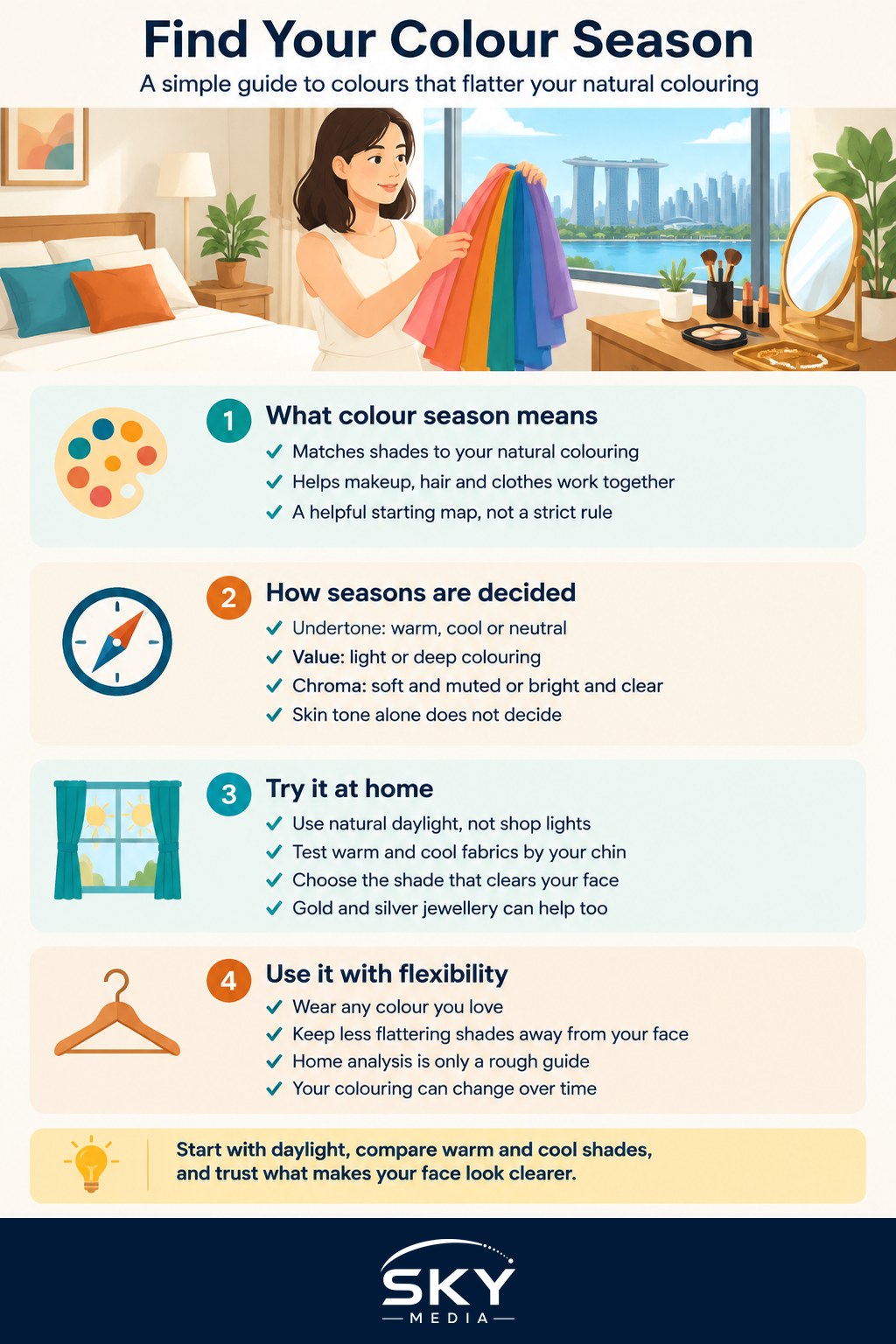
How Colour Seasons Actually Work
Three qualities decide your season. The first is undertone, whether your skin leans warm (golden, peachy), cool (pink, bluish), or neutral. The second is value, how light or deep your overall colouring is. The third is chroma, whether your best colours are soft and muted or bright and clear.
Here is a rough sketch of the four seasons:
- Spring: warm and bright. Clear, fresh colours like coral, warm peach, golden yellow, and light warm greens tend to flatter.
- Summer: cool and soft. Muted, gentle shades such as dusty rose, soft blue, lavender, and cool greys sit well.
- Autumn: warm and muted. Rich, earthy tones like terracotta, olive, mustard, rust, and warm browns come alive.
- Winter: cool and bright. Bold, high-contrast colours such as true red, emerald, cobalt, and crisp black and white look striking.
Skin tone alone does not decide your season, which is a common misunderstanding. Two people with similar depth of skin can be different seasons because of undertone and contrast. Your hair and eye colour matter too. This is why undertone is the anchor of the whole thing. If you have not sorted yours out, our guide to understanding undertones and colour matching is the best place to begin, because once you know warm from cool, half the puzzle is solved.
Finding Your Season In Singapore Conditions
You can do a rough self-analysis at home, and our lighting here makes one step easy and one step tricky. The easy part is that we get strong, bright daylight almost every day, and natural light is the only reliable light for judging colour. Shop lighting and warm indoor bulbs distort everything. The tricky part is that a suntan or the flush from a hot, humid day can temporarily shift how warm your skin looks, so judge on a normal day, not straight after the beach.
A simple at-home method:
- Sit by a window in daylight with clean, bare skin and hair pushed back.
- Drape different coloured fabrics or scarves under your chin, one warm and one cool version of each colour.
- Watch your face, not the fabric. The flattering colour makes your skin look clearer and more even, and any shadows or dark circles soften. The wrong colour makes you look tired, sallow, or grey.
- Compare gold versus silver jewellery against your skin. Gold flattering warm, silver flattering cool is a classic quick test, though plenty of people suit both.
Once you have a sense of your family of colours, you can apply it gently. For makeup, it guides lipstick and blush undertones, whether a warm coral or a cool berry suits you better, and which eyeshadows brighten rather than dull your eyes. If you are still building your kit, makeup for beginners pairs nicely with this, and our lipstick and lip products guide can help you translate your season into actual shades you will reach for.
Using The Idea Without Being Ruled By It
Colour seasons are a tool for confidence, not a list of banned colours. If you adore a shade that supposedly is not your season, wear it. You can also adjust placement so a less flattering colour sits away from your face, on trousers or a bag rather than a top, while your best colours frame your face where it counts.
A few honest caveats are worth keeping in mind. Home analysis is imprecise, and even professional draping is a matter of trained opinion rather than a lab result. Different analysts may place you slightly differently, and that is normal. The point is not a perfect label but a useful direction, spending less on clothes and makeup that disappoint and more on the ones that light you up.
Your colouring can also shift over the years, as hair greys or you change your hair colour, so it is worth revisiting occasionally. And none of this is about anyone being better or worse. Every season is beautiful, and the whole exercise is simply about making your own features sing.
Start small. Notice which tops earn you compliments, which lipsticks make your smile pop, and which colours leave you looking washed out. Over time those observations add up to a personal palette that makes getting dressed and made up feel a great deal easier.
Frequently Asked Questions
Can I be a different colour season in the sun than indoors? Your underlying colouring does not change, but a suntan or the flush from a hot, humid day can temporarily shift how warm your skin looks. That is why it is best to judge on a normal day, in natural daylight, rather than straight after the beach.
Does my season change as I get older or grey? It can shift over the years, as hair greys or you change your hair colour, so it is worth revisiting occasionally. Your undertone usually stays the anchor, but contrast and depth may soften. Treat your season as a flexible guide rather than a fixed label.
Is professional colour analysis more accurate than doing it at home? Not exactly. Professional draping relies on a trained eye rather than a lab result, so different analysts may place you slightly differently. It can still be a useful second opinion. Home analysis is imprecise, but it is a fine starting map.
Can I wear colours outside my season? Absolutely, since colour seasons are a tool for confidence rather than a banned list. If you love a shade, wear it. You can also keep a less flattering colour away from your face, on trousers or a bag rather than a top.
How can I use my colour season for makeup, not just clothes? It guides the undertone of your lipstick and blush, such as whether a warm coral or a cool berry flatters you more, and which eyeshadows brighten rather than dull your eyes. Start with one or two products, then build the rest of your kit around them.
Further reading: Choosing Eyeshadow for Your Eye Colour · How to Wear Red Without Looking Overdressed