
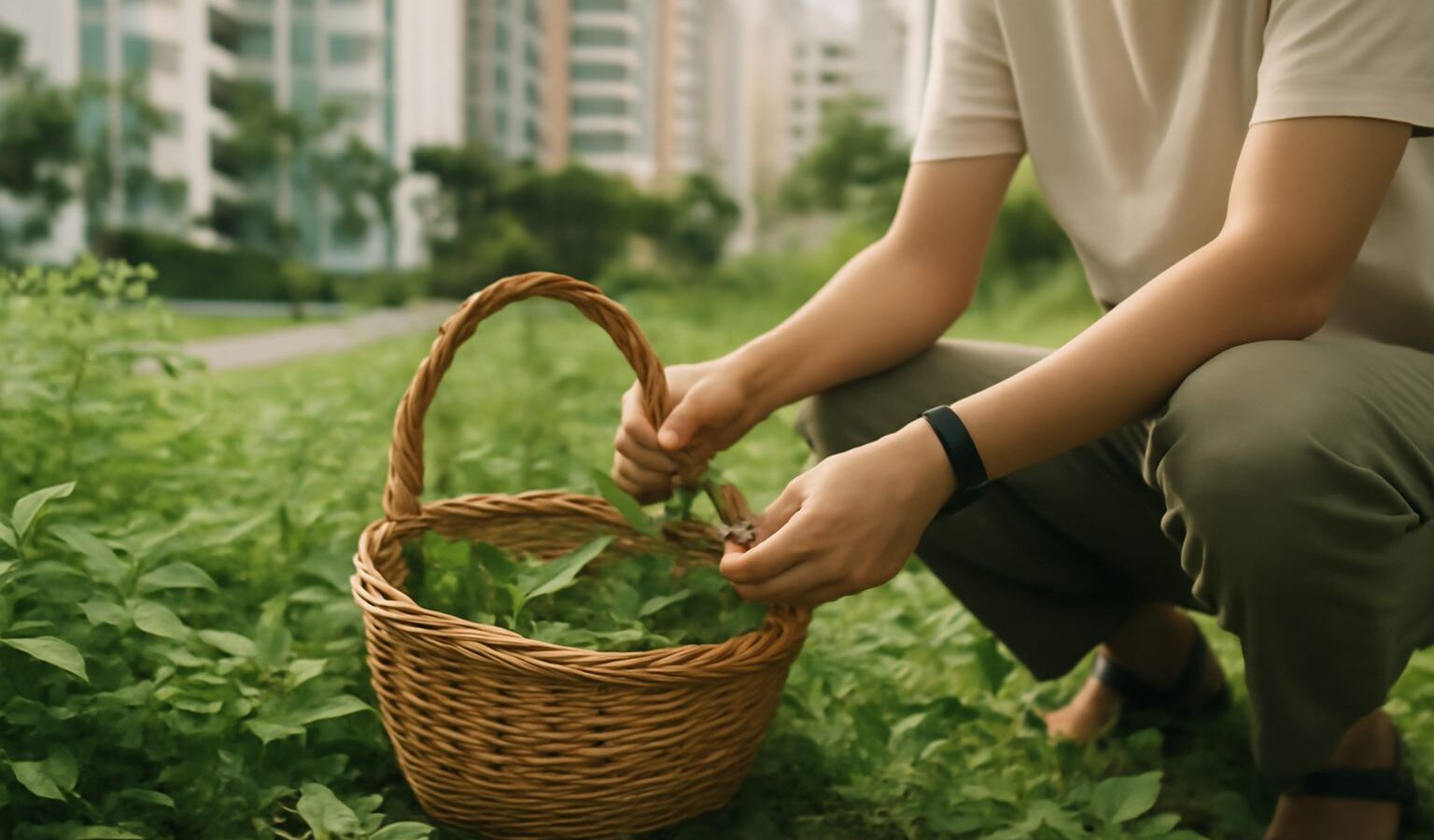
If you have ever walked past a fruiting tree or a patch of wild herbs and wondered what it was, you already have the instinct behind this hobby. Urban foraging in Singapore, done responsibly, is really about learning to notice, name, and appreciate the edible and useful plants that grow around our estates, parks, and roadsides. It is a hobby of attention and identification, not of harvesting, and framing it that way keeps you safe and on the right side of the law.
What Urban Foraging Really Means Here
Let us be clear from the start, because this matters more than anything else in the article. Urban foraging as a beginner hobby in Singapore should mean identifying and appreciating plants, not picking and eating them. Many plants and fungi are poisonous, and some of the most dangerous species have look-alikes that even experienced people confuse. You should never eat anything you find unless it has been identified as safe by a genuinely qualified expert, and even then caution is wise. Treat this as a rule with no exceptions, especially with mushrooms, where a single misidentification can be fatal.
There is also the legal side. Removing plants, fruit, flowers, or fungi from Singapore’s parks, gardens, and nature reserves is prohibited and counts as an NParks offence. This is not a grey area you want to test. So the healthy version of this hobby looks like a naturalist walking with a notebook and a camera, learning the difference between a real curry leaf plant and something that merely resembles one, rather than a person filling a bag with free food. If you keep that mindset, urban foraging becomes a rich, low-cost way to understand the greenery all around you.
What You Need to Begin
The lovely thing about this hobby is how little kit it asks for. A smartphone, comfortable shoes, and curiosity will carry you a long way.
- A good plant identification app or two, used as a starting hint rather than a final answer.
- A field guide to Singapore and Southeast Asian plants, ideally one written for our region.
- A notebook or a photo album on your phone to log what you see, where, and when.
- A hat, water, and sun protection, because our climate is hot and humid year round.
Photograph the whole plant, the leaves, any flowers or fruit, the stem, and the growing conditions. Those details are what let a knowledgeable person confirm an identification later. Never rely on a single app result to decide anything is edible.
How to Start and Get Better
Begin close to home. Walk the same block or park connector a few times and try to name five plants each visit. You will quickly meet the familiar ones, such as the Ceylon spinach climbing a fence, the humble weeds in the pavement cracks, and the ornamental trees planted along walkways. Cross-check every identification against more than one source, and write down what you are unsure about so you can ask someone later.
To improve faster, join a guided nature walk led by qualified guides, or plug into a local plant-identification community online where people share clear photos and careful corrections. Reading widely helps too. Because this is fundamentally a looking-and-learning pursuit, it pairs naturally with related outdoor hobbies. If you enjoy the observation side, you might like nature journaling and sketching to record what you find, or birdwatching as a hobby in Singapore, which trains the same patient eye. Those who love hunting for tiny living things often enjoy butterfly and insect watching as a companion interest.
Doing It Respectfully in Singapore
A few habits keep this hobby ethical and sustainable. Stay on paths, do not trample undergrowth, and leave everything where it grows, so the next person and the wildlife get to enjoy it too. Never enter fenced, private, or restricted land. Remember that some attractive plants are toxic to touch, so avoid handling anything you cannot name. In our tropical setting, sap, spines, and irritant plants are common, and mosquitoes are a real consideration, so cover up and use repellent.
Think of yourself as a guest and a student of the landscape rather than a harvester. That framing protects the greenery, protects you, and keeps you clear of any offence.
A Gentle Wrap-Up
Urban foraging, understood as identification and appreciation, is one of the most accessible hobbies you can pick up in Singapore. It costs almost nothing, it slows you down in the best way, and it slowly turns an ordinary walk into a living puzzle you get better at solving. Keep the golden rule close, never eat anything without expert confirmation, and never remove plants from protected areas. Do that, and you will gain a deeper, calmer relationship with the surprising abundance of green that shares this city with us.