
There is something quietly thrilling about sitting on a bench, opening a sketchbook, and capturing the scene in front of you exactly as it is right now. That is the heart of urban sketching, the practice of drawing on location from real life rather than from photos, out in the streets, hawker centres, parks, and void decks of the city around you. It needs only a pen and a small book, it costs very little, and it turns any spare half hour into a memory you have made by hand. This guide walks a beginner in Singapore through getting into urban sketching, from a pocket-sized kit to your first outdoor drawing, and how to sketch in public comfortably and respectfully.
What Makes Urban Sketching Different
Urban sketching is not about producing a perfect, polished drawing. It is about recording a real moment and place, on the spot, with all its life and imperfection. Where a general drawing hobby might have you copying a photo or a still life at your desk, urban sketching sends you out into the world to draw what is actually happening in front of you: the shophouse across the road, the auntie at the next table, the rush of a morning market. That live, on-location element is the whole point, and it changes how you see the city.
This makes it a wonderfully rewarding way to slow down and truly look. You notice the shape of a five foot way, the angle of a rooftop, the way light falls through a covered walkway, details you would walk straight past otherwise. Every sketch becomes a dated, personal souvenir of a place and a mood, far more meaningful than a phone photo. It also builds your drawing skills faster than desk practice, because real scenes do not hold still and you learn to capture the essence quickly.
Why It Suits Singapore
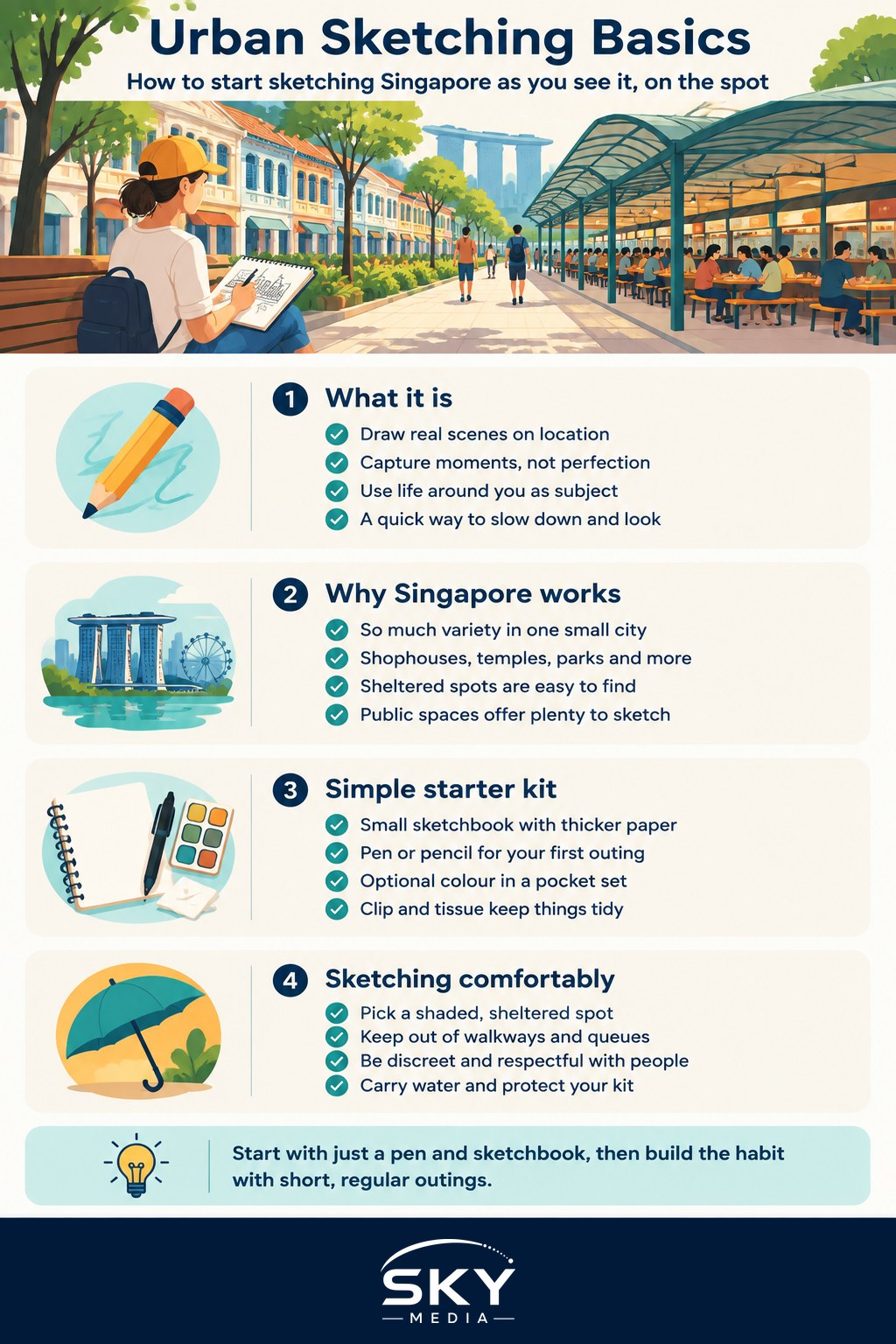
Few cities offer an urban sketcher as much variety in such a small space. Within a short bus or train ride you can draw colonial shophouses, gleaming towers, temples, void decks, wet markets, parks, and the harbour, often within the same neighbourhood. Sheltered spots are everywhere too, which matters in our climate, since a covered walkway, an MRT concourse, a hawker centre, or a mall atrium lets you sketch in comfort out of the sun and rain.
There is also a friendly, unhurried culture around public spaces here. Coffee shops and hawker centres are natural places to linger over a drink and a drawing, and because so much of daily life happens in shared spaces, you never run short of scenes worth capturing.
Building a Small Sketching Kit
The beauty of urban sketching is how little you need. A pocket kit that fits in a bag means you can seize any spare moment. Look in an art-supply store, a general craft shop, a bookshop, or an online marketplace for the basics.
- A small sketchbook. An A5 or smaller book with reasonably thick paper handles both pen and a little water. Compact means you will actually carry it.
- A pen or pencil. A waterproof fineliner or a simple ballpoint is perfect. Waterproof ink lets you add colour later without it smudging.
- A small colour set, optional. A pocket watercolour tin with a water brush, or a few coloured pencils, adds life without much bulk.
- A bulldog clip. Keeps your pages from flapping in the breeze.
- A cloth or tissue. For wiping brushes, sweaty hands, or a sudden splash.
You do not need expensive paper, a full paint set, or an easel to begin. A pen and a notebook are genuinely enough for your first month, so start with those and add colour only once the habit sticks.
Choosing Your First Tools
Beginners often stall over what to draw with, so here is a simple comparison of forgiving starting points. Any of these will serve you well, and many sketchers eventually combine them.
| Tool | Best for beginners because | Watch out for |
|---|---|---|
| Ballpoint pen | Cheap, always to hand, smooth lines | Hard to erase, so commit to the line |
| Waterproof fineliner | Crisp lines that take colour on top | Nib can wear with heavy use |
| Pencil | Easy to correct, gentle and familiar | Can smudge in a bag, looks faint |
| Pen and a small wash | Adds mood and warmth quickly | Needs a moment for water to dry |
For a very first outing, a single pen and your sketchbook keep things simple, since having fewer choices lets you focus on looking and drawing rather than fiddling with materials. Add a splash of colour once the lines feel comfortable.
Your First Outdoor Sketch
Pick a sheltered, comfortable spot with a clear view, such as a bench under a covered walkway, a hawker centre seat, or a shady corner of a park. Choose one simple subject rather than the whole panorama, perhaps a single shopfront, a tree, a parked trishaw, or a friend nursing a kopi. Keeping the scene small keeps it achievable.
Start by looking longer than you draw. Trace the main shapes with your eyes, then lightly place the biggest forms on the page before adding detail. Do not aim for accuracy or neatness. Aim to capture the feel of the place, wonky lines and all, since imperfection is exactly what gives an on-location sketch its charm. If people or traffic move, draw them quickly from memory or leave them as loose suggestions. When the lines are down, you can add a little colour or simply write the date and place in a corner. Finishing even a rough sketch matters far more than making it pretty, because completed sketches are how you improve.
Sketching in Public Comfortably and Respectfully
Drawing in public can feel exposing at first, but a little courtesy makes it relaxed and pleasant for everyone. The key is to be considerate of the people and places around you.
- Choose a spot where you are not in the way. Keep out of walkways, doorways, and busy queues so you do not block foot traffic.
- Be discreet when drawing people. Sketch strangers loosely and without staring, and never make anyone feel watched or uncomfortable. If someone seems uneasy, simply turn to another subject.
- Ask before drawing inside private premises. Shops, cafes, and private buildings are not public space, so seek a nod from staff before settling in, and buy a drink if you are using a table.
- Mind stallholders and workers. In a busy hawker centre or market, do not take up a seat during a packed meal rush when others need it.
- Respect no-photography or no-sketching signs. Some places restrict it, so follow the posted rules without argument.
Most people are curious and kind when they notice you sketching, and a friendly smile usually smooths any awkwardness. Keeping a low profile, staying out of the way, and treating the people you draw with respect will make every outing easy.
Dressing and Packing for the Weather
Our heat, sun, and sudden rain shape every outdoor session, so a little preparation keeps you drawing longer. Favour sheltered, shaded spots and sketch in the cooler morning or late afternoon when the light is kinder and the glare off the page is gentler. Carry water and drink often, since you can get dehydrated sitting still in the humidity without realising it. Wear light, breathable clothing, and bring a hat or a compact umbrella that doubles as sun and rain cover.
Protect your kit too. Keep your sketchbook and pens in a resealable bag so a downpour cannot ruin your work, and remember that watercolour and ink dry slowly in high humidity, so give wet pages a little longer before closing the book.
How to Improve and Keep Going
The single best way to improve is simply to sketch often, even for five minutes, since regular short sessions beat rare long ones. Fill sketchbooks rather than hoarding blank pages, and do not tear out the drawings you dislike, because looking back at early work is how you see your progress. Try adding colour, experimenting with loose lines, or timing yourself to loosen up. Sketching with others is a lovely next step, and there are welcoming communities and free tutorials online to learn from. Keep dating and naming each sketch, and before long your sketchbooks become a warm, hand-drawn diary of the city you live in.
Explore more
If drawing the world around you appeals, there are related hobbies worth exploring. Try geocaching for another creative reason to get outdoors and explore the island, or starting a blog or vlog if you would like to share your sketches and adventures. For a playful, hands-on craft to enjoy between outings, have a look at kite making and flying.
Frequently Asked Questions
Do I need drawing talent to start urban sketching? No, the goal is to record a real moment, not to produce a polished drawing. Wonky lines add charm to an on-location sketch. Finishing rough sketches is how you improve, so keep going.
What should I do if people stare or ask what I am drawing? Most people are curious and kind, and a friendly smile usually smooths things over. Stay out of walkways, and turn to another subject if someone seems uneasy. Show your sketchbook if they ask politely.
Can I sketch inside a cafe or shop without asking? It is better to ask first, as shops and cafes are private premises. Seek a nod from staff before settling in, and buy a drink if you use a table. Respect any no-sketching signs.
What should I carry in my bag for a quick sketching trip? A small sketchbook, a pen or pencil, a bulldog clip and a cloth are enough. Add water, a hat or umbrella for the weather, and a resealable bag for rain. Keep the kit small enough that you will actually carry it.
How do I choose what to draw on my first outing? Pick one simple subject rather than a whole panorama, such as a shopfront, a tree or a friend with a kopi. Sit in a sheltered, comfortable spot with a clear view. Look longer than you draw.
Further reading: Urban Sketching Groups in Singapore