
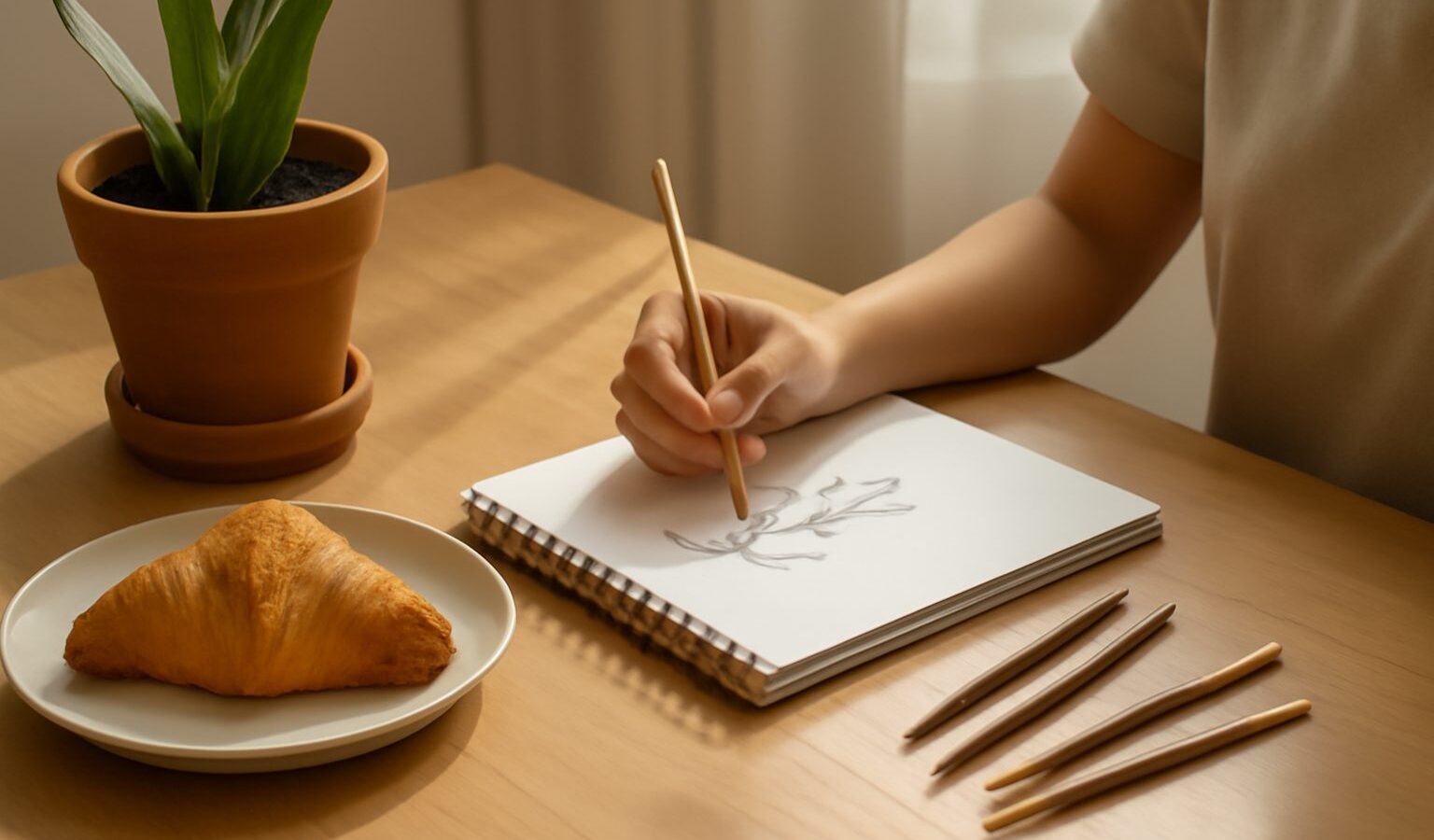
There is something quietly wonderful about putting a pencil to paper and watching a picture appear. Drawing is one of the cheapest, most portable hobbies you can pick up, and it is genuinely for everyone. If you have been curious about drawing and sketching in Singapore but told yourself you have no talent, this guide is for you. Talent is mostly practice in disguise, and you can start this very weekend with tools you probably already own. All you really need is a pencil, some paper, and a willingness to make a few wobbly lines.
This guide walks you through the small kit that gets you going, a handful of simple exercises, where to buy supplies locally, and how to keep your sketchbook happy in our humid climate. Take it gently and enjoy the process.
Why Drawing Is a Perfect Beginner Hobby
Drawing asks very little of you to begin. Unlike hobbies that need a dedicated room or costly gear, sketching fits into a bag, a lunch break, or ten quiet minutes before bed. It is HDB friendly and small space friendly by nature, because your whole studio is a sketchbook on your lap.
It is also a calming, screen free way to slow down. Focusing on the shape of a coffee cup or the curve of a leaf pulls your attention into the present moment, a bit like a moving meditation. You do not need to show anyone your work, and you do not need to be good. The only goal at the start is to enjoy making marks and to draw a little more often than you did last week.
Best of all, progress is visible. Flip back through a sketchbook after a month and you will see your lines grow more confident. Those small wins are what keep the hobby fun.
What You Need to Start
Keep your first kit small and cheap. A pile of fancy supplies can actually make a beginner freeze up. Here is a sensible starter list:
- Pencils. A basic HB pencil is fine to begin. If you want a small range, a set with 2H, HB, 2B and 4B gives you light to dark shading. A mechanical pencil is great for fine lines.
- A sketchbook. An A5 book is easy to carry. Plain cartridge paper suits pencil work. Save textured watercolour paper for later.
- An eraser. A soft kneadable eraser lifts graphite gently, and a plastic eraser handles sharper corrections.
- A sharpener or a craft knife, and a small pencil case.
- Optional extras once you are hooked: fineliner pens for ink sketches, a few grey brush pens, and a clip to hold pages open outdoors.
That is it. You can begin with a single pencil and printer paper and upgrade only when a real limit annoys you. Starting cheap is not a compromise; it is the smart way in.
Simple Exercises to Build Your Eye
Skill in drawing comes from learning to see, not from a magic hand. These beginner exercises train your eye and hand together. Try a few most days, even for ten minutes.
- Line warm ups. Fill a page with straight lines, circles and ovals. Loose, repeated shapes loosen your wrist and build control.
- Contour drawing. Pick a simple object like your keys or a mug. Draw its outline slowly without lifting the pencil, looking at the object more than the page.
- Blind contour. Same idea, but do not look at the paper at all. The results are funny and wonky, and they teach your eye to really observe.
- Basic shapes first. Break any subject into circles, boxes and cylinders, then refine. A cup is a cylinder; a face is an egg. This stops you from feeling overwhelmed.
- Shading a sphere. Draw a circle, pick a light direction, and shade from dark to light. This one lesson makes drawings look solid and three dimensional.
- Daily object sketch. Sketch one everyday thing a day: your breakfast, a shoe, a plant. Small and finished beats big and abandoned.
Do not chase perfect results. A page of honest attempts teaches you more than one careful masterpiece you fuss over for hours.
Choosing a Sketchbook and Pencils for Your Style
Different drawers enjoy different tools, so it helps to know what suits you before you spend. The table below compares common beginner setups so you can pick a starting point. Treat any figures as rough, illustrative bands only and check the shop for current prices.
| Setup | Best for | Rough cost band | Notes |
|---|---|---|---|
| Single HB pencil and printer paper | Total beginners testing the waters | Budget | Almost free; perfect for daily practice |
| Small graded pencil set and A5 sketchbook | Regular practice and shading | Budget to mid | The classic all rounder starter kit |
| Fineliner pens and a mixed media sketchbook | Ink and urban sketching outdoors | Mid | Pens dry fast and travel well in humidity |
| Graphite set, blending stumps and quality paper | Detailed, realistic pencil work | Mid to premium | Buy once you know you enjoy the hobby |
Start on the top rows and move down only as your interest grows. There is no prize for owning the most expensive kit, and beginners often draw more freely on cheap paper because a mistake feels low stakes.
Where to Buy Supplies and Learn in Singapore
You are spoilt for choice locally. Art Friend, with branches at malls including Bras Basah Complex and Takashimaya, is the go to for pencils, sketchbooks and pens across every budget. Bras Basah Complex itself is an art supply treasure trove, with several shops worth a slow browse. Popular bookstores and Daiso carry cheap pencils, erasers and notebooks that are perfect for practice. Spotlight stocks paper and mixed media supplies, and online marketplaces are handy for restocking specific brands.
For learning, community centres and CCs run affordable art classes, and studios around the island offer beginner drawing and life drawing sessions; check each provider for current schedules and fees. If you prefer company, look for urban sketching groups that meet to draw around town at spots like Chinatown, Tiong Bahru and the Botanic Gardens. Free lessons on YouTube can carry you a long way too. Drawing along with a video is a low pressure way to build habits.
Whatever route you choose, the fastest progress comes from drawing regularly rather than from any one class.
Caring for Your Work in a Humid Climate
Singapore’s humidity is tough on paper. Sketchbooks left in a damp cupboard can grow foxing, those brown spots, or turn wavy and soft. Store finished work flat in a dry spot, and consider a box with a silica gel sachet or two, refreshed now and then, for pieces you want to keep. A small dehumidifier or an air conditioned room helps a great deal.
If you sketch outdoors, remember the heat. Draw in shaded spots, keep water handy, and go early morning or late afternoon when the light is kind and the glare is gentler on your eyes. Ink pens can be smudgy in sweaty hands, so a page of kitchen towel is a humble but useful companion.
Explore More
Ready to add colour or go further? If pigment tempts you, our guide to getting started with watercolour painting is a natural next step. Prefer a screen and stylus? See digital art and illustration. And if you love capturing what you see, you might also enjoy photography as a hobby.