
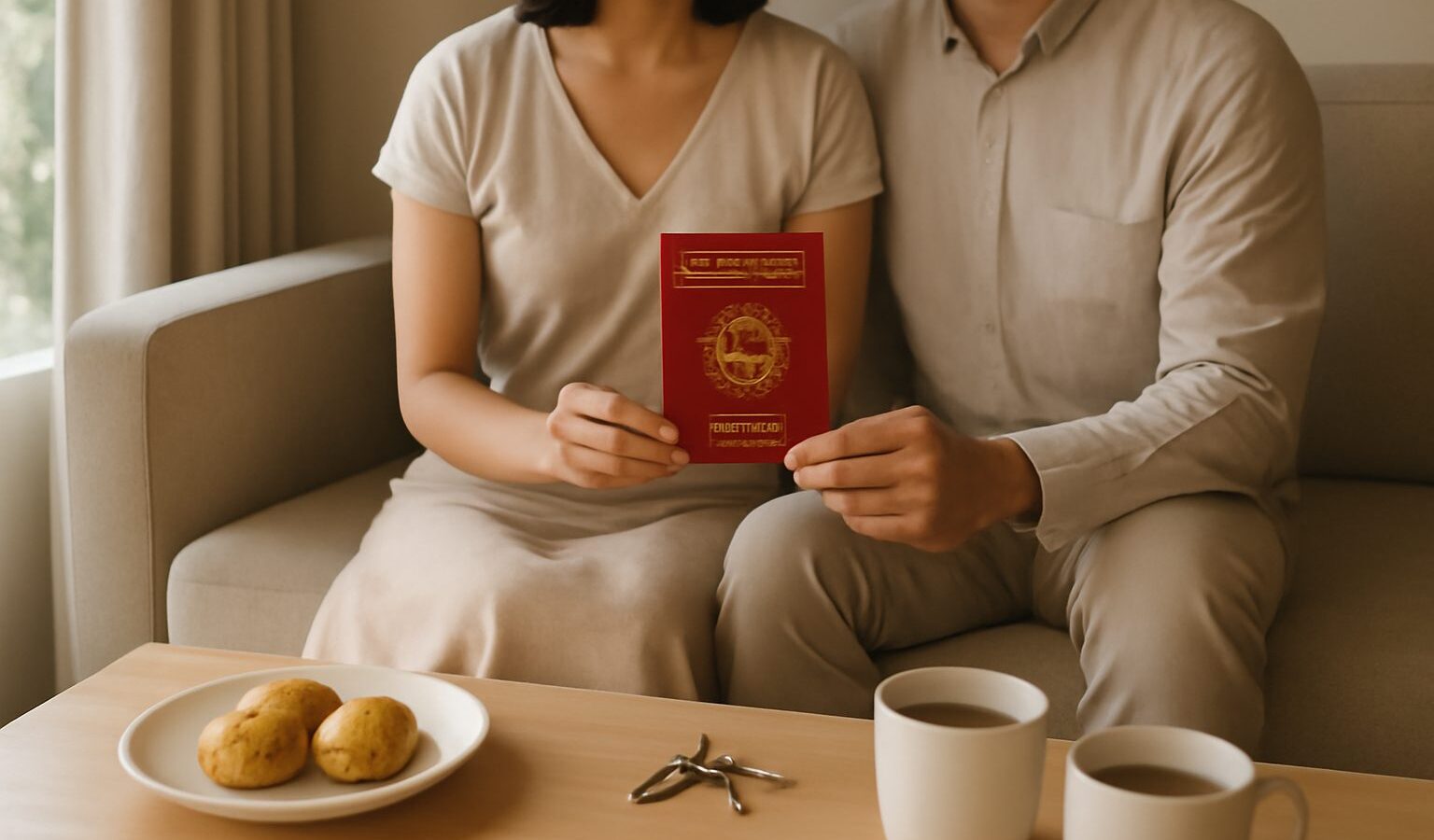
If you married in the mainland and then moved south, your red marriage booklet (结婚证, jiehun zheng) suddenly has to work in a new system. Whether you are applying for a dependant pass, adding a spouse to a permanent residence application, buying a home together or updating official records, using a China marriage certificate Singapore-side means getting it read, trusted and accepted by the right body. This guide walks through when the certificate is needed, how Singapore recognises a foreign marriage, the translation and authentication steps, and the mistakes that slow couples down. Rules on both sides change, so treat this as general information, not legal advice, and confirm current requirements before you rely on anything.
When your China marriage certificate matters here
A marriage registered in China is generally treated as a validly contracted marriage, but many Singapore processes still ask you to produce and sometimes prove it. You are most likely to need the certificate for:
- A Dependant’s Pass or Long-Term Visit Pass for a spouse, assessed by MOM or ICA
- A permanent residence or citizenship application that includes your spouse
- Housing matters, since a couple’s eligibility for certain HDB flats and schemes depends on marital status
- CPF nominations, insurance, banking and employer benefits that recognise a spouse
- Registering the birth of a child, where the parents’ marital status is recorded
Each of these bodies sets its own evidence standard. Some want to see the certificate with a certified translation, others want it authenticated for cross-border use. As always, ask the organisation what it needs before you spend on translation or legalisation.
How Singapore recognises a marriage registered in China
Singapore does not re-register your China marriage. Instead, when a marriage was validly contracted under the law of the place where it happened, it is generally recognised here for official purposes, subject to each authority’s own checks. In practice that means you are proving two things: that the marriage exists, and that the document you hold is genuine.
That is why the paperwork chain matters. A Singapore officer cannot read a Chinese-language booklet at face value, nor take an unverified copy on trust. The two layers below bridge that gap.
Translation and authentication, step by step
Certified English translation. The certificate and any accompanying record are in Chinese, so most Singapore bodies want a certified English translation with a signed certificate of accuracy from a professional translation company. Confirm whether the receiver accepts a translation prepared in Singapore or wants one done and notarised in China.
Authentication or legalisation. For the document to carry official weight across the border, it may need authentication. China has joined the Apostille Convention, so for many documents an apostille from the competent Chinese authority can replace older multi-step consular legalisation. Whether you need an apostille, embassy authentication, or only a certified translation depends on who is asking. Confirm the exact chain with the receiving Singapore body and with the Chinese Embassy or Consulate in Singapore.
The marriage certificate translation record (结婚证公证书). Some couples obtain a notarised certificate from a Chinese notary office that packages the original details, a translation and authentication together. This is often the cleanest format for overseas use, but only if the Singapore receiver accepts that form.
Comparison: what different Singapore bodies typically look for
| Situation | Body involved | What is usually asked | Extra step often needed |
|---|---|---|---|
| Dependant’s Pass for spouse | MOM | Marriage certificate plus English translation | Authentication if requested |
| PR or citizenship with spouse | ICA | Marriage certificate and supporting records | Certified translation, sometimes authentication |
| HDB flat eligibility | HDB | Proof of marital status | Certified translation of the certificate |
| Registering a child’s birth | ICA | Parents’ marital status evidence | Translation, and authentication if asked |
Treat this as a general map rather than a rulebook. Requirements differ by case and change over time, so verify the live checklist with each body directly.
Practical tips that save couples time
- Start from the receiver’s checklist. Ask MOM, ICA, HDB or your employer exactly what they accept before ordering translations. This avoids paying for authentication you do not need.
- Keep names consistent. The English spelling of both spouses’ names on the translation should match your passports exactly, and Chinese names should match your identity records.
- Mind validity and versions. If your booklet is old or worn, or if a name has changed, ask whether a fresh notarised extract is preferable.
- Order enough sets. If several bodies each want an original set, request multiple certified copies up front rather than repeating the process.
- Keep the full bundle together. Retain the original booklet, the certified translation and any apostille or authentication as one package, with spare copies.
- Plan around timelines. Authentication and any China-side steps can take days or weeks, so begin early if you have a pass or housing deadline.
If a spouse is joining you here, it is worth reading up on the wider journey of settling in, since the marriage certificate is usually one item in a larger relocation folder.
Divorce, remarriage and sensitive cases
Marital records are personal, and Singapore bodies will treat them factually. If you were previously married, a body may ask for a divorce decree (离婚证 or court judgment) with the same translation and authentication treatment. If names or details differ across documents, prepare a short explanation and supporting records rather than leaving the officer to guess. There is no need for anxiety here: mismatched spellings and old booklets are routine, and are resolved with the right certified paperwork.
A note on accuracy
This article explains how using a China marriage certificate generally works in Singapore and the factors involved. It does not quote specific fees, processing times, thresholds or eligibility figures, because these differ by case, by city and over time, and rules on both sides of the border change. Before you act, verify the current Singapore-side requirements with the body concerned, such as ICA, MOM or HDB, and verify the China-side procedure, translation format and authentication with the Chinese Embassy or Consulate in Singapore or the relevant Chinese authorities. This is general information, not personalised legal advice.
Explore more
For the document mechanics, see our guides to translating and notarising Chinese documents in Singapore and apostille and document legalisation between China and Singapore. If your marriage is part of a family move, our PR application tips for Chinese nationals and the guide to registering your China-born child in Singapore cover the next steps, and China Embassy consular services in Singapore explains who to contact.