
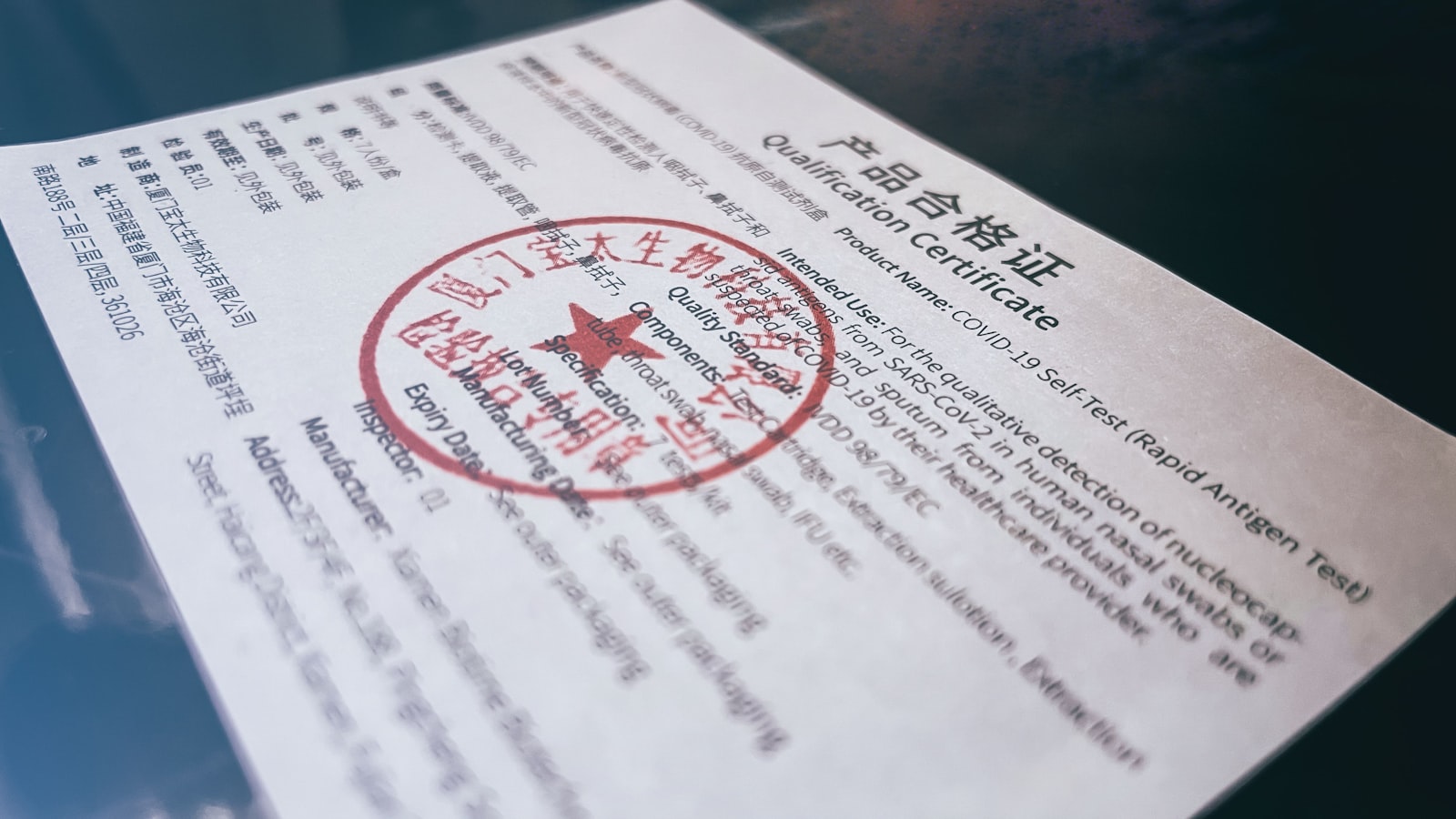
When you move from China to Singapore, sooner or later an official asks for your birth certificate, marriage certificate or degree in English, and you have to translate Chinese documents Singapore-side before they will be accepted. This guide explains certified translation, notarisation and legalisation, who does each step, and the usual order to do them in. Requirements change and every organisation is different, so always confirm the exact details with the receiving organisation and the relevant authority before you pay for anything.
Which documents usually need translating
Most China-issued personal records are in Chinese only, so a Singapore agency, employer or school cannot read them as they are. Documents newcomers most often need in English include:
- Birth certificate (出生证明) and household registration (户口本)
- Marriage certificate (结婚证) or divorce decree
- Academic transcripts, diplomas and degree certificates
- Police clearance / certificate of no criminal record (无犯罪记录证明)
- Bank statements, employment letters and professional licences
The organisation that asks for the document decides what standard of translation it will accept. A school admissions office, the Immigration and Checkpoints Authority (ICA), a bank and a professional registration board may each set different rules, so always ask them first.
The three things people confuse: translation, notarisation, legalisation
These are separate steps with separate purposes. You may need one, two or all three.
- Certified translation turns the Chinese text into English and attaches a signed statement that the translation is accurate and complete. In Singapore this is normally done by a professional translation company that provides a certificate of accuracy on its letterhead, with the translator’s signature and company stamp.
- Notarisation is when a notary public verifies signatures or certifies that a copy is a true copy of the original. A notary does not usually check the quality of the translation itself. Notaries public in Singapore are appointed under the Notaries Public Act, and the Singapore Academy of Law (SAL) oversees notarial services and authenticates notarised documents.
- Legalisation or authentication is the extra layer that makes a document valid for use across borders. For documents that will be used in another country, or foreign documents used here, this can involve the SAL, the Ministry of Foreign Affairs and, for China-issued documents, the Chinese Embassy or a Chinese consular office.
Who does what
Professional translators and translation companies. For an English translation that a Singapore body will accept, use an established translation company that issues a signed certificate of accuracy. Some organisations accept translations only from named or approved providers, so check the accepted list before you order.
Notaries public. A notary public is a senior lawyer appointed to witness signatures and certify true copies. You would see a notary when the receiving party wants proof that a copy matches the original, or that you signed a document in person.
Singapore Academy of Law (SAL). The SAL runs the authentication service that verifies a Singapore notary’s signature and seal. If your notarised document is going overseas, this is often the next step after notarisation.
Ministry of Foreign Affairs and foreign missions. Depending on the destination country, a document may also need a foreign embassy’s involvement. Since Singapore and China have their own consular arrangements, the exact chain for a China-bound or China-issued document should be confirmed with the mission concerned.
Chinese Embassy and consular services. For documents issued in China that need to carry official weight in Singapore, or Singapore documents you will use back in China, the Chinese Embassy’s consular section handles the China-side authentication. Note that China now uses the Apostille Convention for many documents, which can replace the older multi-step consular legalisation. Check the current position with the embassy.
The general sequence
Every case differs, but a common order looks like this:
- Ask the receiving organisation exactly what they need: a certified English translation only, or a notarised copy, or full legalisation.
- Get a certified English translation from a professional translation company.
- If notarisation is required, take the original plus the translation to a notary public.
- If the document must cross borders, arrange SAL authentication and any embassy or apostille step.
- Submit the finished set to the organisation that asked for it, and keep copies of everything.
Starting from the receiving organisation’s checklist saves you from paying for steps you do not need.
Comparison table: the three steps at a glance
| Step | What it proves | Typically done by | When newcomers need it |
|---|---|---|---|
| Certified translation | The English version is accurate and complete | Professional translation company | Almost always, since China documents are in Chinese |
| Notarisation | Signatures are genuine or a copy is a true copy | Notary public (senior lawyer) | When the receiver wants verified originals or copies |
| Legalisation / apostille | The document is valid for cross-border use | SAL, MFA, Chinese Embassy or apostille authority | When the document is used overseas or issued abroad |
Practical tips before you start
- Bring the original document, not just a scan, because notaries and some receivers must see it.
- Keep names consistent. Make sure the English spelling of your name on the translation matches your passport exactly.
- Ask about validity. Some bodies want a police clearance or bank statement issued within the last three or six months.
- Budget time. Legalisation and embassy steps can take days or weeks, so start early if you have a visa or enrolment deadline.
- Order enough certified copies. If several organisations each need an original set, ask for multiples up front.
Getting your paperwork in order is one of the first hurdles after arriving, alongside setting up digital access and banking. Treat the receiving organisation’s checklist as your single source of truth, confirm current fees and processing times with each authority, and you will avoid the most common and most expensive mistakes.
Explore more: Moving to Singapore from China · China Embassy consular services in Singapore · Singpass setup for Chinese newcomers