
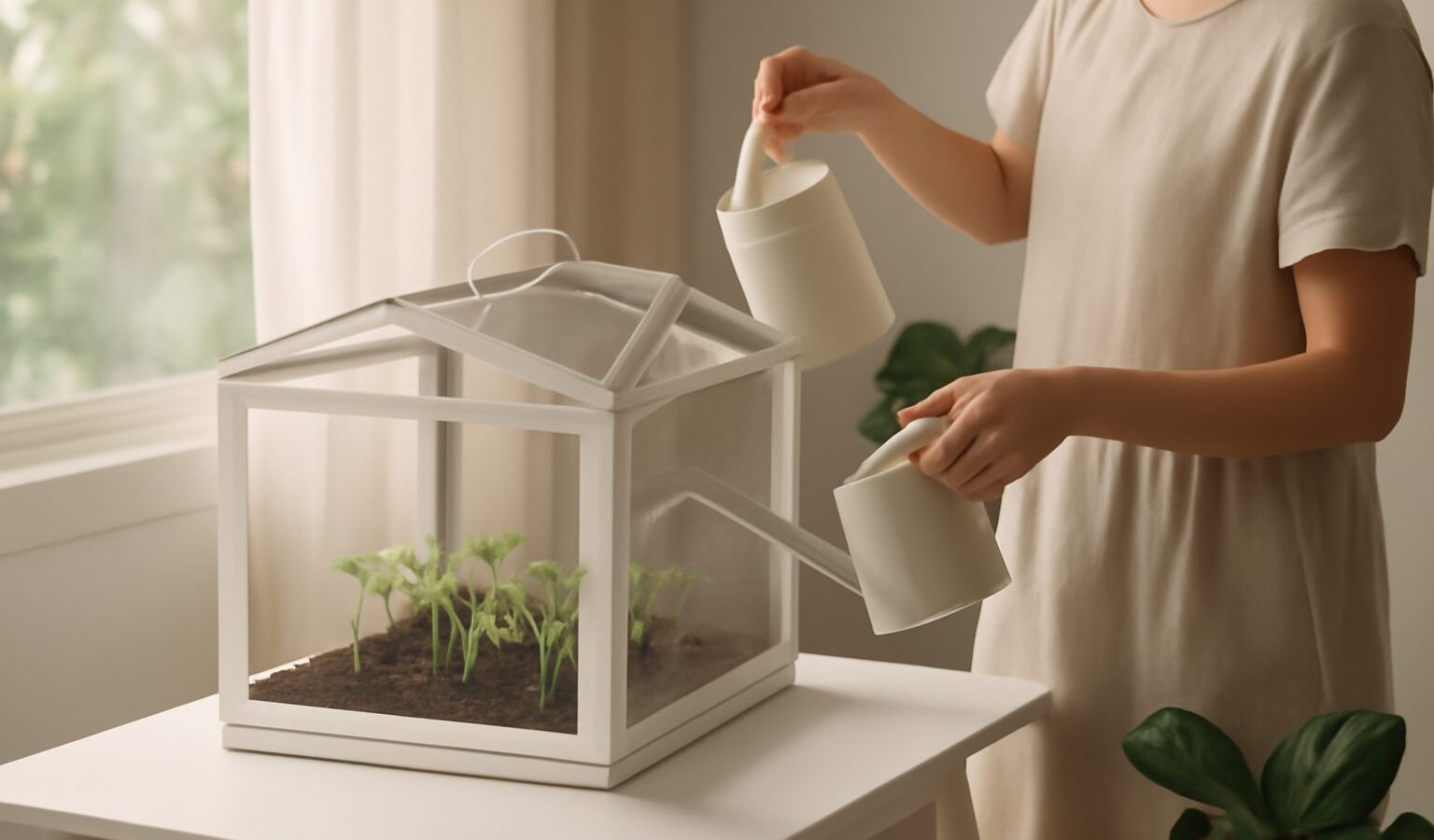
Setting up a mini greenhouse in Singapore might sound odd when we already live in a warm, humid climate, but these little structures earn their place for very different reasons than they do in cold countries. Here, a small greenhouse or a simple cloche is less about trapping heat and more about protecting tender plants from heavy monsoon rain, shielding fresh cuttings, raising humidity around fussy species, and keeping pests off your most vulnerable seedlings. Used thoughtfully on a balcony or by a window, they give small-space growers a controlled little pocket to nurse plants along.
What a mini greenhouse and a cloche actually do here
A mini greenhouse is usually a tiered rack wrapped in a clear zip-up cover, small enough to stand in a corner of an HDB balcony. A cloche is even simpler: a clear dome or an upturned plastic bottle placed over a single pot or seed tray. Both create a sheltered microclimate, but in our climate you are managing that microclimate to stay gentle rather than hot.
The practical wins are real. A cover keeps pelting rain from flattening delicate seedlings during a downpour, which matters a lot in monsoon season. It holds humidity around cuttings and moisture-loving plants so they do not dry out in a breeze. It forms a physical barrier against snails, caterpillars and other pests hunting for soft new growth. And it lets you keep a tray of germinating seeds tidy and undisturbed while they get going.
If you are raising plants from seed, pairing a cover with the advice in our seed starting for beginners guide gives young roots a calmer, steadier start.
The heat trap: our biggest risk
The single most important thing to understand about using a mini greenhouse in Singapore is that a sealed clear box under tropical sun becomes an oven very quickly. In cool climates the greenhouse effect is the whole point. Here it can scorch and steam your plants to death in an afternoon. So the golden rule is ventilation.
Keep these habits and you will avoid cooking anything:
- Never place a covered greenhouse in direct midday sun. Bright, indirect light or gentle morning sun is safer.
- Unzip the cover, or prop the cloche open, during the hottest hours so heat and stale air can escape.
- On a cloche made from a bottle, cut a few holes or leave the cap off for airflow.
- Watch for heavy condensation and constant fog, which is a sign it is too hot and wet inside.
- Open up fully on very sunny days and use the cover mainly for rain protection and humidity.
Trapped, stagnant, warm-wet air also invites fungal problems, so airflow does double duty. If you see fuzzy growth or damping-off in your seedlings, ventilate more and read up on dealing with mould and fungus on plants.
Getting the most from your setup
Think of the cover as a tool you use in bursts rather than a permanent home. Bring plants under it when they genuinely need shelter: newly potted cuttings, delicate seedlings, a recovering plant, or anything you want to keep dry through a wet week. Once a plant is sturdy and established, move it out into normal airflow so it toughens up rather than getting soft and leggy in coddled conditions.
A mini greenhouse is also handy for quarantining, giving you a contained spot to watch a new arrival before it joins your collection. Our guide to quarantining new plants to stop pests explains why that pause is worth it.
Keep the setup clean. Wipe down the cover between uses so old spores and algae do not build up, and make sure the frame is stable, because a light zip-up rack can topple in a strong balcony gust. Weigh the base down or tie it to a railing if wind is an issue.
Used with a light touch, a cloche or a small covered rack becomes a genuinely useful part of a Singapore grower’s kit: not for warmth, but for shelter, humidity and protection. Respect the heat, prioritise airflow, and these humble covers will help your tenderest plants get established before they face the full force of the tropics.