

Contracts are written to be precise, which often makes them hard for the rest of us to read. A tenancy agreement, an employment offer, an insurance policy or a set of terms and conditions can run to pages of dense clauses. It is tempting to paste the lot into a chatbot and ask, “What does this mean?” Using ai for contracts singapore can genuinely help you understand the gist of a document, spot terms you want to ask about, and feel less lost before an important conversation. But this is one of the areas where the warnings matter most, so let us be very clear from the start.
AI is not a lawyer, and it is not legal advice. It can misread clauses, miss the ones that matter, and sound completely confident while being wrong. For anything you are about to sign or that is legally binding, a qualified lawyer comes first. Treat AI as a way to prepare your questions, not as the authority on the answers.
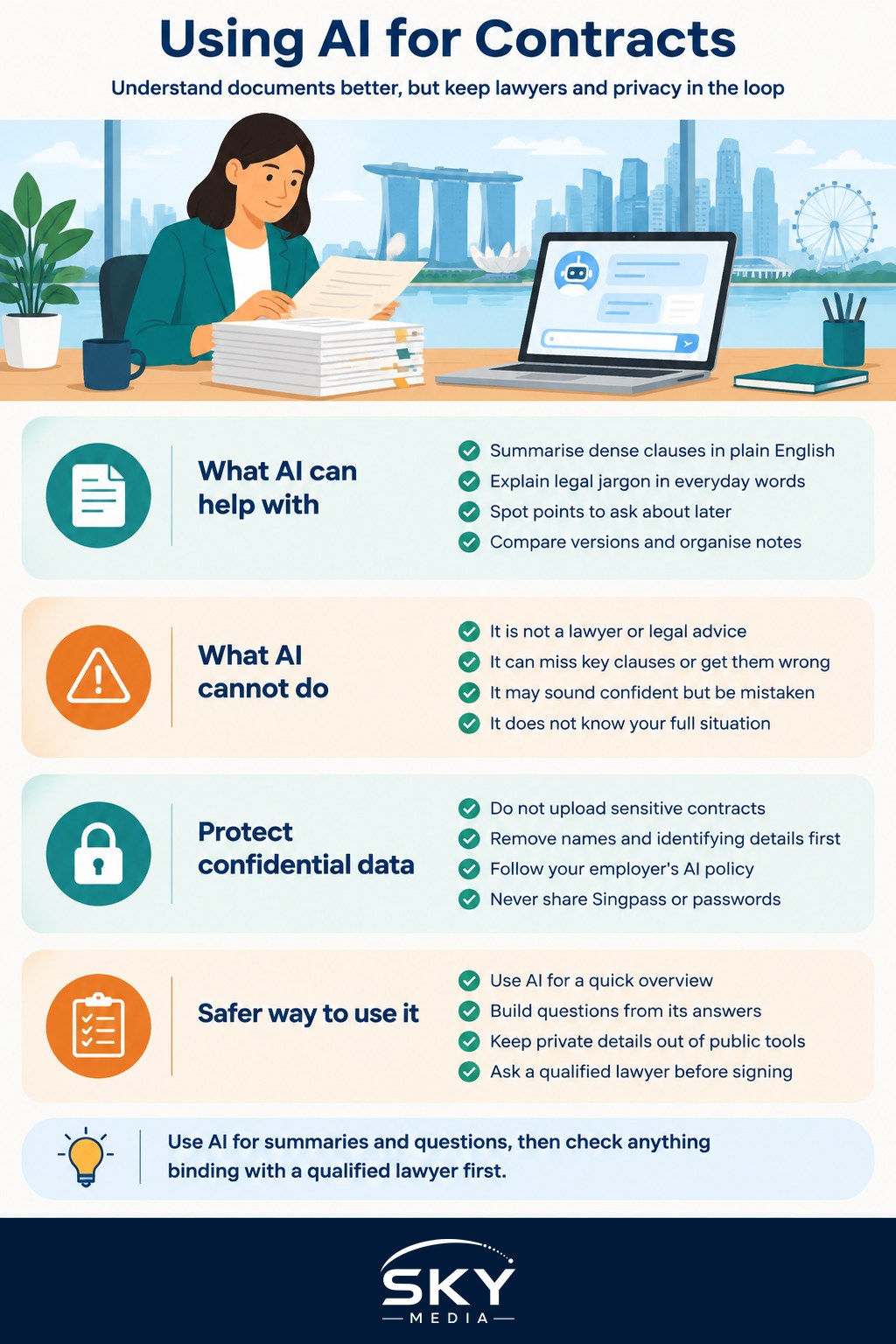
What AI can genuinely help with
Used with care, and for the right tasks, AI can make a dense document far less intimidating.
- Plain-English summaries. Ask it to explain a clause or a whole section in simple language. This helps you follow the general shape of a document you would otherwise skim and forget.
- Defining jargon. Terms like “indemnity,” “liquidated damages” or “force majeure” can be explained in everyday words so you at least know what you are looking at.
- Spotting things to ask about. You can ask, “What in this agreement should I pay attention to?” and use the reply as a checklist of questions for the other party or your lawyer.
- Comparing and organising. It can help you compare two versions of a document to see what changed, or organise your own notes and questions before a meeting.
Think of it as a study aid that helps you walk into the room informed, rather than a source of decisions.
Why AI is not legal advice
This is the heart of the matter. A contract is a legal instrument, and the consequences of misunderstanding it can be serious and expensive. AI has real limits that make it unsafe to rely on here.
It can hallucinate, meaning it can state things that are simply not true, a problem explained in AI hallucinations and fact-checking. It can misread a clause, invert the meaning of a “not,” or overlook a critical exclusion buried in the fine print. It does not know your specific situation, and it does not know current Singapore law or how a clause would be interpreted here. A summary that sounds reassuring can lull you into signing something you should have questioned.
So for anything binding, a lease, an employment contract, a loan agreement, a business deal or a settlement, consult a qualified lawyer before you sign. AI is a starting point that helps you understand and prepare. It does not replace professional legal advice, and you should never rely on it alone for a decision that carries legal or financial stakes.
Protect confidential information
There is a second serious risk here: privacy. A contract usually contains sensitive information, including names, identity details, addresses, salary figures, company secrets and financial terms.
Do not upload confidential contracts or documents to public AI tools. Once you paste content into a public chatbot, you may lose control over where that data goes and how it might be used, and you could be breaching confidentiality or a non-disclosure agreement without realising it. If a document is sensitive, keep it out of public tools entirely.
- Strip out the details. If you only need a clause explained in general terms, remove names, numbers and identifying details first, and ask about the wording in the abstract.
- Follow your employer’s policy. For work documents, check your company’s AI policy. Many organisations forbid putting internal or client material into public tools, and for good reason.
- Never share Singpass or passwords. No document analysis should ever involve typing your Singpass details, one-time passwords or banking credentials into a chatbot.
Our guides to protecting your data online and understanding app permissions and privacy go further into keeping sensitive information safe.
A safe way to use it
Here is a sensible routine that captures the benefit without the danger. Use AI to get a plain-English overview and to define the jargon, so you understand the general shape of the document. Ask it what to pay attention to, and build a list of questions from its answers. Keep confidential and identifying details out of public tools, and follow your workplace policy for anything work-related. Then, crucially, take your questions to a qualified lawyer before you sign anything binding, and verify anything important rather than trusting the AI’s word.
Used this way, AI turns an intimidating wall of legal text into something you can approach with confidence and good questions. It helps you understand, and it helps you prepare. The judgement, the decision and the legal safety net stay firmly with a human professional, which is exactly where a binding agreement deserves them to be.
Frequently Asked Questions
Can I use AI to compare my tenancy agreement against the standard terms? It can point out differences and flag clauses to question, but it may miss or misread them. Use its list as questions for your landlord or a lawyer. Never treat its comparison as confirmation that the agreement is fair or enforceable.
What should I check in an employment contract before signing? Look at job scope, pay and how it is calculated, probation, notice period, working hours, leave, and any restrictions on working elsewhere after you leave. MOM’s website explains key employment terms. If a clause worries you, ask HR or a lawyer to explain it.
Does AI help with contracts written in Chinese or other languages? It can translate and summarise, but translation errors can change the legal meaning of a clause. For a binding document, rely on a qualified lawyer or certified translator rather than AI, and keep the original language version as the reference.
How much does it cost to have a lawyer review a contract? Fees vary widely by the lawyer and the complexity, so ask for a quote up front. Some offer a fixed fee for a review. Compared with the cost of signing a bad agreement, a short consultation can be worth it.
What should I do if I signed a contract and now regret it? Read the document for any cooling-off or termination clause, and note any deadlines. Do not ignore it or stop performing without advice. Speak to a lawyer, or contact the relevant body such as MOM for work matters or CASE for consumer ones.
Further reading: Using AI to Summarise Documents and Articles