

By mid-afternoon in Singapore’s heat, roots that looked fine in the morning can turn flat and greasy. Dry shampoo is the quick fix many people reach for: a spray or powder that soaks up oil and buys you a fresher-looking day without a full wash. Used well, it saves time, spares your hair from over-washing and keeps a blow-dry going a little longer. Used carelessly, it leaves a chalky cast, dulls dark hair and lets buildup sit on the scalp. This guide covers how to use dry shampoo properly in a hot, humid climate, and when to skip it and just wash.
What Dry Shampoo Actually Does
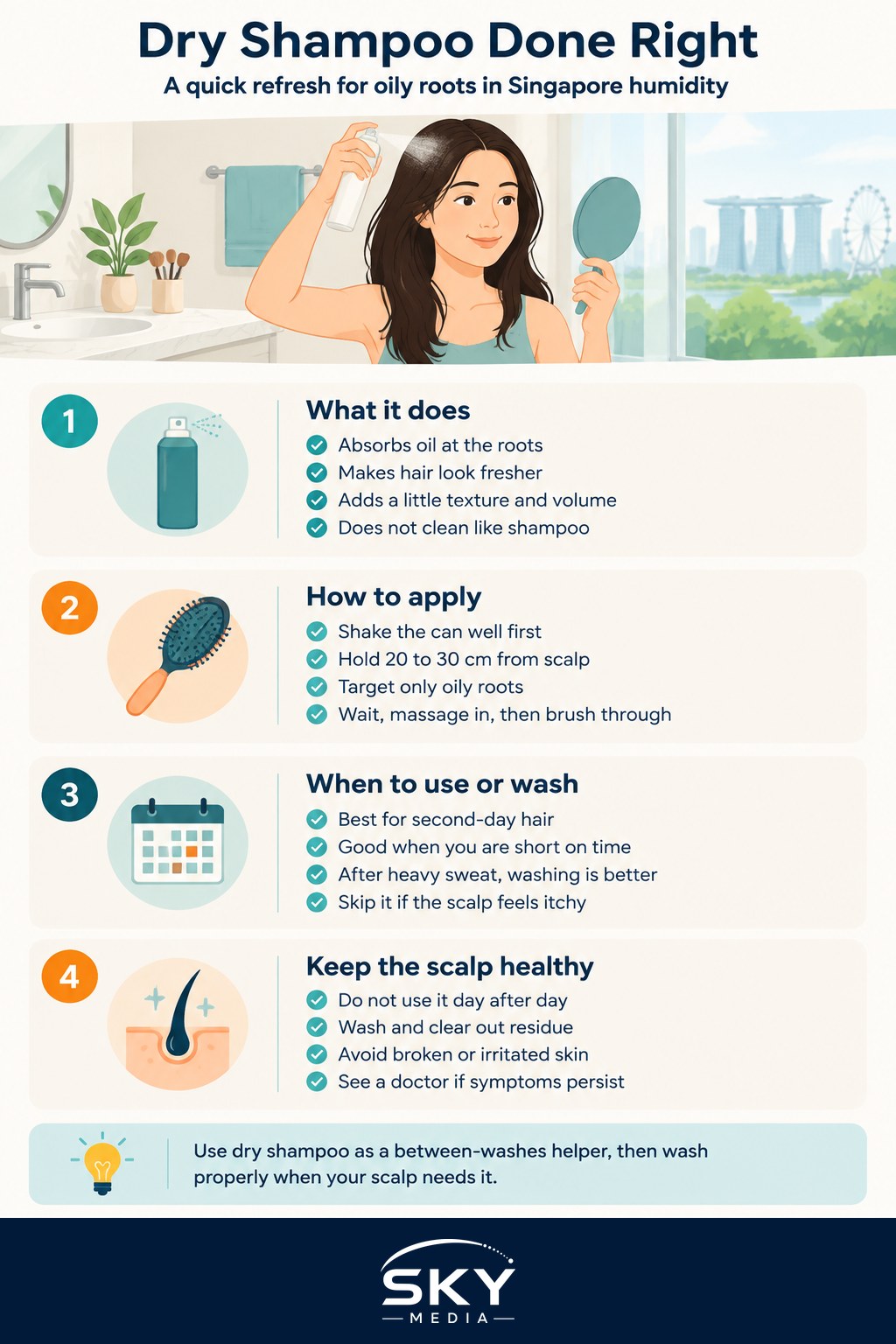
Dry shampoo does not clean your hair in the way water and shampoo do. It works by absorbing excess oil at the roots using starches or a light powder, so hair looks less greasy and feels lighter. It can also add a bit of texture and volume, which is handy for fine, flat hair. What it does not do is remove sweat, dead skin, product residue or the oil it has soaked up; all of that stays on your scalp until you wash it out.
That distinction matters most in Singapore. When you sweat through a commute or a workout, dry shampoo can mask the look of oily roots, but the sweat and salt remain. Think of it as a cosmetic refresh between washes, not a replacement for cleansing. It shines on a second-day or third-day head, or when you are short on time, rather than as a daily crutch.
Formats vary a little. Aerosol sprays are the most common and easy to distribute, while powders and pastes give more control and skip the propellant. Tinted versions exist for darker hair to reduce the white cast. Whichever you choose, the technique matters more than the format.
How to Apply It Without the Chalky Cast
Most dry shampoo problems come down to application, not the product. A few steps make the difference between fresh-looking roots and a powdery grey film.
- Shake an aerosol can well, then hold it about 20 to 30 centimetres from your scalp so the product lands as a fine mist, not a heavy dump.
- Section your hair and target only the oily roots, usually the crown, hairline and parting. Skip the lengths and ends, which are drier.
- Use less than you think. You can always add more, but too much is hard to fix.
- Wait a minute or two to let it absorb the oil before you touch anything.
- Massage it in with your fingertips, then brush through so no visible residue is left. This step is what banishes the chalky look.
- If you have dark hair, choose a tinted formula or apply at night so it settles by morning.
A light hand and proper blending are the whole game. Overdoing it is the single most common mistake, and it is far more obvious than slightly oily roots would have been.
Dry Shampoo vs Washing: When to Use Which
Dry shampoo is a tool for specific moments, not a substitute for cleansing. The table below sums up when each makes sense.
| Situation | Reach for dry shampoo | Better to wash |
|---|---|---|
| Oily roots, otherwise clean hair | Yes, quick refresh | Not urgent |
| After a heavy, sweaty workout | Only as a stopgap | Yes, rinse the sweat out |
| Scalp feels itchy, tight or flaky | No | Yes, and ease off dry shampoo |
| Second-day hair, busy morning | Yes, ideal use | Optional |
| Several no-wash days in a row | No, buildup accumulates | Yes, wash and reset |
The pattern is simple: dry shampoo is brilliant for stretching a good hair day, and poor as a way to avoid washing altogether. If your scalp is telling you it needs a wash, listen to it.
Keeping Your Scalp Healthy in the Humidity
The main risk with dry shampoo is letting product and oil pile up on a scalp that already deals with heat and sweat. Buildup can leave the scalp itchy, flaky or irritated, and clog things up in a way that is uncomfortable in our climate. A few habits keep it in check.
Do not stack day after day of dry shampoo without washing. Two or three refreshes between washes is reasonable for most people; beyond that, buildup outpaces the benefit. On the days you do wash, cleanse thoroughly at the scalp to clear out residue, and use a gentle clarifying wash occasionally if you rely on dry shampoo often. Always brush the product out rather than leaving it sitting, and avoid spraying directly onto broken or irritated skin.
Be sensible about sweat, too. On very hot, active days, a proper rinse beats masking, because sweat and salt left on the scalp help nobody. And if you notice persistent itching, flaking, redness, soreness or unusual shedding, ease off dry shampoo and see a doctor, dermatologist or pharmacist. Those can signal a scalp condition that needs proper care, and no styling product is a treatment. If a new formula stings or triggers a reaction, stop using it and patch test anything new on a small area first.
Making the Most of Dry Shampoo
Beyond rescuing oily roots, dry shampoo has a few genuinely useful tricks. A little at the roots of clean hair adds grip and volume, which helps fine hair that goes limp in humidity hold a style. It can extend a salon blow-dry by a day or two, saving your hair from extra heat and washing. It also helps updos and braids grip better when hair is freshly washed and slippery.
Keep your expectations realistic. Dry shampoo is a helper, not a hair-care routine on its own. Pair it with proper washing, gentle handling and a healthy scalp, and it earns its place in a Singapore bag or desk drawer for those afternoons when the heat gets the better of your roots. Used thoughtfully, it is one of the simplest ways to look put together on a busy, sticky day.
Explore More
Dry shampoo works best alongside good basics, so start with choosing shampoo and conditioner for your hair type and give your scalp regular care through hair oiling and scalp treatments. For the humid days when roots go flat fast, see our easy hairstyles for humid weather, and treat your lengths now and then with deep conditioning and hair masks.
Frequently Asked Questions
Can dry shampoo cause hair loss? Dry shampoo itself is not usually blamed for hair loss, but heavy buildup can irritate the scalp and leave it itchy or flaky. Wash properly between uses and brush it out. If you notice unusual shedding or a sore scalp, stop and see a doctor, dermatologist or pharmacist.
How do I use dry shampoo on dark hair without a white cast? Choose a tinted formula, spray from a distance, and use only a little. Apply it at night so it settles by morning, then massage and brush it through. Leaving it to absorb for a minute or two before touching your hair also helps.
Can dry shampoo add volume to clean hair? Yes, a little at the roots of clean hair adds grip and texture, which helps fine hair hold a style in humidity. It can also help braids and updos stay put on slippery, freshly washed hair. Keep the amount small.
Is aerosol dry shampoo better than powder? Neither is better overall, since technique matters more than the format. Aerosol sprays are easy to spread, while powders and pastes give more control and avoid the propellant. Pick the one you find easiest to apply lightly.
Can I use dry shampoo after a sweaty workout instead of washing? Only as a short-term stopgap. Dry shampoo absorbs oil but leaves sweat and salt on your scalp, so a proper rinse or wash is better after a hot, active session. Save dry shampoo for second-day hair or busy mornings.
Further reading: Clarifying Shampoo and Product Buildup