

For most households here, the family flat is the single biggest asset they own. So it is natural to ask whether that value can help pay for the years after you stop working. Thinking about home equity retirement singapore means looking at how the money tied up in your property could be turned, at least in part, into income or cash to support your later years. This guide explains the common ways people do that and the trade-offs involved, so you can approach the decision with clear eyes.
This is general information, not financial advice, and it is not personalised to you. Property rules and scheme details change over time and depend on your specific flat and circumstances. Defer to the official details from HDB and CPF, and consider speaking to a licensed, MAS-regulated financial adviser before acting.
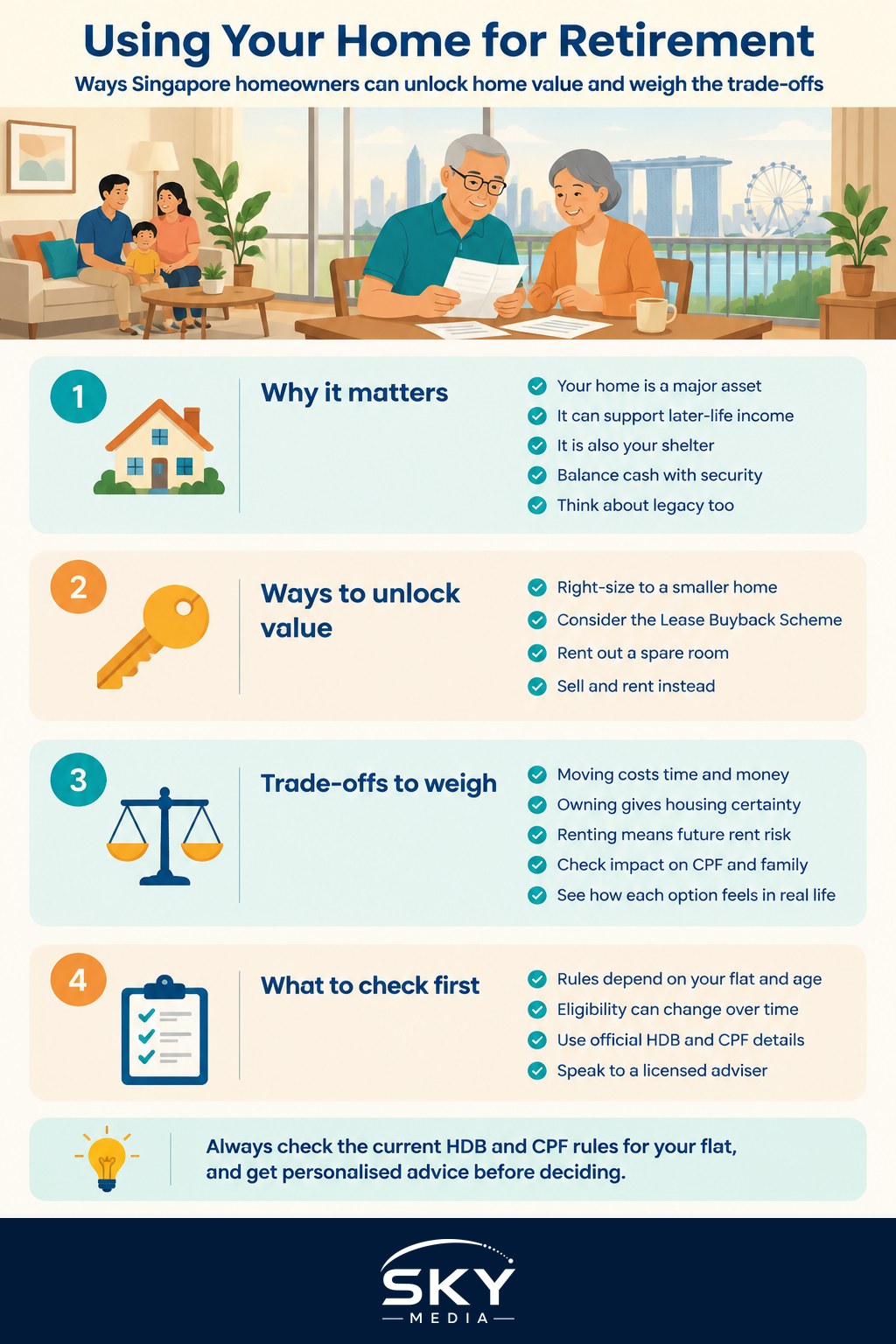
Why your home is part of the retirement picture
A home does two jobs at once. It is a place to live, and it is a store of value that has usually grown over the years you have owned it. During your working life, that second job stays in the background. As retirement approaches, some people start to wonder whether they can unlock a portion of that value without giving up a secure place to stay.
The tension is real. Your home is also your shelter, and the emotional weight of the family flat is not something a spreadsheet captures. Any plan to draw on it has to balance the money you might free up against the lifestyle, security, and legacy you want to keep. There is no single right answer, and what suits one household may not suit another.
Common ways people unlock home value
There are several broad approaches, and the ones available to you depend on your flat type, age, and eligibility under the official rules. Treat the following as a map of the landscape rather than a recommendation of any one route.
Right-sizing to a smaller or cheaper home
One of the most straightforward approaches is to move to a smaller or less expensive home and free up the difference. If you have raised a family in a larger flat and the children have moved out, a smaller unit may suit your needs while releasing some cash. This is sometimes called right-sizing. It can also lower your running costs, since a smaller home often means smaller bills. The trade-offs include the effort and cost of moving, leaving a familiar neighbourhood, and adjusting to less space. Some public schemes are designed to support older owners who right-size, so check the current official details before assuming what applies to you.
The HDB Lease Buyback Scheme
For eligible older flat owners, the HDB Lease Buyback Scheme lets you sell part of your flat’s remaining lease back while continuing to live in it. The proceeds are used in a way set out by the scheme to help provide retirement income, with a portion typically going towards your CPF retirement savings. Because the exact eligibility, the way proceeds are handled, and the age requirements are set by HDB and can change, do not rely on figures you read second-hand. Go to the official HDB and CPF sources for the current rules and check whether your flat qualifies.
Renting out a room or space
Some owners choose to rent out a spare bedroom, if the rules for their flat allow it, to generate ongoing income while staying in their home. This keeps you in place and can suit people who are comfortable sharing their space. Being a landlord comes with responsibilities, including a proper tenancy agreement and declaring rental income, so make sure you understand the obligations first. Eligibility to rent out a room or a whole flat is governed by the official rules, which you should verify.
Selling and renting instead
A more decisive option is to sell the home entirely and rent a place to live, converting the full value into cash and investments. This frees the most money but gives up the security of owning your home and exposes you to future rent. It is a significant step that suits some situations and not others.
The trade-offs to weigh
Whichever route you consider, the same questions recur. How much certainty of housing do you want for the rest of your life? How would drawing on your home affect what you leave to family, if that matters to you? How does the cash or income released fit with your CPF savings, any pension arrangements, and your overall plan? And how would each option feel in practice, not just on paper?
It usually makes sense to see your home as one part of a broader retirement plan rather than the whole of it. Your CPF savings, any investments, and your expected spending all belong in the same picture. Reading up on how to plan for retirement in Singapore and how to know if you’re on track for retirement can help you see where your home fits. Understanding CPF LIFE matters too, since some options interact with your CPF retirement savings. And if you are still weighing whether to own or rent your home in the first place, rent vs buy your home in Singapore covers that ground.
The practical wrap-up
Your home can play a part in funding retirement, but it is a decision to make slowly and with good information. Map out the options that actually apply to your flat and age, from right-sizing to the Lease Buyback Scheme to renting out space, and weigh the money released against the security and legacy you want to keep. Because the rules and figures change, always check the current details directly with HDB and CPF, and consider getting personalised guidance from a licensed adviser. Done thoughtfully, unlocking some home value can add flexibility to your later years without giving up more than you are comfortable to lose.
Official sources: HDB