
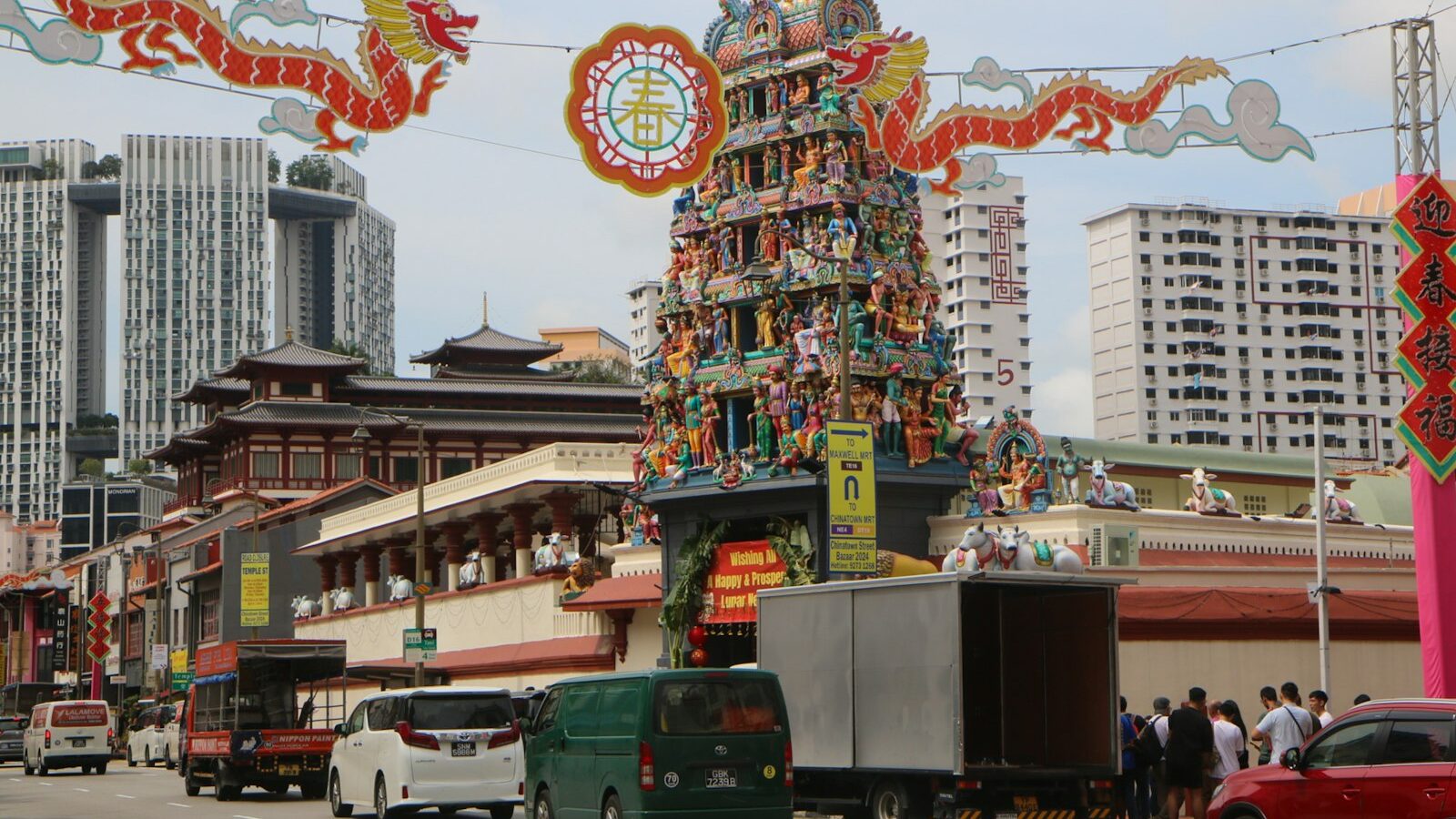
Singapore’s temples are among its most beautiful and welcoming spaces, from Chinese temples wreathed in incense to colourful Hindu temples and serene Buddhist halls. Many are happy to receive respectful visitors, and stepping inside is one of the loveliest ways to understand the island’s multiracial heart. Good temple worship etiquette is mostly common sense and kindness: arrive as a guest, dress modestly, keep quiet, and follow whatever the venue asks. This guide gathers the practical courtesies that help a newcomer feel at ease, whether you are there to look, to learn, or simply to accompany a friend. When in doubt, watch what regulars do and take your lead from them.
Arriving as a welcomed guest
The single most useful idea is to think of yourself as a guest in someone’s spiritual home. Temples are active places of worship first and sights second, so people come to pray, to grieve, to give thanks and to mark important moments. Entering quietly, keeping your voice low and switching your phone to silent all signal respect from the moment you arrive.
Move gently and give worshippers room. Do not walk between a person and the altar they are facing, do not touch statues, offerings or ritual items unless you are invited to, and step around anyone who is praying, bowing or making an offering. If a ceremony is under way, stay to the side and simply observe. None of this requires you to share the faith. It only asks that you honour the people for whom the space is sacred.
Dressing modestly
Modest dress is welcomed at every temple and expected at many. As a general guide, cover your shoulders and knees, and avoid very short shorts, low-cut tops, or revealing clothing. Comfortable, respectful clothes that you can move easily in are ideal, especially since you will often be removing your shoes.
Some temples, particularly Hindu and certain Buddhist ones, may provide a shawl or sarong at the entrance for anyone who needs to cover up, though it is best not to rely on this. Dressing modestly before you go is the simplest way to avoid any awkwardness at the door. If you are visiting several temples in a day, a light scarf in your bag is a handy way to adjust your cover as needed.
Shoes, incense and offerings
Footwear customs vary by faith, so it pays to look before you step. At Hindu temples you remove your shoes before entering, usually leaving them on racks or shelves at the entrance, and you may also be asked to wash or rinse your feet. Many Buddhist temples and prayer halls ask you to remove shoes before entering carpeted or inner areas. At many Chinese temples you can keep your shoes on in the main courtyard, though inner shrine rooms may differ. When you see a row of shoes at a threshold, that is your cue.
Incense, or joss sticks, is central to Chinese and some Buddhist worship, and you are often welcome to offer some if you wish. Offerings of fruit, flowers and food are common too. A few gentle pointers help.
- If you would like to offer joss sticks, watch how others light and hold them, usually with both hands, and place them in the main urn or censer.
- Step forward to pray or bow after the person ahead of you has finished, rather than crowding the altar.
- Do not take, touch or sample food and fruit offerings; they are meant for the deities and are later shared by the community.
- Follow any direction of movement, such as walking clockwise around a shrine, that regulars are observing.
- If you do not wish to take part in any ritual, that is completely fine. Quiet, respectful observation is always welcome.
Photography and quiet conduct
Temples are often stunning, and photography is frequently allowed, but manners matter more than the picture. Always look for signs, and where photography is restricted, put your camera away without exception. Even where photos are permitted, never photograph people at worship without asking first, and never let a phone or camera intrude on a ceremony, a grieving family or a private moment of prayer.
Keep flash off, stay out of the way of worshippers to get a shot, and do not pose playfully with statues or altars, which can cause real offence. A simple, friendly rule covers most situations: people before pictures. If you are unsure whether something is acceptable, ask a temple attendant, who will usually be glad to guide a respectful visitor.
A quick do and do not
The table below sums up the essentials for a comfortable, respectful first visit.
| Situation | Do | Do not |
|---|---|---|
| Dress | Cover shoulders and knees | Wear revealing or beachy clothing |
| Footwear | Remove shoes where others do | Stride into shoe-free areas in footwear |
| Photography | Ask before photographing people | Use flash or shoot during rituals |
| Offerings | Observe, join in only if invited | Touch or take food and fruit offerings |
| Conduct | Speak softly, phone on silent | Point feet at altars or block worshippers |
One small note that surprises some newcomers: in many Asian traditions the soles of the feet are considered lowly, so avoid pointing your feet towards altars, deities or people at prayer, and sit or stand accordingly.
Visiting with curiosity and care
Beyond the practicalities, the warmest thing you can bring is genuine interest. Many temples run open days, festival celebrations and heritage tours where newcomers are actively welcomed, and volunteers are often delighted to explain the deities, the customs and the history. Making a small donation where a donation box is provided is a kind gesture, though never an obligation.
If your visit sparks curiosity about the beliefs behind what you see, you can read more about Taoist deities and their festivals in Singapore or, for Hindu temples specifically, praying at a Hindu temple in Singapore. To understand the folk traditions that often accompany temple life, the Chinese almanac tong shu in Singapore is a natural next read.
Approached as a respectful guest, a temple visit is welcoming, moving and quietly joyful. Dress with care, follow the venue’s rules, put people before photographs, and let curiosity guide you. Do that, and you will find Singapore’s temples open their doors, and often their stories, with real warmth.