
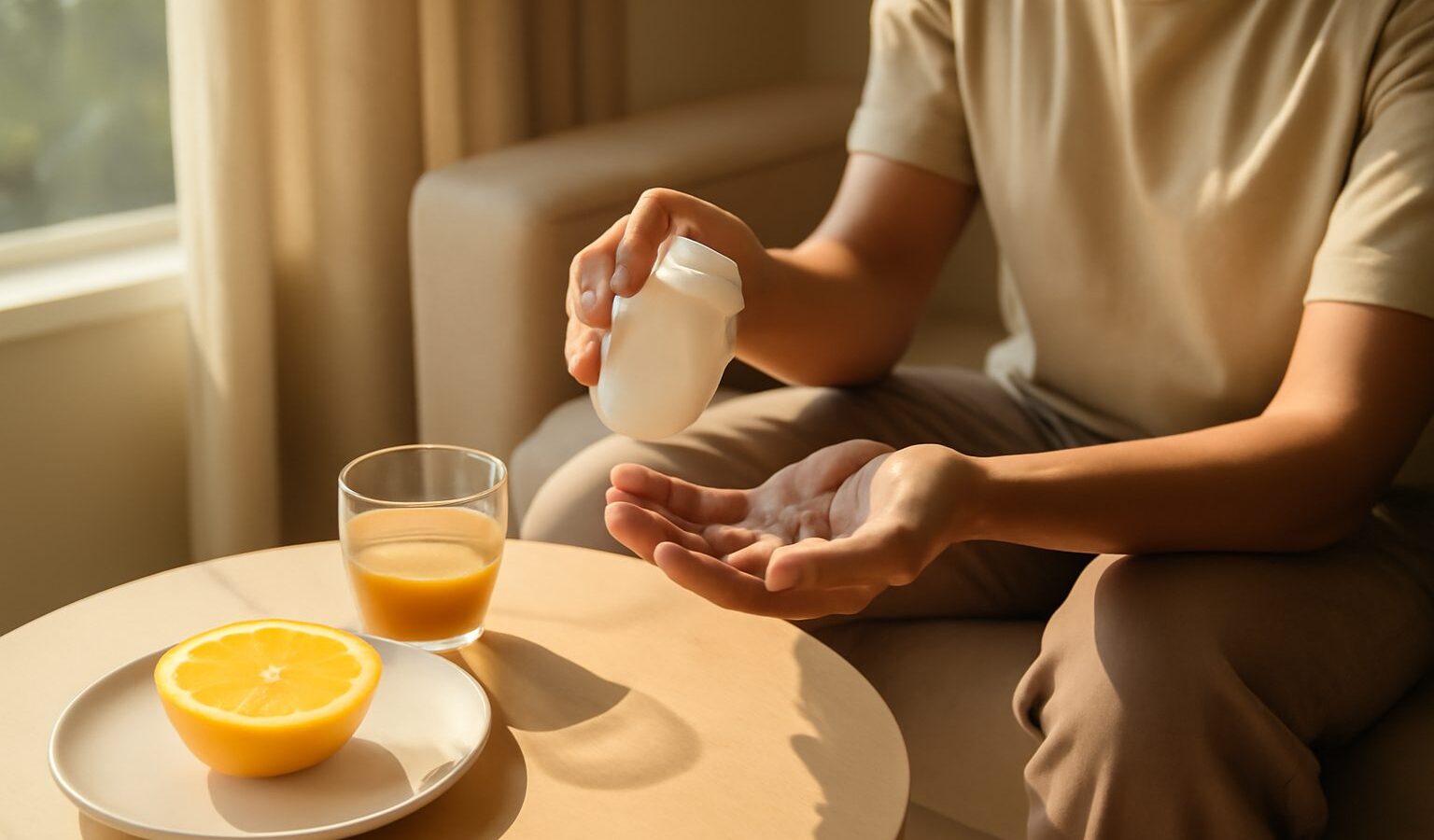
It seems almost ironic. We live in one of the sunniest places on earth, yet many people wonder whether they are getting enough vitamin D. Singapore is warm and bright all year round, but modern life often keeps us indoors, moving from air conditioned homes to offices to malls with barely a moment in direct sunlight. This guide looks at what vitamin D does, why an indoor lifestyle can matter, and sensible ways to look after your levels.
First, an important note. This article is general information only, not medical or dietitian advice. Vitamin D is a topic where individual needs vary a great deal, so please do not use this as a reason to start supplements on your own. If you are concerned about your levels, speak to a doctor, who can advise you and, if needed, arrange a blood test.
What Vitamin D Does
Vitamin D is often called the sunshine vitamin because your skin makes it when exposed to sunlight. It plays several quiet but important roles in the body. It helps you absorb calcium, which supports healthy bones and teeth. It also plays a part in muscle function and in the normal working of your immune system.
When someone is low in vitamin D over a long period, it can affect bone strength and general wellbeing. This is why the vitamin gets so much attention, especially for growing children and older adults, whose bones need particular care. The good news is that, for most people, keeping levels healthy is quite achievable with a few simple habits.
The Indoor Lifestyle Puzzle
Here is the part that catches many people out. Living in a sunny country does not automatically mean you get enough sun on your skin. If your day runs from a covered walkway to an office, then to a shopping centre and back home, you may spend very little time actually exposed to sunlight.
Several everyday factors reduce how much vitamin D our skin makes. Spending most of the day indoors is the obvious one. Covering up with clothing, staying in the shade and using sunscreen also lower the amount of vitamin D produced, though these habits protect your skin in other important ways. It is a genuine balancing act between getting a little sun and looking after your skin’s long term health.
| Factor | Effect on vitamin D from sun |
|---|---|
| Mostly indoors | Much less made by the skin |
| Covered clothing | Reduces skin exposure |
| Staying in shade | Lowers sunlight reaching skin |
| Sunscreen use | Reduces production, protects skin |
| Older age | Skin makes it less efficiently |
Getting Safe Sun Exposure
The aim is a little regular sunlight, not a long time baking in the midday heat. Short periods of sun on your arms and legs, taken outside the hottest part of the day, are generally enough to help many people. A brief walk in the morning or later in the afternoon is a pleasant way to fit this in.
The key word is moderation. Singapore’s sun is strong, and too much exposure raises the risk of sunburn and skin damage, which is never worth it. You do not need to sunbathe. Think of it as building small amounts of outdoor time into your routine, such as a stroll at a park connector, a walk to lunch or some time in the garden, rather than deliberately roasting yourself. If you are outdoors for a longer stretch, protecting your skin with shade, a hat and sunscreen remains wise.
Food Sources to Include
Food is the other reliable way to top up your vitamin D, and it is a good idea to make it a regular part of your diet. Oily fish such as salmon, sardines and mackerel are among the richer natural sources. Egg yolks contain some, and certain products, such as some milks and cereals, are fortified with added vitamin D, so it is worth reading the label.
Building meals around a variety of these foods gives you a steady, gentle supply without any guesswork. A food first approach is generally the sensible starting point for most people, alongside a little sunlight. If you eat a plant based diet or avoid fish, you may find it harder to get vitamin D from food alone, which is a good reason to raise the topic with a doctor or dietitian.
When to Consider a Blood Test
If you are worried you might be low, the reliable way to find out is a simple blood test, which a doctor can arrange. Guessing is not helpful, because the symptoms of low vitamin D can be vague and overlap with many other things, such as tiredness or aches.
A blood test takes the guesswork out of it. Based on your result and your overall health, a doctor can advise whether you need to make changes, and whether a supplement is appropriate for you. This is far safer than deciding on your own, since the right approach really does depend on the individual.
A Word on Supplements
Supplements can help some people, but they are not something to start casually. More is not better, and taking high doses of vitamin D over time without guidance can cause problems, since it is a vitamin the body stores rather than flushes out easily. This is exactly why professional advice matters.
If you have a health condition, are pregnant, take other medicines, or care for young children or older relatives, it is especially important to check with a doctor, pharmacist or dietitian before adding any supplement. They can consider your whole situation and recommend what is suitable, if anything. For most healthy people, a mix of a little safe sunlight and a varied diet does much of the work, with a supplement reserved for those who genuinely need one.
The Balanced Takeaway
Living an indoor life in a sunny city is more common than you might think, and it is a reasonable thing to be mindful of. The reassuring message is that looking after your vitamin D need not be complicated. A little regular sunshine taken sensibly, a diet that includes oily fish, eggs and fortified foods, and a willingness to check with a doctor if you are concerned will serve most people well.
Rather than reaching straight for a bottle of pills, start with these gentle, everyday habits. Then, if you have any doubts or belong to a group that needs extra care, let a health professional guide you with advice tailored to you.
Explore more
A Simple Guide to Vitamins and Supplements
Getting Your Vitamins From Food Not Pills
Nutrition Basics: A Beginner’s Guide
Building Better Sleep Habits