
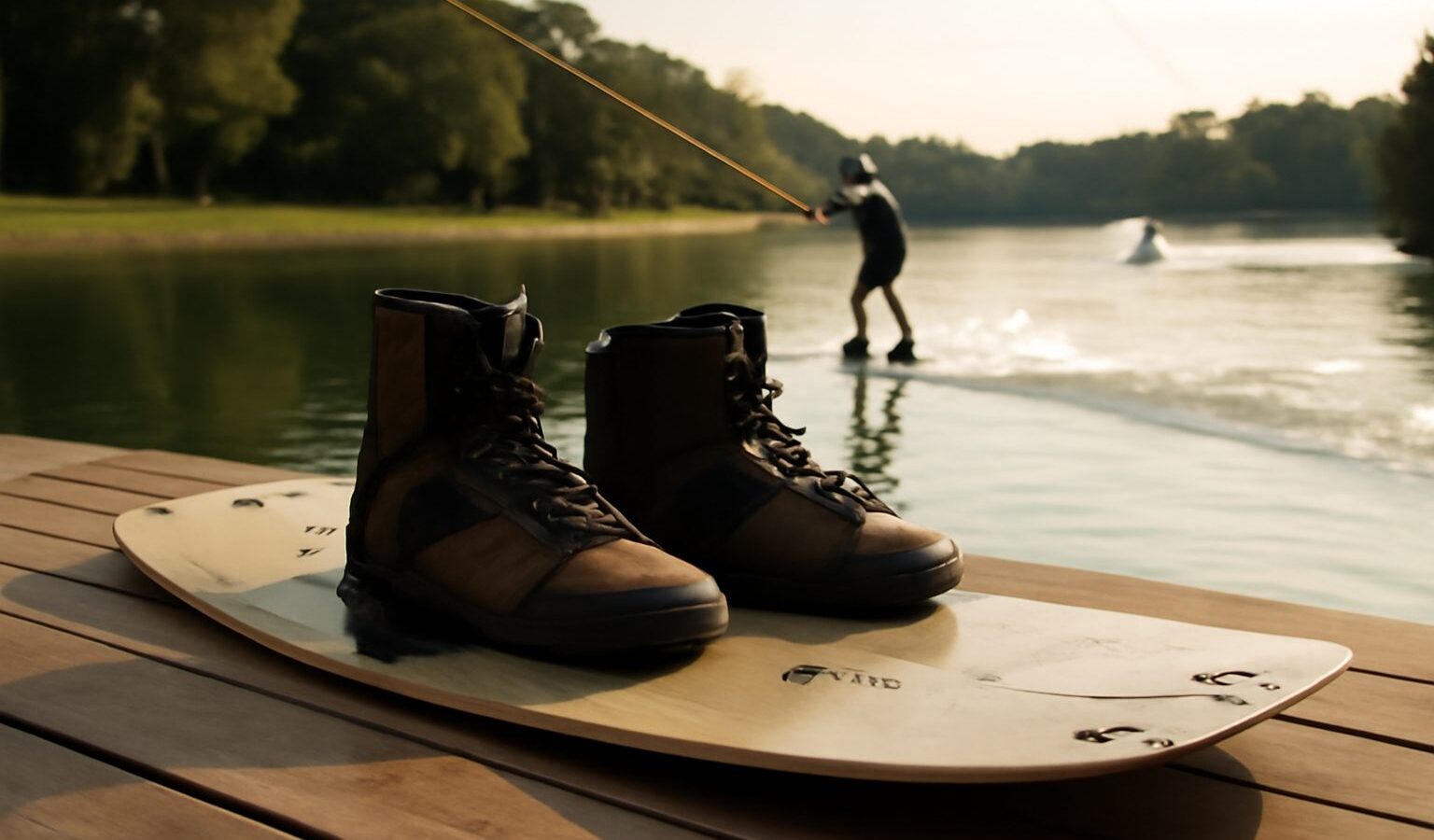
Skimming across the water on a board, leaning into the pull and feeling the spray on your face is one of the most accessible thrills our island offers. Wakeboarding Singapore has quietly become easy to try thanks to cable ski systems, which let you ride without a boat, a driver or a big group. Whether you have never stood on a board or you already carve turns and hit small ramps, there is a set-up here that fits.
This guide explains what wakeboarding and cable ski actually involve, where in Singapore you generally find them, who the sport suits, how safety works and what a first session really feels like. Operators, prices and opening hours shift over time, so use this as a general picture and check the current details before you go.
What Wakeboarding and Cable Ski Are
Wakeboarding is a water sport where you stand sideways on a short, wide board, feet strapped in, and get towed across the water while holding a handle. As you build speed you can ride the wake, carve from side to side and, once confident, pop off small ramps and features.
There are two main ways to get that pull, and the difference matters for beginners.
- Boat wakeboarding uses a powerboat to tow you. It creates a bigger, cleaner wake for jumps and gives that classic open-water feel, but it needs a boat, fuel and usually a group to share the cost.
- Cable ski, sometimes called a cable park, uses an overhead cable system on pulleys to tow riders around a fixed course, a bit like a ski lift laid flat over the water. It is steadier, cheaper per ride, and far more forgiving for learners because the pull is smooth and consistent.
Cable systems come in two styles. Full-size cable parks run a large loop that carries several riders at once, while smaller “two-tower” or straight-line cables pull one rider back and forth, which is ideal for a first lesson.
Where You Generally Find It in Singapore
Water sports naturally live near our coast and reservoirs, so a few areas come up most often.
- The East Coast stretch is the heartland of wakeboarding here, with its long shoreline and established water-sports culture. If someone mentions cable ski in Singapore, this eastern coastal belt is usually what they mean.
- The northern coast and reservoir areas have hosted water-sports facilities too, making use of sheltered, calmer water that suits learners.
- Sheltered marina and channel areas around the island are where boat-based wakeboarding tends to launch, since you need calmer, boat-friendly water.
Rather than a fixed venue list, search for what is currently operating in these areas, as facilities open, relocate and update their offerings over the years.
Who Wakeboarding Suits
One of the best things about cable ski is how beginner-friendly it is. You do not need to be an athlete, and plenty of first-timers get up on the board within a session or two.
| Rider type | Best fit | Good to know |
|---|---|---|
| Total beginners | Straight-line or two-tower cable | Gentlest, most patient way to learn the basics |
| Improvers | Full-size cable park loop | Practise carving and small features at your own pace |
| Confident riders | Boat wakeboarding | Bigger wake and airtime for tricks and jumps |
| Groups and parties | Cable park sessions | Social, take turns, cheer each other on |
| Kids and teens | Cable, with supervision | Check minimum age, weight or swim requirements |
A basic level of comfort in the water is the main requirement. You should be able to swim or at least be relaxed floating in a life vest, because you will fall in, often, especially at the start. Reasonable upper-body and core strength helps, but technique matters far more than raw muscle. People with recent injuries, back or shoulder problems, or who are pregnant should check with the operator first, since the sport puts sudden load on the arms and core.
Safety and What Keeps You Secure
Cable ski has a strong safety record largely because the environment is controlled. You ride on a fixed course in known water, watched by staff, wearing the right gear.
Expect to be fitted with a buoyancy aid or life vest and usually a helmet, particularly at cable parks with features. Before you get in the water you will get a briefing covering the single most important beginner lesson: how to start, and crucially, when to let go of the handle. New riders instinctively hold on when they fall, which drags them; the golden rule is simply to release the handle and let yourself stop.
A few sensible habits make sessions safer and more fun:
- Listen fully to the briefing, even the “obvious” parts
- Let go of the handle the moment you lose balance
- Keep your arms relatively straight and let the cable pull you up rather than yanking yourself
- Stay aware of other riders and the course layout
- Tell staff if you are tired, since fatigue is when most falls happen
Facilities generally pause during lightning and severe weather for safety, so an afternoon storm can cut a session short.
What a First Session Feels Like
Be ready to fall a lot, and to laugh about it. Most beginners spend the early attempts getting tugged forward and toppling off before they figure out the trick, which is to stay patient, keep the board across the pull and let the cable do the work. The moment you finally stay up and glide is genuinely addictive.
Physically it is more tiring than it looks. Your forearms and grip fade first, then your legs and core, so a beginner session is often kept short for good reason. Wear swimwear you can move in, bring a change of clothes, a towel, water and sunscreen, and go earlier in the day when it is cooler and less crowded. Board shorts or a rash guard help prevent chafing from the vest and straps.
Give yourself realistic expectations. Standing up and riding a straight stretch in your first session is a real win; jumps and tricks come later with practice. Book a beginner lesson or an instructed session for your first go rather than just renting gear, since a few pointers early on save a lot of frustrating faceplants.
Explore more
For more ways to get out on the water, our guide to sailing and yachting in Singapore covers a gentler coastal pace, while East Coast Park is the natural base for a full day by the sea. If you would rather chase your adrenaline in the air, take a look at indoor skydiving at iFly.