
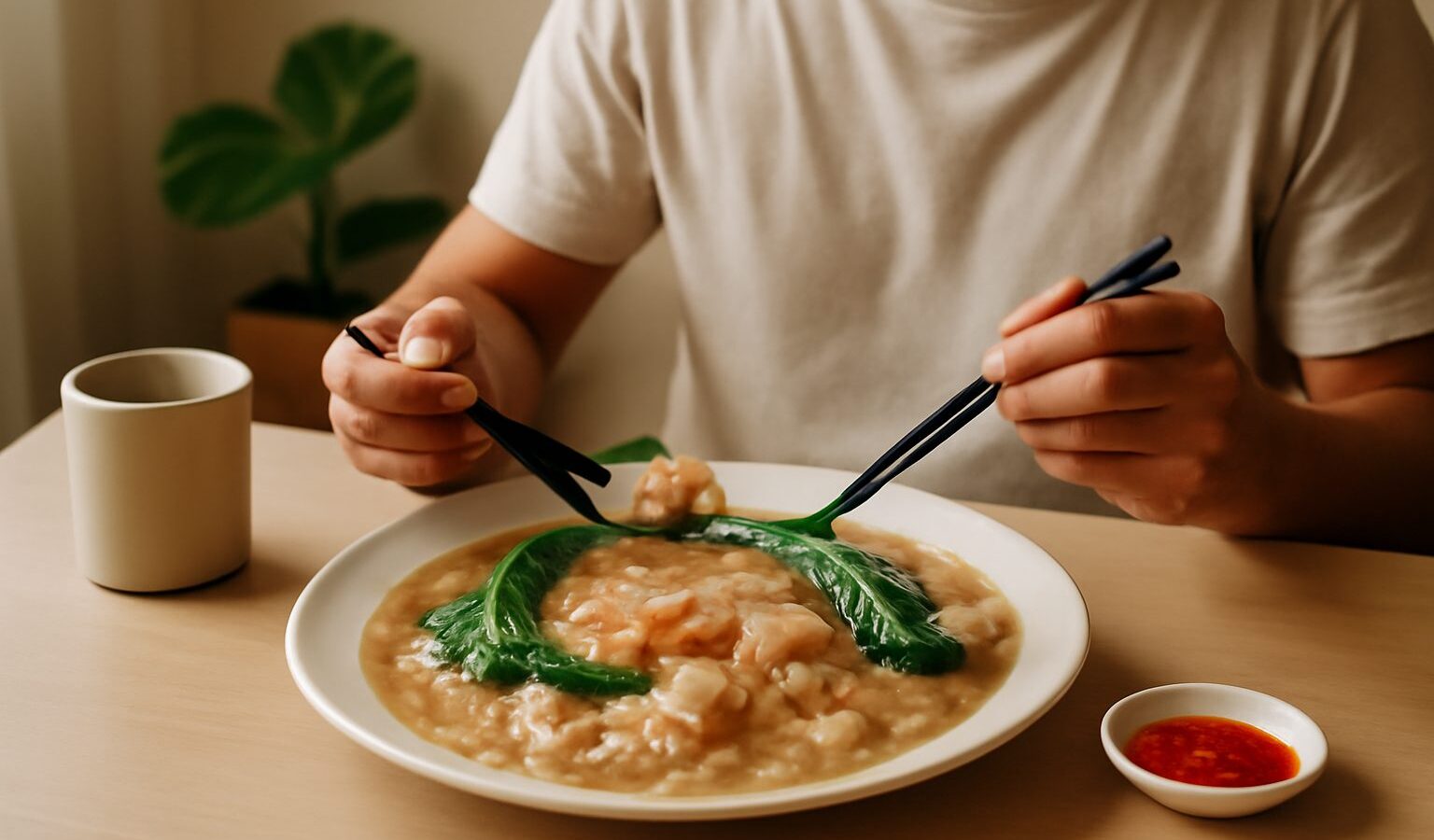
Comfort arrives in many forms, and few are as soothing as a plate of wat tan hor. Broad, slippery rice noodles are blanketed in a glossy, savoury gravy thickened with egg until it turns silky, all carrying the smoky perfume that only a screaming-hot wok can give. Wat tan hor is one of those Cantonese classics that manages to be both humble and quietly luxurious, a dish you order when you want something warming, saucy and deeply satisfying. It has a firm following at zi char stalls and coffee shops, where the clatter of the wok is part of the appeal.
This guide covers what wat tan hor is, the meaning behind its name, how the celebrated egg gravy and prized wok hei come together, and where you are likely to find it. If you have ever hesitated between the many hor fun dishes on a menu, this is the one to understand first.
What Wat Tan Hor Is
Wat tan hor is a Cantonese noodle dish built on flat, wide rice noodles known as hor fun, the same broad ribbons found in several beloved dishes across the region. What defines wat tan hor specifically is its sauce, a savoury gravy that is thickened with beaten egg swirled in at the end so it sets into soft, silky ribbons throughout. The name itself points to this, with the “wat tan” portion referring to the smooth, egg-enriched gravy that gives the dish its character.
The gravy is typically a light to medium brown, savoury and slightly starchy, and it usually carries a mix of toppings. Slices of pork or chicken, prawns, fish cake and leafy greens such as choy sum are common, giving the dish substance and variety in every spoonful. Some versions include squid or other seafood. The noodles are usually charred first in the wok before the gravy is ladled over, and this step is important to the finished flavour.
Because pork and various seafood commonly feature, and preparation varies widely, wat tan hor is generally not assumed to be halal, though ingredients differ by vendor. Anyone with dietary needs should check with the individual stall about what goes into their version and how it is cooked.
The Meaning Of The Name
The name wat tan hor is descriptive once you unpack it. In Cantonese, the “wat tan” element evokes the smooth, slippery, egg-thickened quality of the gravy, the very thing that sets this dish apart from a drier fried hor fun. The “hor” points to the hor fun rice noodles at its base. Put together, the name essentially promises silky egg gravy over flat rice noodles, which is a fair summary of exactly what lands on your table.
You may see the dish written or referred to in slightly different ways depending on the stall and the local dialect conventions, and it shares close family ties with other hor fun preparations. What remains constant is that a true wat tan hor delivers on the promise of its name, a gravy so smooth it seems to slip off the spoon, laced with tender threads of just-set egg.
The Egg Gravy and The Magic Of Wok Hei
Two elements make or break a wat tan hor, and both come down to skill at the wok. The first is the egg gravy. A savoury stock is brought up to heat, seasoned, and thickened gently with a starch slurry until it reaches a pourable, glossy consistency. Then beaten egg is drizzled in and stirred through at just the right moment, so it forms delicate, silky ribbons rather than clumping or dissolving completely. Timing and temperature are everything here, and an experienced cook knows exactly when to add the egg and when to stop stirring.
The second element is wok hei, the elusive smoky “breath of the wok” that defines great Cantonese stir frying. Before the gravy goes on, the hor fun noodles are tossed in a blisteringly hot, well-seasoned wok, often with a little dark sauce, so they pick up a light char and that unmistakable smoky aroma. This charring is not just for flavour, it also gives the noodles a slight fragrance that plays beautifully against the smooth, mild gravy poured over them.
The finished plate is usually served with cut chillies in soy sauce or a splash of vinegar on the side, and many diners add a spoonful to cut through the richness of the gravy. That little hit of acidity and heat is part of the classic experience, lifting the dish and balancing its savouriness.
Wat Tan Hor and Its Hor Fun Relatives
Hor fun noodles appear in several dishes, and it helps to know how wat tan hor sits among them. The table below compares a few common preparations.
| Dish | Cooking style | Sauce or liquid | Signature note |
|---|---|---|---|
| Wat tan hor | Charred then sauced | Silky egg gravy | Smooth gravy plus wok hei |
| Dry fried hor fun | Stir fried dry | Little to no gravy | Strong wok hei, less sauce |
| Beef hor fun | Stir fried | Savoury gravy with beef | Tender beef slices |
| Soup hor fun | Served in broth | Clear soup | Light and comforting |
Seen side by side, wat tan hor’s identity is clear. It is the saucy, egg-enriched member of the family, prized for the contrast between smoky, charred noodles and that pool of glossy gravy. Where a dry fried version showcases pure wok hei and a soup version offers gentle comfort, wat tan hor gives you both smoke and silk in one plate.
Where To Find It and How To Enjoy It
Wat tan hor is a staple of zi char stalls, those cook-to-order Chinese stalls found in coffee shops and hawker centres, as well as at some Cantonese eateries. It is a popular choice for a shared meal, often ordered alongside other stir fried dishes to make up a spread. Stalls, cooks and opening hours change over time, so it is always sensible to check current information if you are hoping to visit a particular place.
A few tips for getting the most from your plate. Eat it while it is hot and freshly cooked, when the gravy is at its silkiest and the wok hei is still fragrant, since both fade as it sits. Add the chilli in soy or a little vinegar to taste, as the acidity balances the rich gravy wonderfully. And do not let it linger too long, because the noodles are best before they soak up all the sauce and soften.
Wat tan hor is Cantonese comfort cooking at its finest, a dish where technique quietly does all the work to produce something that feels effortless and indulgent. Between the smoky noodles and that unforgettable silky egg gravy, it is easy to see why it remains a favourite order whenever the wok is fired up.
Explore more
Wanton Mee Guide
Kolo Mee Guide
Bak Chor Mee Guide
Hawker Centre Guide