
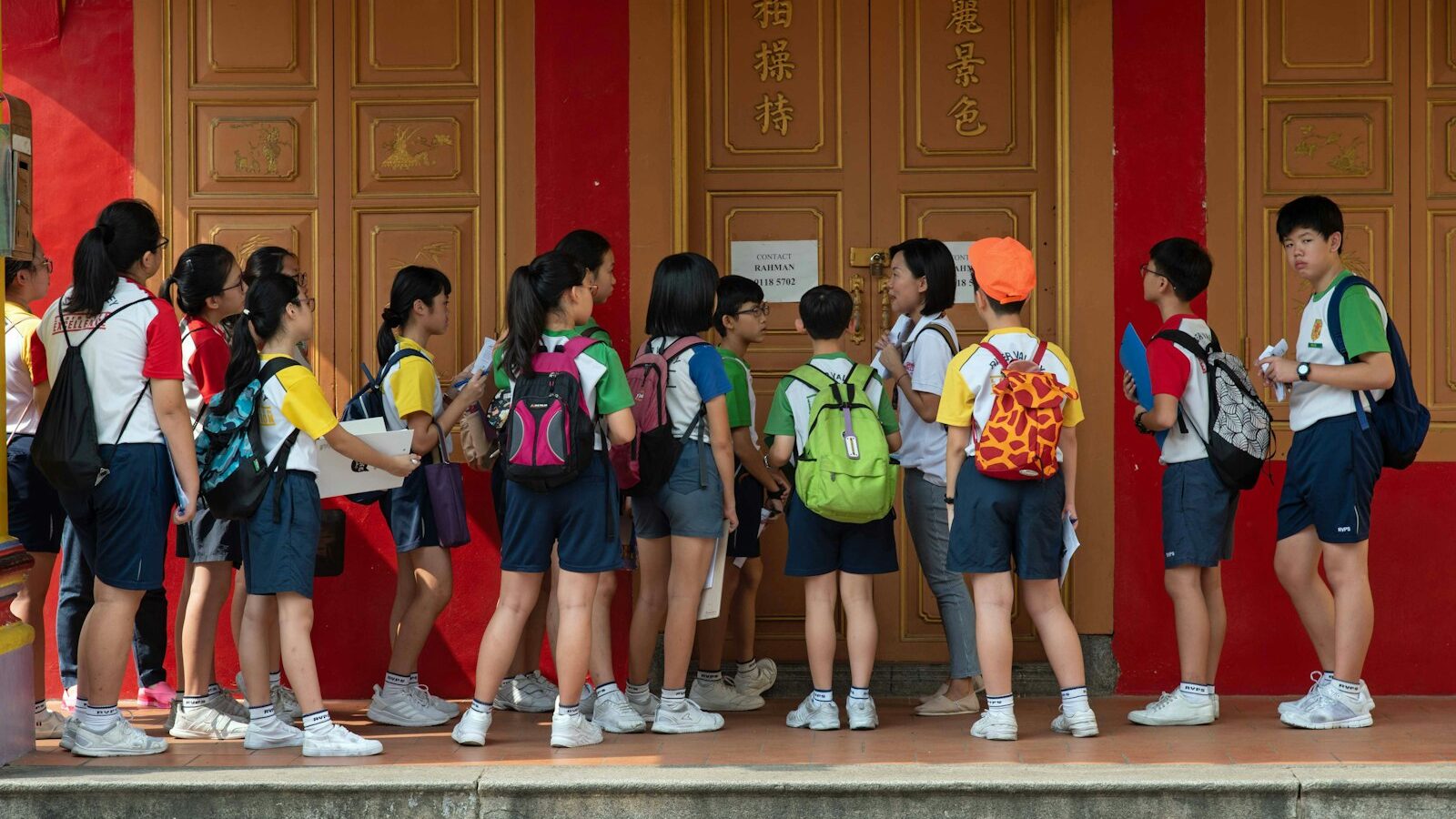
For many mainland families, the local school does its job during the week, but you still want somewhere your child reads, writes and speaks Chinese at a level that matches home. That is where a weekend chinese school singapore parents rely on comes in: supplementary Saturday or Sunday classes that keep literacy strong, prepare pupils for exams such as HSK, and hold on to the culture that everyday life in English can slowly wear away. This guide explains what these classes offer, the kinds of organisation that run them, how to choose, and how they fit alongside a local school. It describes types of provider rather than naming specific centres, and because timetables and syllabuses change, confirm current details directly with any school you approach.
Why Weekend Chinese Classes Exist
Even in a country where Chinese is an official language, English dominates the school day and much of public life. Children pick up English fast and can quietly lose ground in written Chinese, which is the hardest skill to maintain. A child from China who arrived reading fluently can, within a couple of years, start forgetting characters they once knew.
Weekend classes are the counterweight. They add concentrated Chinese time outside school hours, usually a few hours on a Saturday or Sunday, with a clear focus that ordinary school lessons cannot always give. For newcomer families the goal is often preservation rather than catching up: keeping an existing strength alive so it does not fade.
What They Actually Offer
Programmes vary, but most weekend Chinese schools concentrate on one or more of these aims:
- Maintaining literacy. Structured reading and writing so children keep and extend their character knowledge, composition and comprehension.
- Exam preparation. Coaching for standardised tests, most commonly the Hanyu Shuiping Kaoshi (HSK), the international Chinese proficiency test, and sometimes support aligned to the local school syllabus.
- Spoken fluency and confidence. Conversation, storytelling, speech and drama to keep Mandarin natural rather than stiff.
- Culture. Calligraphy, festivals, Chinese history, poetry and classic stories, so language sits inside a living context.
Some schools follow the mainland curriculum and simplified characters, which is reassuring for a child who may one day return to China. Others align more with the Singapore context. Ask which materials and character set a class uses, because it should match where your family is heading.
Who Runs Them
Weekend and supplementary Chinese classes come from several kinds of organisation, each with a different character:
- Community and non-profit language schools. Long-standing Chinese-language schools and community groups that run structured weekend programmes, often with a cultural mission and a steady curriculum.
- Clan and dialect associations. Singapore has many Chinese clan associations (huiguan) rooted in ancestral hometowns and surnames. A number run affordable weekend classes and cultural activities, and they are a warm entry point into the wider Chinese community, though the teaching style can be traditional.
- Private education and tuition centres. Commercial providers offering Mandarin classes and exam preparation on weekends, usually with polished materials, smaller classes and higher fees.
- Enrichment providers. Businesses specialising in a particular strand, such as speech and drama in Mandarin, creative writing or reading programmes, which happen to run on weekends.
- Community club and grassroots courses. Neighbourhood community clubs sometimes host Mandarin or cultural courses at modest cost.
None is automatically best. The right fit depends on whether you want low cost and community, structured exam results, or a specific skill.
Comparing the Types
| Provider type | Typical focus | Fees | Class feel | Good for |
|---|---|---|---|---|
| Community or non-profit language school | Literacy and culture, steady curriculum | Low to moderate | Structured, mission-driven | Long-term literacy and belonging |
| Clan or dialect association | Culture, basic language, heritage | Often low | Traditional, community | Affordable classes and community ties |
| Private tuition or education centre | Exam prep, HSK, composition | Higher | Polished, results-focused | Measurable progress and test outcomes |
| Enrichment provider | One strand, such as speech or writing | Varies | Lively, specialised | A specific skill or confidence gap |
| Community club course | General Mandarin or culture | Low | Casual, local | Low-commitment, near home |
How to Choose the Right One
A weekend class only works if your child will actually keep going, so weigh practicality alongside quality:
- Match the goal to the provider. Want exam results and HSK levels? Lean towards a structured centre. Want culture and community at low cost? An association or community school fits.
- Check the level and grouping. A newcomer from China is often ahead in speaking and characters. Make sure the class will stretch them rather than repeat what they know, and ask how pupils are grouped by ability.
- Look at the materials and character set. Confirm whether they use simplified characters and a curriculum that suits your family’s plans, including a possible return to China.
- Consider location and timing. A class near home that runs at a workable hour is one your child will sustain. A brilliant class across the island that everyone dreads travelling to will not last.
- Watch the total load. Weekends are also for rest and family. One focused class a week that the child enjoys usually beats a packed schedule that breeds resentment.
- Ask about the teachers. Find out who teaches, how classes are run and whether you can observe or trial a lesson before committing.
How They Complement a Local School
Think of the two as doing different jobs. The local school gives your child English-medium learning, integration and the national Mother Tongue curriculum. The weekend class adds depth, cultural grounding and, where you want it, exam preparation that goes beyond the school syllabus. Together they cover both sides of a bilingual upbringing.
The weekend school also does something a timetable cannot measure: it surrounds your child with other Mandarin-speaking families, which makes keeping the language feel normal rather than a chore imposed at home. For a newcomer family still building a social circle, that community can matter as much as the lessons.
Whatever you choose, the strongest results come from pairing any class with steady Chinese use at home. A weekend school reinforces the habit; it cannot replace it. Since programmes, fees and schedules are updated regularly, confirm the current syllabus, class levels and timings directly with each school before you enrol.
Explore more: Keeping Up Your Child’s Chinese in Singapore · Helping Your Child Adjust from the China School System · Schools in Singapore: A Guide