

Most guides to Singapore cover the big, obvious things. The passes, the flights, the rent, the school run. All useful, all important. But ask anyone who has actually lived here for a while and they will tell you the move is really made of a hundred small things nobody warned them about. The tiny surprises, the habits you did not expect to pick up, the quiet reliefs and the odd frustrations. This is a collection of the honest, human moving to singapore tips that rarely make the official checklists, the stuff you usually only learn once you are already here.
The Small Everyday Surprises
The first thing that catches most newcomers off guard is not any single big event. It is the accumulation of small daily differences that no one bothered to mention because locals never think about them.
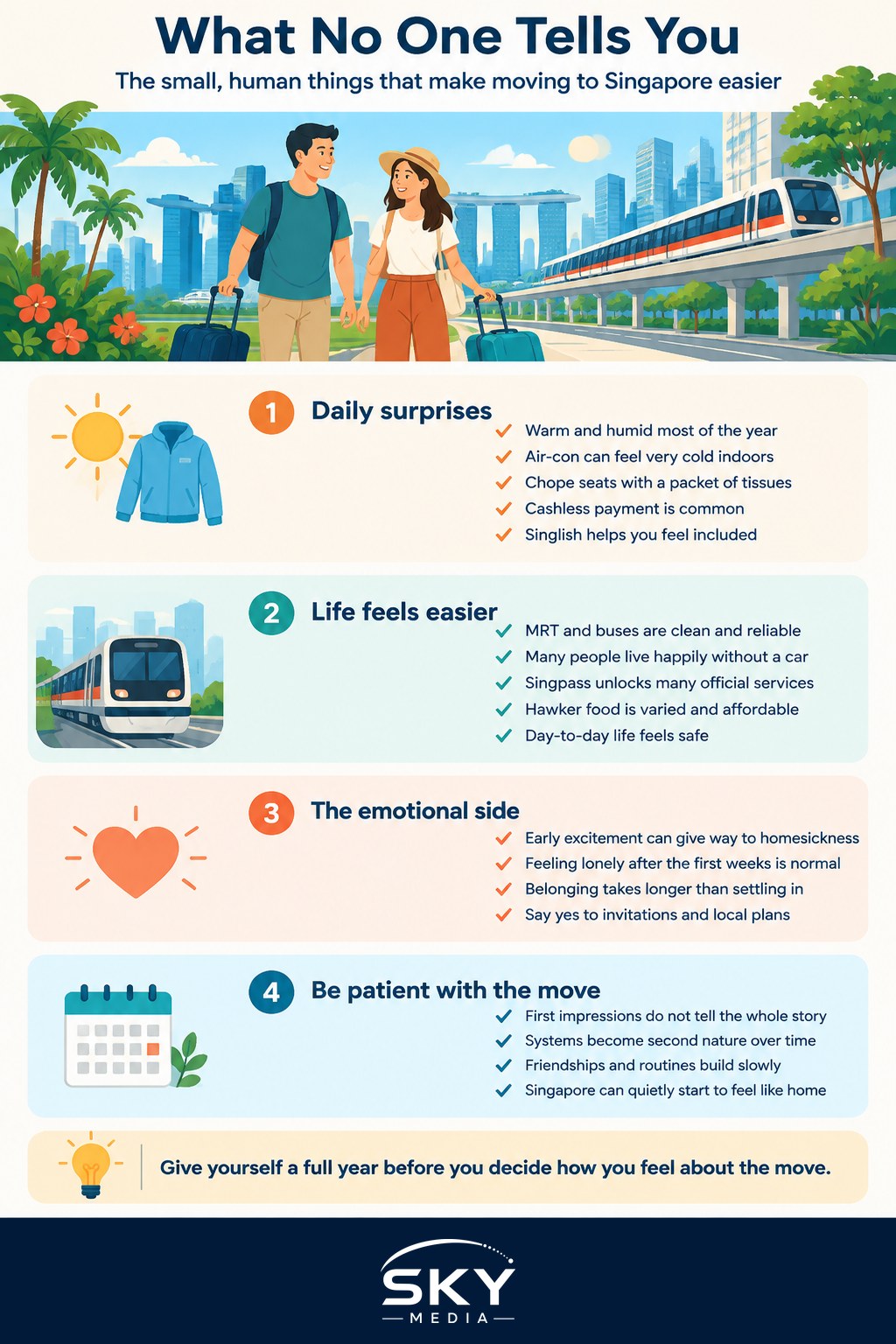
- The weather does not have seasons the way you might be used to. It is warm and humid nearly all year, and the “cool” you are waiting for does not really arrive. You adapt, but it takes your body a while. Our guide on adjusting to the weather when you first move is worth a read before you unpack all your jumpers.
- Air-conditioning is fierce indoors. You will step from tropical heat into an office or mall that feels chilly, so a light layer in your bag is oddly essential in a hot country.
- You will “chope” a table with a packet of tissues. Reserving a hawker centre seat with a small personal item is a real, gentle local custom, not litter.
- Cashless is everywhere, sometimes more than cash. Paying by phone or card is the default in many places, and getting comfortable with it early saves fumbling.
- Singlish is its own warm shorthand. The local blend of English with bits of other languages is friendly, not a barrier, and picking up a few terms helps you feel included fast.
None of these are difficult. But learning them one awkward moment at a time is exactly why the first few weeks feel like a gentle blur.
The Things That Are Easier Than You Feared
Here is the good news that also tends to go unmentioned. A lot about daily life in Singapore is genuinely, pleasantly easy, and newcomers often brace for hassle that never comes.
Getting around is a real joy. The MRT and bus network is clean, reliable, and reaches most of the island, so many people happily go without a car for years. Setting it up takes minutes, and setting up public transport when you arrive covers the how.
Everyday admin is largely digital and orderly. Singpass, the national digital identity, unlocks a huge range of official services from your phone once you are set up. Eating well is easy and need not be expensive, with hawker centres serving an incredible range of dishes at friendly prices. And the sense of safety, day and night, is something many newcomers say they never fully appreciated until they had it.
The rules are real, and honestly, mostly reassuring. Yes, there are things you cannot do here that you could elsewhere, and fines to match, but most exist for a calm, clean, shared public life that quickly grows on you. Adjusting to Singapore’s rules and fines as a newcomer sets out the everyday ones so nothing catches you out.
The Emotional Stuff Nobody Puts on a Checklist
This is the part the practical guides almost never mention, and it might matter most. The move is not just logistical, it is emotional, and the wobble that comes a month or two in surprises almost everyone.
The early weeks often feel exciting because there is so much to do. Then the tasks ease, the novelty softens, and a quiet homesickness or loneliness can settle in right when you expected to feel triumphant. This is completely normal. It is not a sign you chose wrong. It is simply the emotional side of a huge life change catching up with you. Our piece on dealing with homesickness as a newcomer is a gentle companion for those days.
The other honest truth is that belonging takes longer than settling. You can have your flat sorted, your commute figured out, your bills paid, and still not feel at home yet, because home is built out of people and repeated small moments, not just a tidy admin list. Be patient with yourself. Say yes to invitations, join something local, and let the friendships form at their own pace.
Give It a Full Year Before You Judge
If there is one tip to carry above all the others, it is this. Do not judge your whole Singapore chapter by your first difficult month. The heat becomes normal, the systems become second nature, the friendships arrive, and the city that felt like a bright, confusing puzzle slowly turns into somewhere you know by heart. The things no one tells you are mostly not warnings. They are the small, human details that, once you know them, make the whole move so much softer. Come with an open mind, a light jacket for the air-conditioning, and a little patience with yourself, and Singapore has a real habit of quietly becoming home.
Frequently Asked Questions
Is Singapore expensive for newcomers on an average salary? It can be, mainly because of housing, though costs vary widely with your lifestyle. Hawker food and public transport keep daily spending manageable. Work out a realistic budget before committing, and compare housing options against commute and location.
What should I bring, and what is better to buy after arriving? Bring documents, medication, sentimental items and a few lightweight clothes. Heavy winter wear and bulky furniture usually aren’t worth shipping. Most everyday items can be bought locally, so wait to see what your home needs before stocking up.
What are the etiquette rules at hawker centres? Reserve a seat with a small item such as tissue packets, order, then return your tray and dishes when you finish, as signs and the stall staff will show you. Be patient in queues and share tables politely when it is busy.
What small mistakes do newcomers commonly make in the first weeks? Common ones include underestimating the heat, forgetting a light layer for the cold air-conditioning, and not learning local rules before breaking one. Others are sharing one-time passwords by accident and expecting to feel at home immediately. All are easy to learn from.
How can I keep in touch with home without feeling stuck between two places? Schedule regular calls so contact feels like a habit, not an obligation, and share your local life with family. At the same time, invest in friendships and routines here. Having both is possible, and many newcomers say each one supports the other.