
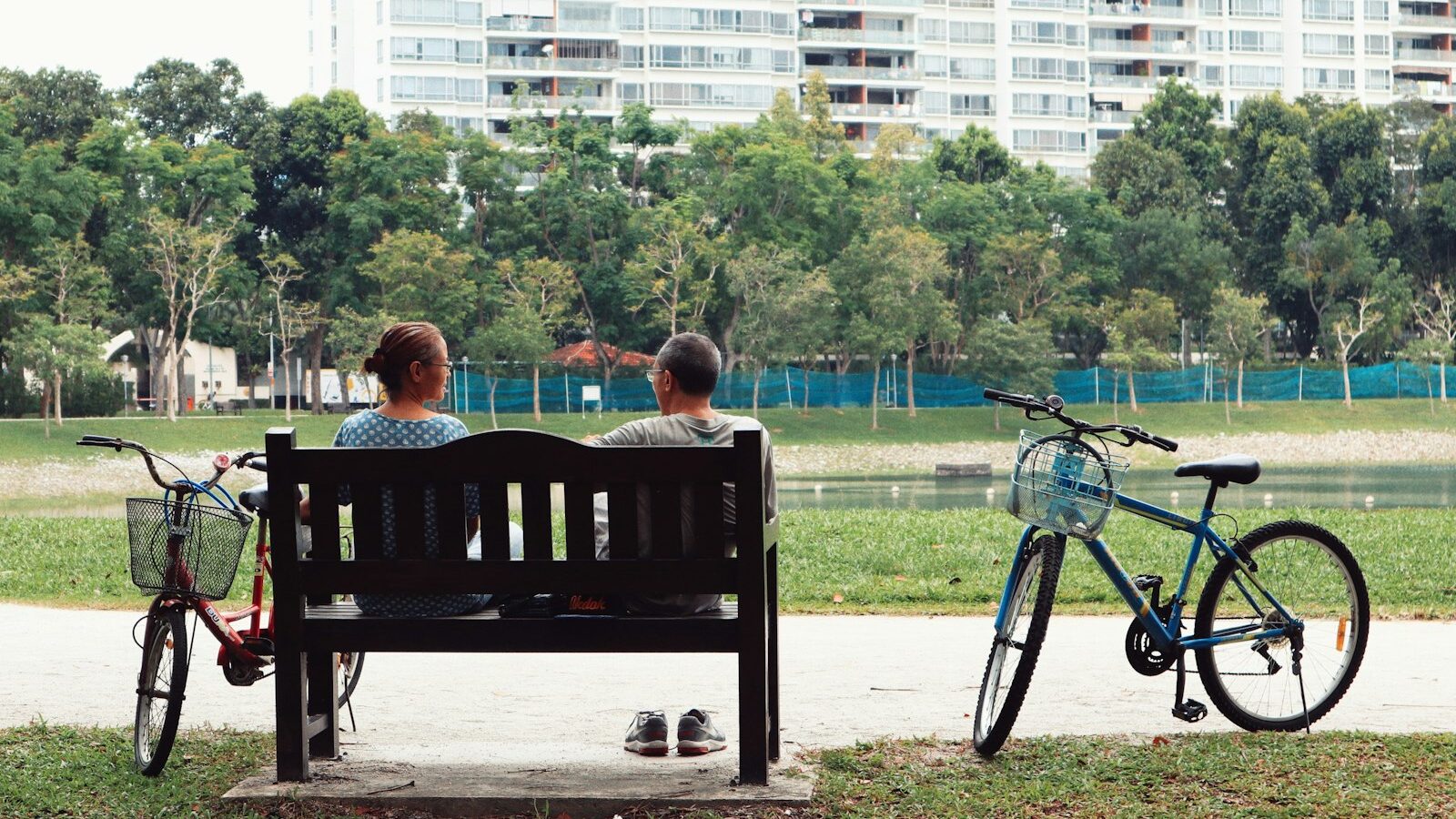
Cycling to work in Singapore is one of the most satisfying ways to commute. You skip the packed train, get some exercise and often arrive faster than the bus. The catch is obvious the moment you step outside: heat, humidity and the occasional sudden downpour. A good cycling to work outfit is less about looking sporty and more about arriving at your desk feeling human.
This guide is for people riding a bicycle, e-bike or shared bike to the office. If you take the MRT or bus, our guide to comfortable commute outfits in Singapore is the better fit. Here, the focus is on managing sweat, choosing fabrics that work on a saddle, and setting up a simple routine for changing once you arrive.

Two Approaches: Ride in Work Clothes or Change at the Office
Before buying anything, decide which kind of bike commuter you are. It depends on your ride length, your office facilities and your dress code.
| Approach | Works best when | What to wear on the bike | Main trade-off |
|---|---|---|---|
| Ride in work clothes | Short, flat ride; relaxed dress code; you ride slowly in the early morning | Breathable smart-casual pieces with stretch | You may still arrive damp on hot days |
| Change at the office | Longer ride; formal dress code; office has showers or a changing area | Athletic shorts or tights, a technical tee, cycling-friendly shoes | You need to carry or store work clothes |
| Hybrid | Medium ride; no shower but a private toilet or locker | Light activewear, then a quick freshen-up and change | Needs a small kit and a few minutes of buffer |
Most Singapore riders end up with the hybrid approach. Even a short ride in tropical humidity builds up sweat, so planning a five-minute reset is usually more realistic than hoping to arrive dry.
Fabrics That Handle Heat and Sweat
Fabric is the single biggest factor in how you feel after a ride.
Choose:
- Technical polyester and nylon blends that wick moisture away from skin and dry quickly. Look for “moisture wicking” or “quick dry” on the label.
- Merino wool in lightweight weights. It sounds odd for the tropics, but thin merino handles sweat well and resists odour, which matters if you wear the same top home.
- Linen and linen blends for riding in work clothes. Linen breathes very well, although it creases, so pick blends with a little cotton or synthetic.
- Stretch fabrics in trousers and skirts, with a small percentage of elastane, so you can pedal without seams pulling.
Avoid:
- Heavy 100% cotton tees and denim. Cotton absorbs sweat, stays wet and gets heavy.
- Silk and delicate fabrics that show sweat marks clearly.
- Pale grey in sweat-prone areas, which shows every damp patch. Darker colours and busy prints hide moisture better.
Bike-Friendly Cuts and Details
Even good fabric fails if the cut fights the bike.
- Trousers: Slim or tapered cuts stay clear of the chain. If you wear wider trousers, roll the right cuff or use a reflective trouser band. A gusseted crotch or stretch waist makes pedalling easier.
- Skirts and dresses: A-line or wrap styles with some length work better than tight pencil skirts. Wearing bike shorts underneath adds comfort and coverage.
- Tops: Slightly longer hems stay tucked when you lean forward. Loose, airy tops let air flow across your back, where a backpack traps heat.
- Shoes: Flat, grippy soles hold the pedal well. Many riders cycle in sneakers or sandals with a back strap and keep work shoes at the office. Avoid smooth leather soles that slip on wet pedals.
- Visibility: Add a bright or reflective element, such as a vest, a reflective band or a bag with reflective strips, especially for early morning or evening rides.
Whatever you wear, follow the current rules for cyclists and personal mobility devices, including helmet requirements on roads. LTA’s Active Mobility pages set out the latest rules, so check there rather than relying on hearsay.
Managing Sweat Before, During and After the Ride
Sweat is unavoidable, but you can reduce how much you arrive with.
Before you leave:
- Ride earlier if you can. Mornings are cooler and the sun is lower.
- Shower at home if you will not have one at work, then apply antiperspirant, which works best on dry skin.
- Drink water before setting off.
On the ride:
- Pace yourself. Riding at an easy, conversational effort produces much less sweat than racing the traffic lights.
- Use the gears to spin lightly rather than mashing hard pedals uphill.
- Carry your bag on the bike, using a rack and pannier or a basket, instead of a backpack. A sweaty back is often caused by the bag, not the ride.
- Shade matters. Where safe, choose park connectors and tree-lined routes, which can feel noticeably cooler than open roads.
When you arrive:
- Give yourself five to ten minutes to cool down before changing. Sit somewhere air-conditioned or near a fan. Changing too early just means sweating into your clean clothes.
- Use body wipes or a damp face towel for a quick refresh if there is no shower.
Your Office Changing Kit
A small, well-organised kit makes changing at the office painless. Keep one set at work permanently and top it up weekly.
- Toiletries: deodorant, face wipes, a small towel, dry shampoo, a comb or brush, and moisturiser or sunscreen.
- Clothes stash: a spare work shirt or top, a pair of trousers or a skirt, underwear and socks. Rotate them home for washing on Fridays.
- Shoes: a pair of work shoes kept under your desk or in a locker.
- Storage: a breathable bag or a hanger for damp riding clothes. Do not leave sweaty gear sealed in a plastic bag all day.
- Grooming: a hair tie or clips, a little makeup if you wear it, and a lint roller.
If your building has end-of-trip facilities such as showers and lockers, ask building management how access works. If not, ask a colleague where people usually freshen up; a quiet accessible toilet or the gym in the building can be options.
To reduce creasing, roll rather than fold clothes you carry, or bring clothes in on days you drive or take transport and leave them hanging at work.
Rain, Haze and Sun
Singapore weather shifts quickly, so keep a few extras on the bike.
- Rain: A lightweight, packable rain jacket is more breathable than a full poncho, which can billow in wind. Waterproof covers for your bag protect work clothes. Mudguards keep road spray off your back. If there is lightning, stop and shelter rather than riding on.
- Haze: When haze levels rise, check the air quality readings from NEA before riding and consider taking public transport instead on poor days. Masks can make breathing harder during exertion, so the simplest choice is often not to ride.
- Sun: A cap under your helmet or a helmet with a visor, sunglasses and sunscreen on your neck and arms help a lot. Light, long sleeves with UV protection can be cooler than bare skin in direct sun.
Putting It Together: Three Sample Outfits
- Casual office, short ride: dark stretch chinos, a merino or technical polo, sneakers, reflective trouser band.
- Formal office, longer ride: cycling shorts and a wicking tee on the bike; a suit or dress and leather shoes stored at the office.
- Hybrid, no shower: athletic joggers and a quick-dry tee to ride, then a fresh linen-blend shirt and trousers from your desk stash after a wipe-down.
Once you find a system that works, it becomes routine within a couple of weeks. If you are dressing for something more formal after work, our guides on what to wear to a networking event and what to wear to a job interview can help you plan your office stash.
Frequently Asked Questions
How do I deal with helmet hair and makeup when cycling to the office? Keep styling simple and finish at the office. Tie hair back loosely, carry a small brush and dry shampoo, and apply makeup after you cool down. A light cap or sweatband under the helmet absorbs sweat. Wipe the helmet’s inner pads regularly.
What can I wear on a bike if I wear a tudung or headscarf? Choose a breathable, quick-dry fabric such as a lightweight jersey or technical blend, and fit it securely so it stays clear of the wheels and under the helmet. Keep a spare in your office kit. Darker colours and loose, airy outer layers help in the heat.
How do I stop my riding clothes from smelling? Wash them soon after each ride rather than leaving them in a sealed bag. Technical fabrics and thin merino tend to resist odour better than cotton. Let damp clothes air out in a breathable bag or on a hanger at the office before taking them home.
Do I need padded cycling shorts for a short commute? Not usually. For short rides, regular stretch shorts or trousers with a comfortable seam layout are fine. Padded shorts help on longer rides, and you can wear them under skirts or loose shorts. Try a saddle suited to your body before buying anything.
Is cycling-specific clothing worth buying, or will gym wear do? Gym wear in quick-dry fabric works well for most short commutes. Cycling-specific pieces add useful features such as longer backs, grippy hems and reflective details. Buy one or two key items first and see how your commute feels before building a whole wardrobe.