

If your car pulls to one side, the steering wheel shakes at speed, or your tyres wear unevenly, the answer often comes down to two related but different jobs. Understanding wheel alignment balancing in Singapore helps you know what to ask for at the workshop and avoid paying for something you do not need. The two are frequently done together, especially when you fit new tyres, but they fix different problems. This guide explains each in plain terms so you can spot the signs early and keep your car driving straight and smooth.
Alignment Versus Balancing
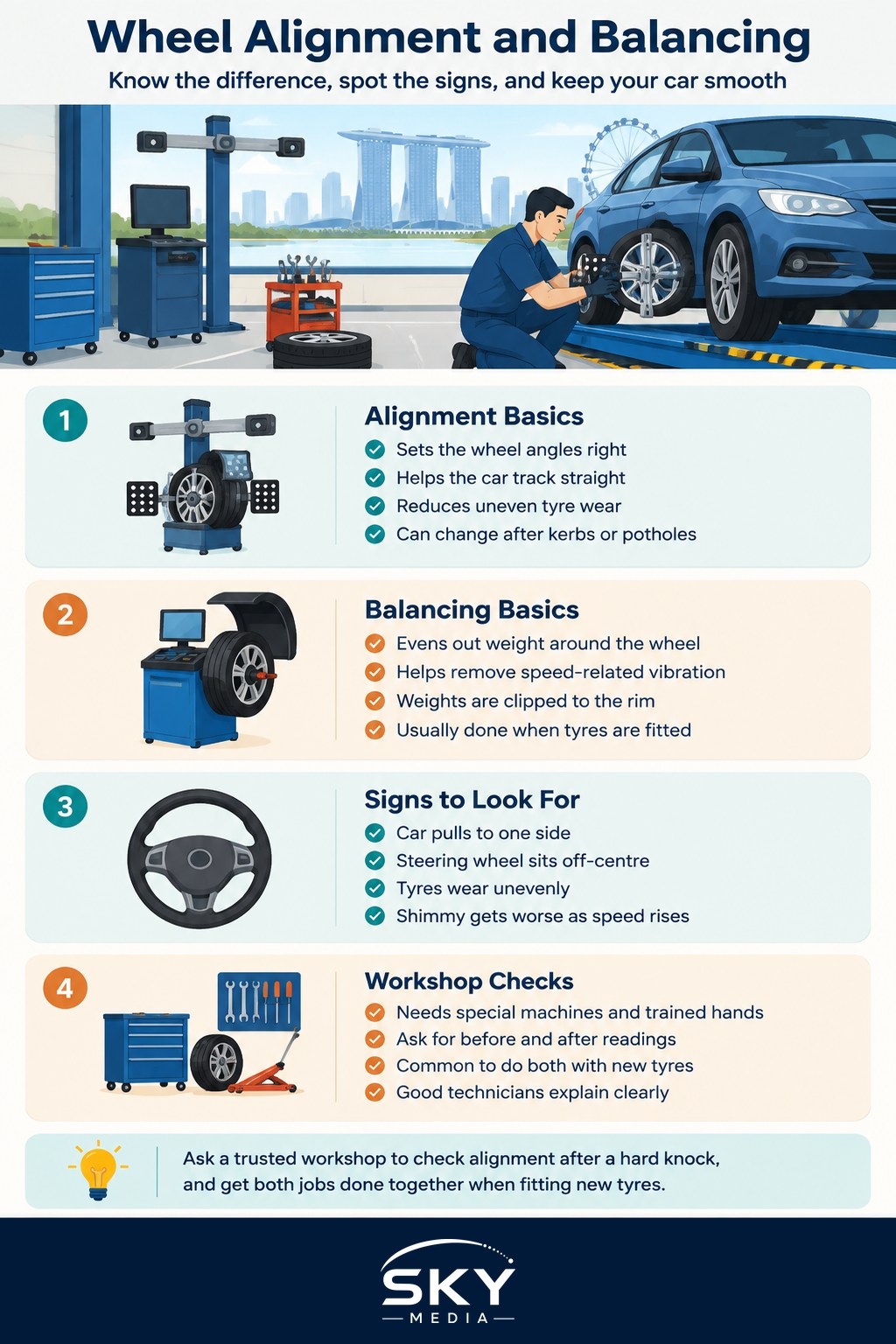
Wheel alignment is about angles. Over time, hitting kerbs, potholes, or simply everyday driving can nudge your suspension geometry out of its correct settings. When alignment drifts, the car may pull to one side, the steering wheel may sit off centre when you drive straight, and your tyres can wear faster on one edge. An alignment job puts those angles back to the manufacturer’s specification using a machine that measures each wheel precisely.
Balancing is about weight distribution around the wheel and tyre. No tyre and rim combination is perfectly even, so small weights are clipped to the rim to cancel out heavy spots. When a wheel is out of balance, you typically feel a vibration through the steering wheel or the seat that grows worse as you speed up and eases off when you slow down. Balancing is done on a spinning machine and is usually carried out whenever a tyre is fitted or refitted. In short, alignment keeps the car tracking straight, and balancing keeps it running smooth.
Signs You Need One or the Other
A few everyday symptoms point to which job you need. If the car drifts or pulls when you take your hands lightly off the wheel on a straight, level road, or the steering wheel is crooked while driving straight, suspect alignment. Uneven tyre wear, with one edge worn more than the rest, is another alignment clue. If instead you feel a shimmy or vibration that builds with speed, balancing is the more likely culprit. Vibration can have other causes too, which is worth reading about in car vibrations and what they mean before you assume it is the wheels.
Because alignment affects how evenly your tyres wear, keeping it in check protects your rubber and your wallet. It pairs naturally with the advice in choosing and fitting new tyres and with regular tyre care. Correct tyre pressure also plays a part in how the car feels, so it is worth knowing how to check your tyre pressure as part of your routine. These small habits catch problems before they become expensive or unsafe.
Leaving It to a Proper Workshop
Both alignment and balancing need specialised machines and trained hands, so they are not DIY tasks. A reputable workshop will measure your alignment against the correct settings for your car and show you the before and after readings, which is a good sign of an honest job. For balancing, they will spin each wheel and add the small weights where needed. It is common and sensible to have both done together when you buy new tyres, and to recheck alignment if you have had a hard knock against a kerb or pothole.
Choosing where to have this work done matters, and our guide to choosing a car workshop can help you find a shop you trust. Do not be shy about asking what they found and what they adjusted. A good technician will explain it clearly.
Keeping Things Straight and Smooth
Alignment and balancing are simple ideas once you separate them. Alignment sets the angles so the car tracks straight and tyres wear evenly, while balancing removes the vibration by evening out the weight around each wheel. Watch for pulling, a crooked steering wheel, uneven wear, or a speed-related shimmy, and have a trusted workshop check and correct things. Done regularly, these two jobs keep your car safe, comfortable, and easy on its tyres.