
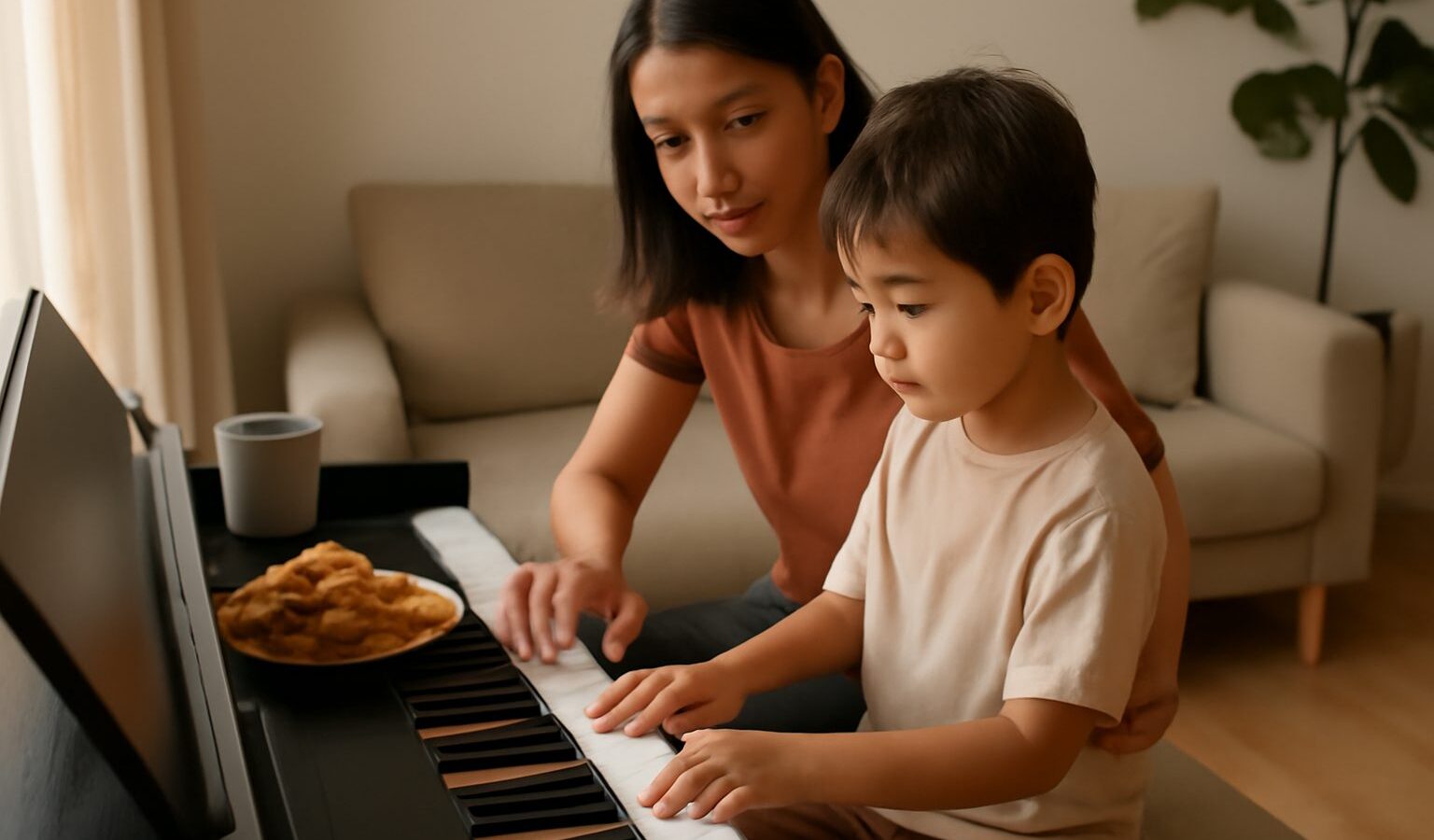
Piano is one of the most popular enrichment choices for Singapore families, and many parents wonder when to start piano lessons. Start too early and a child may feel frustrated, cry through lessons and come to dread the instrument. Start at the right moment and piano can become a lifelong source of joy, discipline and confidence.
There is no single correct age. Readiness depends on a mix of physical development, attention span, basic reading skills and genuine interest. This guide explains the signs to look for, what to try if your child is not quite ready, and the practical questions to settle before you sign up for formal lessons.

Age Is a Guide, Not a Rule
Many piano teachers are comfortable starting one-to-one lessons somewhere around the ages of five to seven. By then, most children can sit still for a short lesson, recognise letters and numbers, and use their fingers with some control. That said, some four-year-olds are ready, and some seven-year-olds would benefit from waiting a little longer.
Younger children can still enjoy music before formal lessons begin. Group music classes for toddlers and preschoolers focus on rhythm, singing, movement and listening. These build a foundation that makes later piano learning easier, without the pressure of daily practice.
Rather than fixing on a number, look at your child as an individual. The signs below will tell you more than their birth year.
Signs Your Child Is Ready
Physical readiness
Playing piano requires each finger to move on its own. A simple test: ask your child to lift one finger at a time while resting their hand flat on a table. If they can move individual fingers without the others following, they have the basic finger independence lessons build on.
Other physical signs include:
- Being able to hold a pencil properly and draw or write simple shapes.
- Having hands large enough to rest comfortably on five neighbouring keys.
- Sitting upright on a bench for a while without slumping or fidgeting constantly.
Attention and focus
A beginner lesson for a young child is often around 30 minutes. Can your child focus on a single activity, such as a puzzle or a book, for 15 to 20 minutes? Can they follow simple two or three step instructions? If so, they are likely able to cope with lesson structure.
Basic literacy and numeracy
Reading music involves letter names (A to G) and counting beats. Children who know the alphabet and can count to at least ten usually find early music reading much easier. They do not need to read fluently, but these building blocks help.
Genuine interest
This is the sign that matters most over time. Does your child drift towards a keyboard when you visit friends? Do they hum tunes, tap rhythms or ask questions about music? A child who wants to play will practise more willingly and recover from setbacks faster than one who is only doing it because a parent signed them up.
Emotional readiness
Learning an instrument involves mistakes, repetition and feedback. Children who can handle being corrected without falling apart, and who can try something again after getting it wrong, tend to settle into lessons well.
Ready, Almost Ready, or Not Yet
Use this comparison to judge where your child sits and what to do next.
| Stage | What you might notice | Suggested next step |
|---|---|---|
| Ready | Moves fingers independently, focuses for 15 to 20 minutes, knows letters and numbers, asks to play | Book a trial lesson with a teacher who works with young beginners |
| Almost ready | Shows interest but loses focus quickly, or finger control is still developing | Try a group music class or casual keyboard play at home for a few months |
| Not yet | Little interest, very short attention span, distressed by structured tasks | Keep music playful through singing and listening, then reassess later |
| Older beginner | Age eight or above and newly interested | Start lessons, as older children often progress quickly with good focus |
Starting later is not a disadvantage. Older beginners usually read faster, understand instructions more easily and can practise more independently, so they often catch up with children who started younger.
Practical Questions Before You Commit
Readiness is not only about your child. The household also needs to be ready for what lessons involve.
Do you have an instrument at home?
Regular practice needs a keyboard or piano at home. An acoustic piano is a big investment, and many families start with a digital piano that has weighted keys and a full-size keyboard. Our guide on how to buy a digital piano in Singapore explains what features matter for a beginner. Small, unweighted toy keyboards can be fun for play but are not ideal for lesson practice.
Can you support daily practice?
Young beginners do best with short, frequent practice sessions, often 10 to 15 minutes a day at first. Parents usually need to sit with them, remind them and keep the mood positive. Think honestly about whether your family’s schedule can fit this alongside school, tuition and other activities.
What kind of lessons suit your child?
- Private lessons at a teacher’s home, a music school or your own home offer individual attention.
- Group lessons are more social and can feel less intense for young children.
- Music school programmes may combine keyboard, theory and group activities.
When choosing a teacher, ask about their experience with young beginners, their approach to practice and progress, and how they handle a child who is struggling. A trial lesson is the best way to see whether your child connects with the teacher.
Should you aim for graded exams?
In Singapore, many children eventually take graded music exams, such as those from ABRSM (the Associated Board of the Royal Schools of Music) or Trinity College London. These give a clear structure and goals, but they are not compulsory, and rushing a young child into exam preparation can sap enjoyment. Talk with the teacher about whether and when exams make sense for your child.
Keeping Early Lessons Positive
Once lessons begin, your attitude shapes how your child feels about piano.
- Praise effort, not just results. Notice when your child practises without being asked or keeps trying a tricky passage.
- Keep practice short and predictable. A regular slot, such as after dinner, makes it a habit rather than a battle.
- Let them play for fun too. Allow time to pick out songs they like or make up their own tunes.
- Avoid comparing. Every child progresses at their own pace, and comparisons with siblings or classmates rarely help.
- Watch for burnout. Constant tears, refusal to practise or dread before lessons may mean the pace or approach needs to change.
The same principles apply to other enrichment activities. If you are weighing piano against something like swimming, our guide on signing your child up for swimming lessons in Singapore shows how to judge readiness for a very different skill.
If It Is Not the Right Time
If a trial lesson does not go well, that is useful information, not a failure. Take a break of a few months, keep music part of daily life through songs and listening, and try again later. Some children who struggle at five thrive at seven.
Piano is also not limited to childhood. Adults pick it up too, and our overview of learning the piano and keyboard covers the basics for learners of any age. Your child does not have to start early to enjoy piano for life.
Knowing when to start piano lessons comes down to watching your child closely. When finger control, focus, basic reading skills and real interest come together, that is usually the right moment to begin.
Frequently Asked Questions
How much should I budget for piano lessons? Costs vary with the teacher’s experience, lesson length, group or private format and whether a music school is involved. Ask for the fee structure in writing, including registration, term payments, make-up lessons and exam fees if relevant. Also budget for an instrument, books and a bench or stool.
Can I help my child practise if I cannot play the piano? Yes. You do not need to play to be a good practice partner. Sit with your child, ask the teacher for a short list of what to practise, set a regular time, and notice effort. Watching a lesson occasionally will help you understand what the teacher expects.
Is piano a good first instrument compared with violin or guitar? Piano is often chosen first because the notes are laid out visibly and a clear sound comes from the first key pressed. Violin and guitar need more finger strength and tuning skills early on. The best first instrument is the one your child is excited to play.
How long does it take for a beginner to play simple songs? Many beginners can play short, simple tunes within the first few weeks or months, though it varies with age, practice and the teacher’s approach. Rather than watching the clock, celebrate small steps like learning a new piece. Regular short practice usually helps more than occasional long sessions.
What if my child wants to quit piano after a few months? Find out why before deciding. It might be a boring piece, a mismatched teacher, practice fatigue or a busy schedule, all of which can be fixed. If unhappiness lasts, take a break rather than forcing it, and keep music in daily life. Many children return with renewed interest later.