
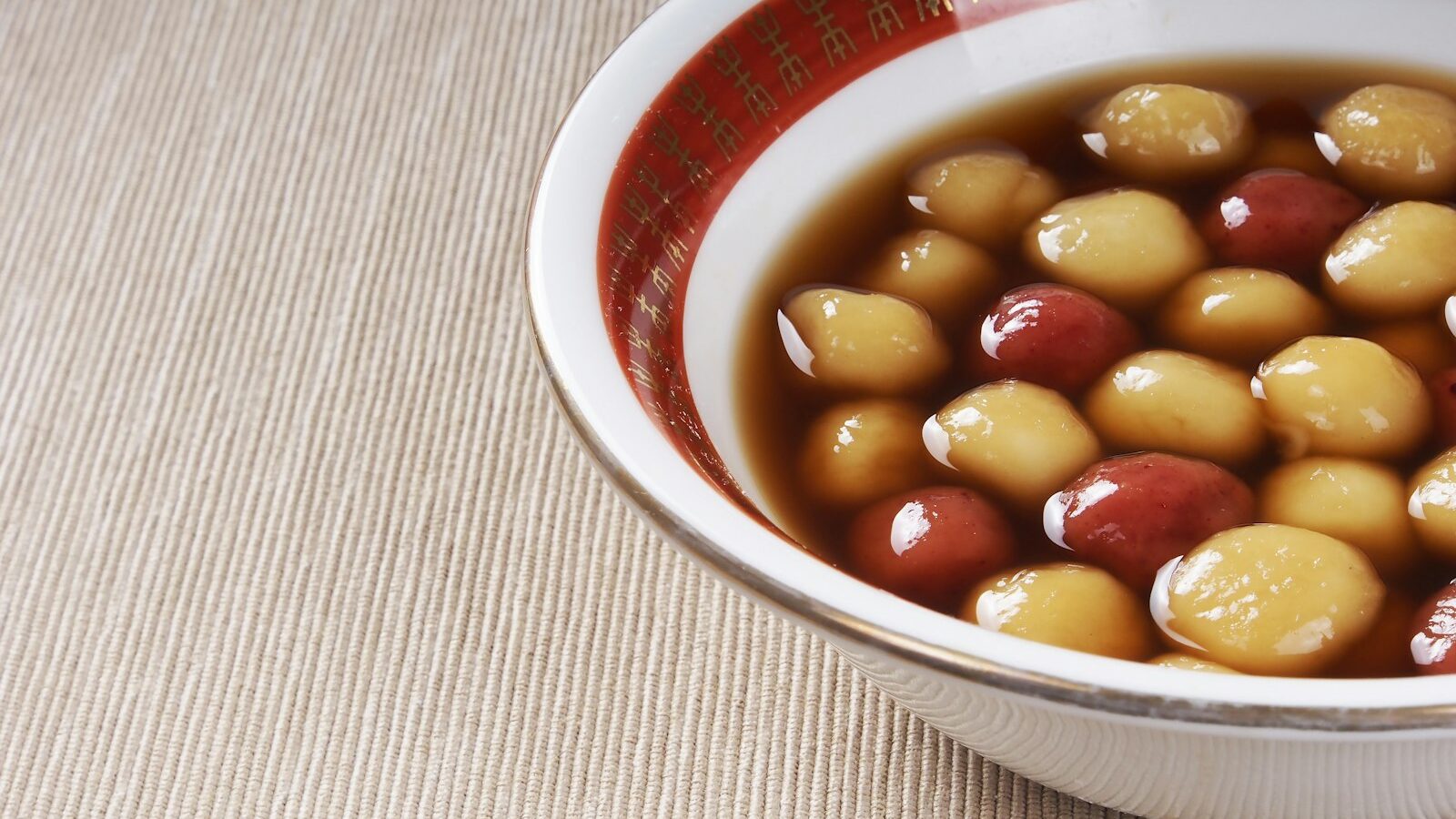
If you are wondering where to buy tang yuan in Singapore, the good news is that you have more options than ever, especially in the weeks before Dongzhi, the winter solstice festival around 22 December. You can grab a frozen pack from the supermarket, order a bowl at a dessert shop, or queue at a hawker stall that has served sweet soups for years. Each option suits a different situation: a quick family dessert, a cosy night out, or a large Dongzhi gathering. This guide explains where to look, what each source is good for and how to choose fillings that your household will actually enjoy.
Frozen Tang Yuan From Supermarkets and Provision Shops
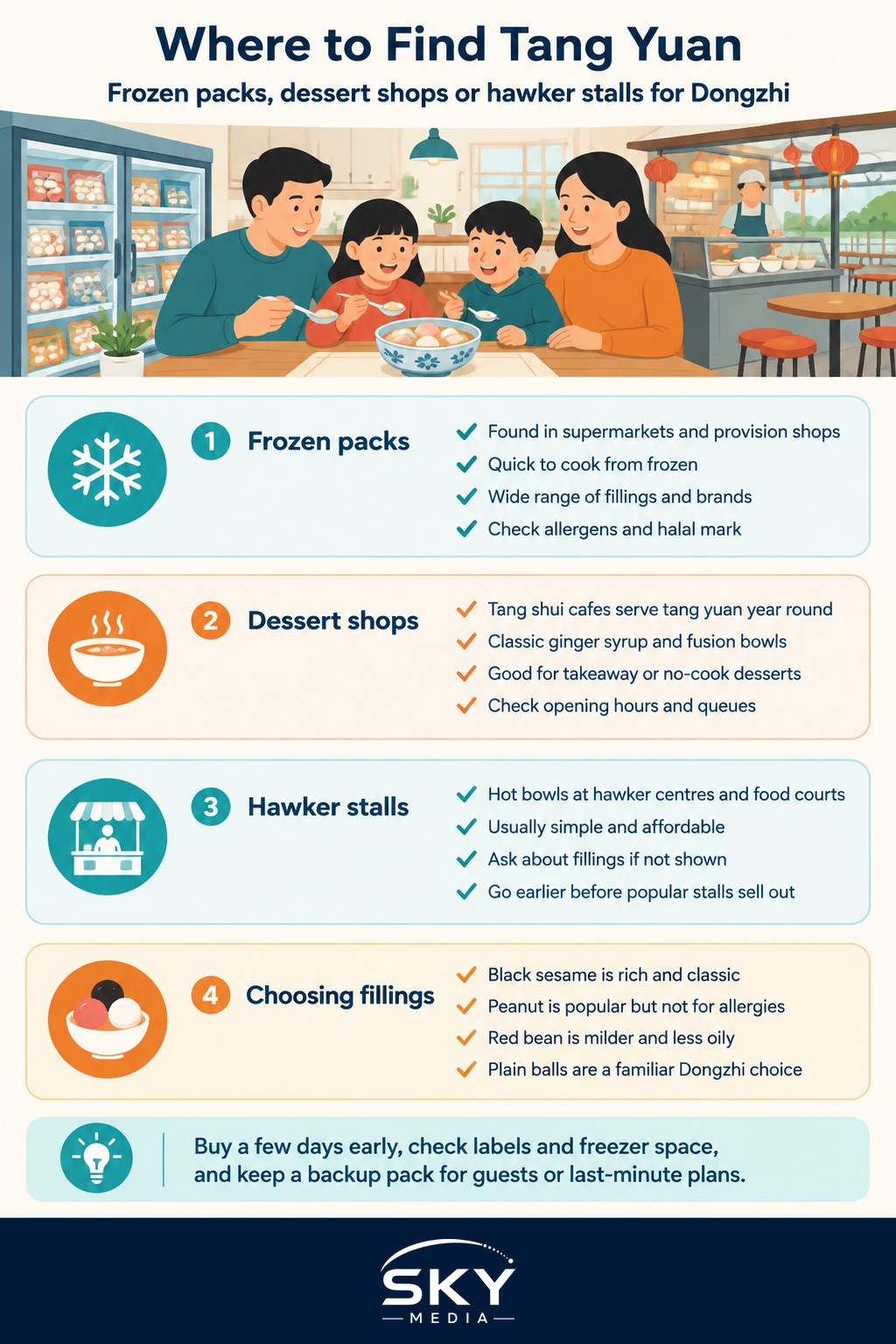
Frozen tang yuan are the most convenient choice, and for many families they are the default for Dongzhi night. You will usually find them in the freezer section of major supermarket chains, neighbourhood provision shops, Asian grocery stores and some online grocery platforms.
What to expect
– Packs typically contain filled balls, often black sesame, peanut or red bean, and sometimes newer flavours such as matcha, yam or salted egg.
– Some brands sell small plain balls, either white or in mixed colours, meant to be cooked in your own syrup.
– Imported brands from China, Taiwan and Malaysia sit alongside locally made ones, so ranges vary widely between stores.
Why people choose frozen
– They cook in minutes from frozen, with no dough to make.
– They keep for weeks in the freezer, so you can stock up before Dongzhi when shelves sometimes thin out.
– They are easy to portion for a small household.
What to check on the pack
– Ingredients and allergens: peanut and sesame fillings are common, and some contain lard, milk or wheat. Read the label if anyone has allergies or dietary needs.
– Halal certification: if this matters to your household, look for a recognised certification mark on the pack rather than assuming.
– Cooking instructions: follow the brand’s directions, as filled balls of different sizes need different times.
– Storage: frozen balls that have thawed and refrozen can crack or stick together, so pick packs that feel solid and separate.
Dessert Shops and Tang Shui Cafes
Dessert shops that specialise in Chinese sweet soups, often called tang shui, frequently have tang yuan on the menu all year, with extra variety around Dongzhi. These range from long-running family shops to modern cafes in malls and heartland estates.
What you are likely to find
– Filled tang yuan in ginger syrup, the classic pairing.
– Tang yuan served in peanut soup, black sesame paste or red bean soup.
– Fusion bowls with tang yuan in almond soup, sweet potato soup or with ice in warmer months.
Dessert shops are a good choice when you want a ready-made bowl without cooking, or you want to try combinations you would not make at home. Some also sell takeaway tubs or frozen packs of their own tang yuan, which can be a handy middle ground. Opening hours and menus change, so check the shop’s own page or listing before you travel, especially on the festival day itself when queues can form.
If you are new to Chinese sweet soups, Chinese Desserts and Tang Shui is a useful primer on what else to order.
Hawker Stalls and Food Courts
Many hawker centres have at least one dessert stall selling sweet soups such as cheng tng, bubur cha cha, red bean soup and, often, tang yuan. Hawker versions tend to be simple and affordable: a few filled balls in ginger or peanut soup, served hot.
Tips for hawker tang yuan
– Look for stalls that list tang yuan or “glutinous rice balls” on their signboard. Some only sell them on certain days or in the cooler months.
– Ask which filling they use if it is not displayed. Black sesame and peanut are the most common.
– Some stalls let you mix tang yuan into another soup, such as red bean or peanut, for a heartier bowl.
– On or near Dongzhi, popular stalls can sell out by evening, so going earlier helps.
For a wider tour of what else you might find at a dessert stall, see Local Desserts Explained.
Comparing Your Options
The table below summarises which source suits which need.
| Where to buy | Best for | Variety | Effort at home | Things to check |
|---|---|---|---|---|
| Frozen packs (supermarkets, provision shops) | Family Dongzhi night, stocking up | Wide range of brands and fillings | Boil and make a simple syrup | Allergens, halal mark, cooking time |
| Dessert shops and tang shui cafes | Treating yourself, trying new combinations | Classic plus fusion bowls | None, or takeaway reheating | Opening hours, festival-day queues |
| Hawker stalls and food courts | Quick, affordable hot bowl | Usually a few classic fillings | None | Whether the stall sells them that day |
| Online grocery and bakery orders | Large gatherings, gifting | Depends on the seller | Varies | Delivery slots before Dongzhi, freezer space |
How to Pick Fillings Everyone Will Enjoy
Choosing fillings is where most of the fun is. Here is how the common options differ:
- Black sesame: rich, nutty and slightly bitter, with a molten centre. The classic choice and a safe bet for most adults.
- Peanut: sweet and slightly crunchy or grainy depending on the brand. A favourite with children, but avoid for anyone with a peanut allergy.
- Red bean: milder and less oily, good if you find sesame too rich.
- Yam or taro: smooth and earthy, popular in Teochew-style desserts.
- Matcha, salted egg, chocolate and other modern flavours: fun to try, though some older relatives may prefer traditional fillings for a festival meal.
- Plain, unfilled balls: the simplest option, often pink and white, and the style many families associate most closely with Dongzhi.
A practical approach for a mixed household is to buy two packs, one traditional (black sesame or plain) and one crowd-pleaser, and let everyone choose. If you have guests with allergies, keep packaging aside so you can check ingredients later.
Serving Shop-Bought Tang Yuan at Home
Buying ready-made does not mean the dessert has to feel ordinary. A few simple touches help:
- Make a fresh ginger syrup. Simmer sliced old ginger and knotted pandan leaves in water for 15 to 20 minutes, then sweeten with rock sugar or brown sugar to taste.
- Cook the balls in a separate pot of water, then transfer them to the syrup. This keeps the syrup clear rather than starchy.
- Do not overcrowd the pot. Cook in batches so the balls do not stick together.
- Serve warm in small bowls, with a mix of fillings so everyone can try something different.
- Cut balls into smaller pieces for young children and older relatives, as glutinous rice is sticky and chewy and should be eaten slowly.
If you want to understand why tang yuan are eaten at Dongzhi in the first place, read Tang Yuan: Glutinous Rice Balls Explained and Celebrating Winter Solstice (Dongzhi) in Singapore.
Shopping Tips Before Dongzhi
- Buy a few days early. Popular fillings and brands can run low close to the festival.
- Check your freezer space before stocking up, especially if you are hosting.
- Compare a couple of stores. Ranges differ a lot between a large supermarket and a small provision shop.
- Keep it simple for big groups. Plain small balls in a big pot of ginger syrup stretch further than large filled ones.
Whichever route you choose, a warm bowl of tang yuan shared with family or friends is what makes the occasion feel complete.
Frequently Asked Questions
How many packs of tang yuan should I buy for a family dinner? It depends on the number of people, the ball size and how many other dishes you serve. Check the serving suggestion on the pack, and remember that plain small balls in a big pot of ginger syrup stretch further than large filled ones. Buying a spare pack is safer than running short.
Is homemade tang yuan better than shop-bought? Homemade gives you control over fillings, colours and sweetness, and rolling them together is part of the fun. Shop-bought is faster and easier for a small household. A good compromise is to buy frozen balls and make a fresh ginger syrup yourself.
Where can I order tang yuan as a gift or for an office gathering? Some online grocery platforms and bakery sellers take orders for larger gatherings and gifting, though variety depends on the seller. Check delivery slots before Dongzhi and your freezer space, and order early. Ask about fillings and allergens if guests have dietary needs.
What can I serve alongside tang yuan for Dongzhi? Tang yuan is usually the centrepiece, but you can add a fuller family dinner before it. Other Chinese sweet soups also pair nicely. Keep the main meal simple, since the dessert is the part most people think of as doing Dongzhi.
What if my usual tang yuan brand is sold out near Dongzhi? Try another store, since ranges differ a lot between large supermarkets and small provision shops. Plain small balls or a different filling can fill the gap. A dessert shop’s takeaway tubs, or making your own from glutinous rice flour, are good backups.
Further reading: How to Make Tang Yuan at Home: Plain, Filled and Coloured