
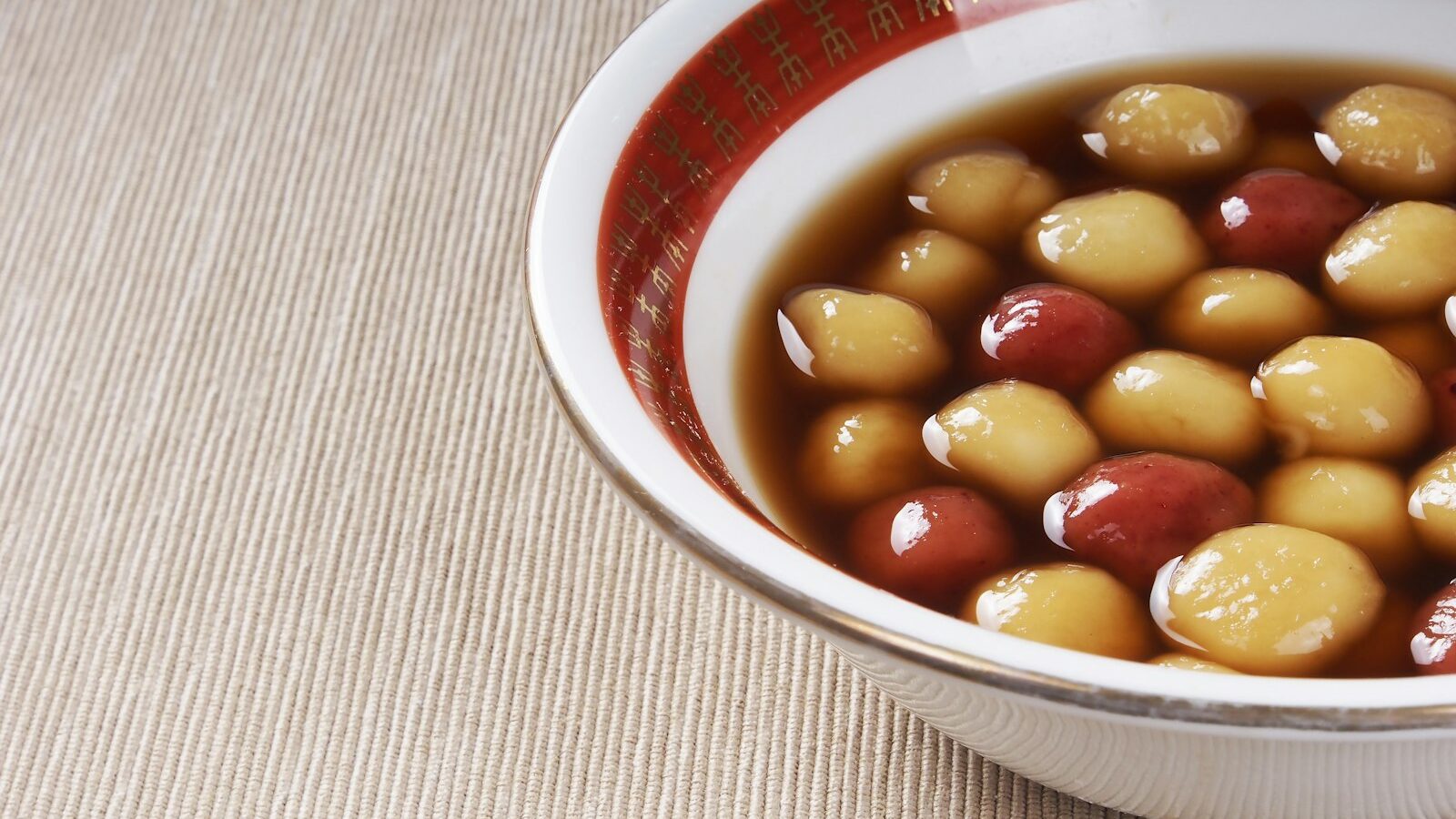
Learning how to make tang yuan at home is easier than most people expect. You need glutinous rice flour, water, a pot and a little patience, and in under an hour you can have a bowl of soft, chewy rice balls floating in warm ginger or pandan syrup. Many Singapore families make them for Dongzhi, the winter solstice festival around 22 December, when eating tang yuan together is a common way of marking family reunion and the turning of the year. This guide focuses on the kitchen side: the dough, three styles of ball, and two syrups. If you want the background on what the dessert means, read Tang Yuan: Glutinous Rice Balls Explained.

What You Need: Ingredients and Equipment
For about four servings of small balls, gather the following. Quantities are a starting point, since flours absorb water differently.
For the dough
– About 200g glutinous rice flour (sold in supermarkets and provision shops, usually in a packet labelled “glutinous rice flour”, not plain “rice flour”)
– About 160 to 180ml water, warm rather than hot, added gradually
– Optional: a spoonful of sugar, which some cooks add for a softer texture
For colours (optional)
– Pandan juice for green (blend pandan leaves with a little water and strain)
– Mashed steamed pumpkin or sweet potato for orange or yellow
– Butterfly pea flower water for blue
– A few drops of food colouring for pink, the classic Dongzhi colour
For fillings (optional)
– Ready-made black sesame paste, red bean paste or peanut paste, or homemade black sesame filling (ground toasted sesame mixed with sugar and softened butter or lard, then chilled)
For the syrup
– Ginger syrup: a thumb-sized knob of old ginger, rock sugar or brown sugar, pandan leaves and water
– Pandan syrup: a bundle of pandan leaves, sugar and water
Equipment is simple: a mixing bowl, a large pot, a slotted spoon, a tray dusted with flour and a cling-wrap or damp cloth to stop the dough drying out.
Step by Step: Making the Glutinous Rice Dough
The single most important skill is getting the dough right. It should feel like soft playdough or an earlobe: smooth, pliable and not sticky.
- Put the flour in a bowl and add about two-thirds of the water. Stir with chopsticks, then switch to your hands.
- Add the rest of the water a little at a time. Stop when the dough comes together and stops sticking to your fingers.
- Knead for two to three minutes until smooth. If it cracks when you roll a ball, add a teaspoon of water. If it sticks to your palms, add a sprinkle of flour.
- Use the cooked-dough trick if it keeps cracking. Pinch off a walnut-sized piece, flatten it and boil it until it floats. Knead this cooked piece back into the raw dough. It acts like glue and makes the dough much more forgiving, which is handy for filled balls.
- Cover the dough with cling-wrap or a damp cloth while you work. Glutinous dough dries quickly in air-conditioned rooms.
Three Styles: Plain, Filled and Coloured Tang Yuan
Plain small balls
Plain balls are what many families make for Dongzhi, often in pink and white. Pinch off pieces about the size of a marble and roll them between your palms. Keep them small so they cook evenly and soak up syrup. Place them on the floured tray, not touching.
Filled tang yuan
Filled balls are larger and richer. Chill your filling first so it is firm, then roll it into small balls about the size of a fingertip.
- Take a piece of dough about the size of a large grape and roll it into a ball.
- Press your thumb into the centre and pinch the edges to make a small cup with even walls.
- Drop in the filling, then gently push the dough up and around it.
- Pinch the top closed and roll the ball between your palms until smooth and seamless. Any thin spot can burst in the pot.
Coloured tang yuan
Divide your dough before adding the final splash of water. Knead pandan juice, pumpkin mash or butterfly pea water into each portion instead of plain water. Natural colours fade a little when cooked, so make them slightly brighter than you want. Children usually enjoy this step, and you can twist two colours together for a marbled look.
The table below compares the three styles so you can decide what to make.
| Style | Effort level | Ball size | Best paired with | Tips |
|---|---|---|---|---|
| Plain | Easy, good for kids | Marble-sized | Ginger syrup | Make plenty, they cook in minutes |
| Filled (sesame, peanut, red bean) | Moderate | Large grape-sized | Light ginger or plain sugar syrup | Chill filling first, seal well |
| Coloured (pandan, pumpkin, blue pea) | Easy to moderate | Marble-sized | Pandan syrup | Natural colours fade, add a little extra |
Making Ginger or Pandan Syrup
Start the syrup before you cook the balls so the flavour has time to develop.
Ginger syrup
1. Peel a thumb-sized knob of old ginger, slice it and smash it lightly with the flat of a knife.
2. Add it to about 1 litre of water with two or three knotted pandan leaves.
3. Simmer for 15 to 20 minutes, then add rock sugar or brown sugar to taste. Old ginger gives more warmth; young ginger is milder.
Pandan syrup
1. Knot a generous bundle of pandan leaves and simmer them in about 1 litre of water for 15 minutes.
2. Add sugar to taste and stir until dissolved. For a stronger colour and fragrance, stir in a little strained pandan juice at the end.
Taste and adjust. Some households like a barely sweet broth so the filling stands out, others prefer it sweeter.
Cooking and Serving Your Tang Yuan
- Bring a separate pot of water to a rolling boil. Cooking the balls in plain water keeps the syrup clear.
- Add the balls in batches and give the pot a gentle stir so they do not stick to the base.
- Wait for them to float. Plain small balls usually need a minute or two after floating; filled balls need a few minutes more so the filling melts. Cut one open to check.
- Lift them out with a slotted spoon and drop them straight into the warm syrup, or into a bowl of cool water first if you want a firmer, chewier bite.
- Serve warm in small bowls with plenty of syrup.
Storing, Freezing and Troubleshooting
You can make tang yuan ahead. Freeze uncooked balls on a floured tray in a single layer, then transfer them to a bag once firm. Cook from frozen, adding a little extra time. Cooked tang yuan harden in the fridge, so they are best eaten the same day.
Common problems and fixes:
- Balls crack while rolling: the dough is too dry. Knead in a teaspoon of water or use the cooked-dough trick.
- Balls go flat or misshapen in the pot: the dough is too wet. Knead in a little more flour next time.
- Filling leaks out: the walls were uneven or the seam was not sealed. Roll a little longer and avoid overfilling.
- Cloudy, starchy syrup: you cooked the balls directly in the syrup. Use a separate pot of water.
- Hard, chewy centres: the balls were too big or undercooked. Keep sizes even and give them time after they float.
A note on safety: glutinous rice balls are sticky and chewy. Cut them into smaller pieces for young children and elderly family members who may have difficulty swallowing, and encourage everyone to eat slowly.
Making It Part of Your Dongzhi Table
Rolling tang yuan together is half the point of the festival for many families, so set up a station with bowls of coloured dough and let everyone help. If you want to explore other sweet soups to serve alongside, see Chinese Desserts and Tang Shui. And once you are comfortable shaping dough, the same pinching and sealing skills carry over nicely to How to Make Dumplings at Home.
Frequently Asked Questions
Can I make tang yuan fillings vegetarian or halal-friendly? Yes, use butter or a vegetable fat instead of lard in the sesame filling, or choose red bean or peanut paste. For halal, check that every ingredient, including ready-made pastes and colourings, carries a recognised certification. Read labels carefully, since fillings vary by brand.
Can people with diabetes eat tang yuan? It is a sweet dish made from glutinous rice, with sugar in the syrup and often in the filling, so it affects blood sugar. Smaller portions, less syrup and sharing a bowl may help. People with diabetes should check with their doctor or dietitian about what suits them.
Is tang yuan gluten-free? Glutinous rice flour is made from rice and does not contain wheat gluten, despite the name, so plain tang yuan is generally gluten-free. Check the packaging for cross-contamination warnings, and read the labels on ready-made fillings and colourings, since some may contain other ingredients.
What can I fill tang yuan with if someone has a nut or sesame allergy? Make plain tang yuan, or use a filling that is safe for them, such as red bean paste if there are no other allergens. Read every label, avoid cross-contact with equipment used for sesame or peanut, and keep allergy-safe balls clearly separate when serving.
How do I reheat leftover tang yuan? Cooked tang yuan harden in the fridge, so they are best eaten the same day. If you have leftovers, warm them gently in hot syrup or simmering water until soft again. For future batches, freeze uncooked balls on a floured tray and cook from frozen.
Further reading: Where to Buy Tang Yuan and Dongzhi Desserts in Singapore · Making Mochi and Daifuku at Home in Singapore