
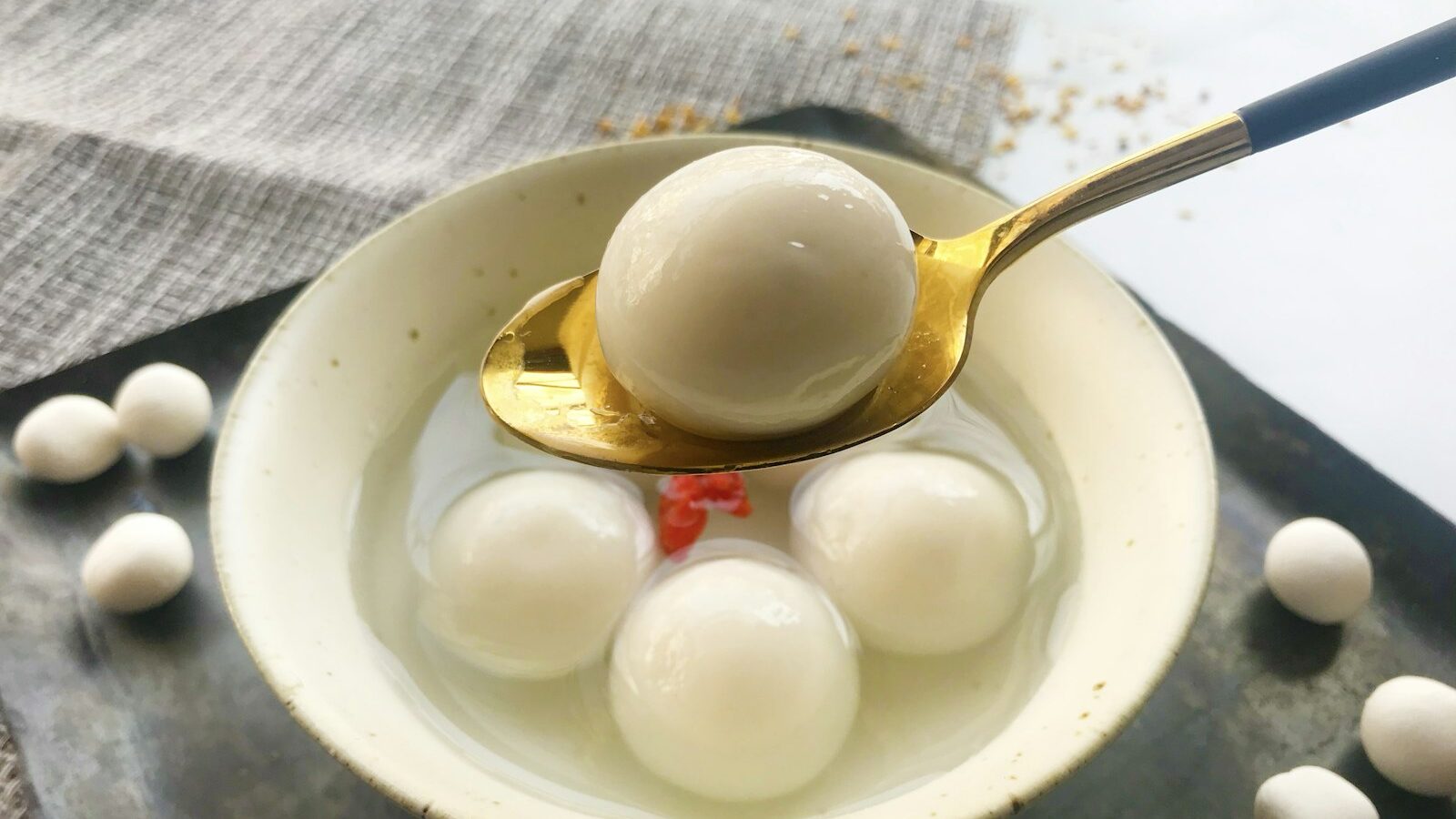
Soft, chewy and gently sweet, tang yuan are glutinous rice balls served in a warm soup. In Singapore you will find them at dessert stalls, in supermarket freezers and on family tables during festive nights. This guide to tang yuan in Singapore covers the dish itself: the doughs and fillings, the soups it is served in, when people tend to eat it, and a simple method you can try at home with a few pantry ingredients.
What Tang Yuan Actually Is
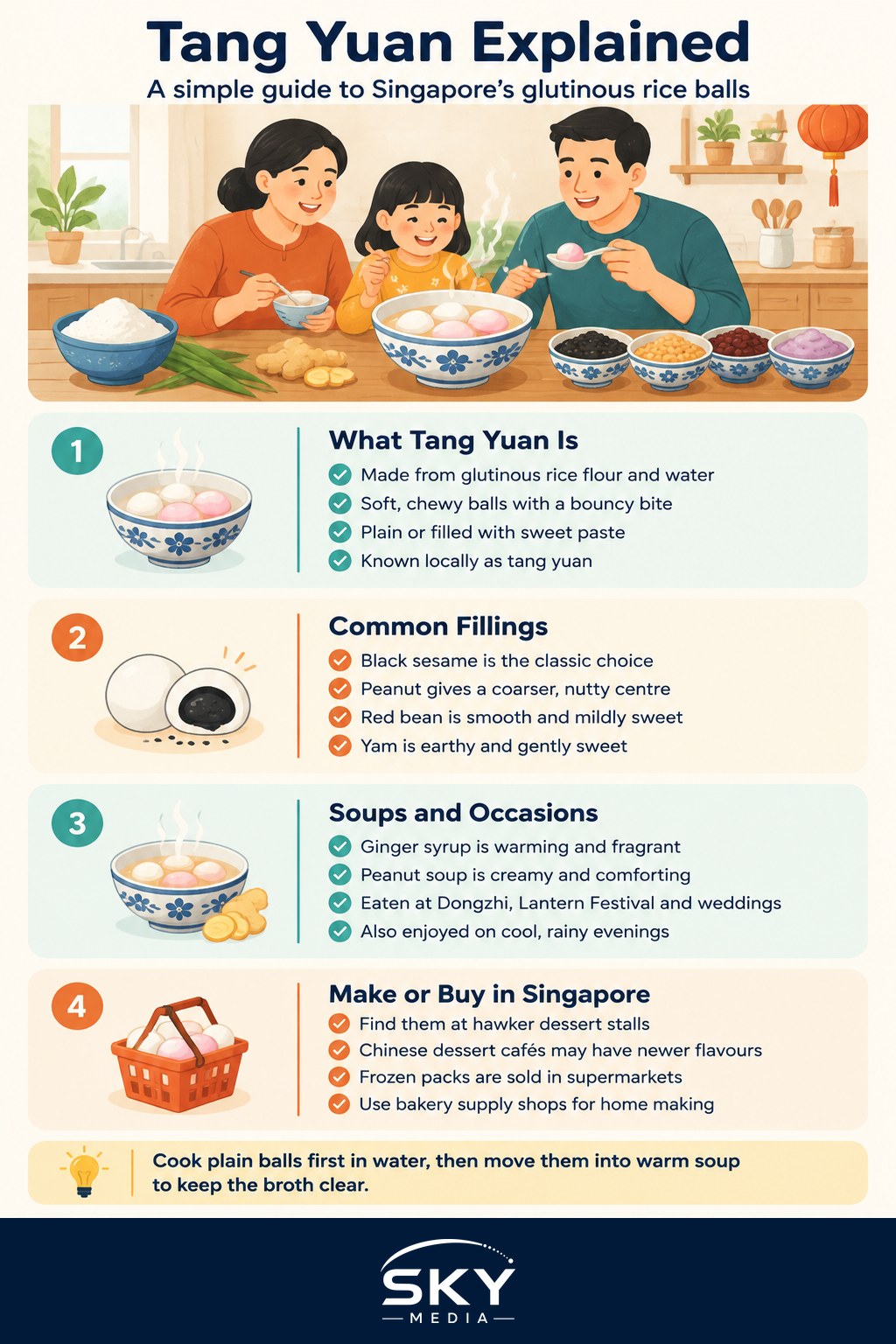
Tang yuan (汤圆, literally “soup rounds”) are balls made from glutinous rice flour mixed with water into a smooth, pliable dough. Glutinous rice flour, sometimes labelled “sweet rice flour”, is milled from sticky rice. It contains no gluten despite the name; the word refers to the sticky texture once cooked. That stickiness is what gives tang yuan their signature bounce.
There are two broad styles:
- Plain balls are small, unfilled and often coloured in pink, white or green. They are cooked and served in a sweet soup, and are the version many local families make at home.
- Filled balls are larger and wrap a sweet paste inside, such as black sesame, peanut or red bean. When you bite in, the filling flows out warm.
You may also hear the name yuanxiao (元宵), which in northern China refers to a related ball made by rolling the filling in dry flour rather than wrapping it in dough. In Singapore, “tang yuan” is the everyday term for both, and Hokkien speakers may call them “ee” in some households.
Common Fillings and What They Taste Like
Filled tang yuan are where most of the variety lies. These are the fillings you are most likely to meet at stalls, in frozen packs and in home kitchens:
- Black sesame: the classic. Toasted black sesame is ground with sugar and fat (traditionally lard, often vegetable shortening or butter today) into a glossy, nutty paste. It turns runny when hot.
- Peanut: crushed roasted peanuts with sugar, giving a coarser, more textured centre.
- Red bean: smooth sweetened adzuki bean paste, milder and less rich.
- Yam (taro): a paste with an earthy sweetness, popular with fans of orh nee, the Teochew yam dessert.
- Newer flavours: matcha, salted egg yolk, durian and chocolate appear in some modern dessert shops and frozen ranges.
Savoury tang yuan also exist, filled with seasoned minced pork and served in a light broth, though they are far less common in Singapore than the sweet kind.
The Soups Tang Yuan Are Served In
The soup matters as much as the balls. Each style changes the character of the dessert, and your choice often depends on the filling and the weather.
| Soup base | Flavour and feel | Best paired with |
|---|---|---|
| Ginger syrup (with pandan, rock sugar) | Warming, slightly spicy, fragrant | Plain coloured balls, sesame or peanut |
| Peanut soup | Creamy, nutty, comforting | Black sesame or plain balls |
| Clear sugar syrup with osmanthus | Light, floral, delicate | Red bean or small plain balls |
| Fermented rice wine (jiu niang) | Gently sweet, faintly boozy, with egg ribbons | Small plain balls, a common Chinese style |
Ginger soup is the version most Singapore households associate with home-made tang yuan. Peanut soup is a hawker dessert favourite. If you enjoy these, our guide to Chinese desserts and tang shui covers the wider family of sweet soups you can order at the same stalls.
When Tang Yuan Is Eaten
Tang yuan carries meaning beyond its taste. Its round shape and the word “yuan” (round, complete) suggest reunion and togetherness, so it often appears when families gather. Practices vary from family to family, but common occasions include:
- Dongzhi (Winter Solstice) in December: many families make or buy tang yuan, and some say eating them means you have “grown a year older”.
- Yuan Xiao (Lantern Festival), the 15th day of Chinese New Year: the night that closes the New Year period.
- Weddings: tang yuan may be served as part of wedding customs to wish the couple a sweet, complete union.
- Any cool, rainy evening: outside festivals, many people simply order a bowl as comfort food.
Dessert stalls and supermarkets usually stock more tang yuan in the weeks before these festivals, and frozen packs are sold year round.
Where to Find Tang Yuan in Singapore
You do not need to wait for a festival. Look for tang yuan at:
- Hawker dessert stalls that sell tang shui, often listed with peanut or ginger soup.
- Chinese dessert cafés in heartland malls and areas such as Chinatown, which may offer newer flavours.
- Supermarket freezer sections, with frozen filled tang yuan from several brands. Cook them straight from frozen following the pack instructions.
- Bakery supply shops, which sell glutinous rice flour, food colouring and ready-made fillings if you want to make your own.
Prices and offerings vary by stall and season, so it is worth asking what soup and filling options are available on the day.
A Simple Home Method for Plain Tang Yuan
Plain coloured tang yuan in ginger soup are an easy starting point, and children enjoy rolling them. Exact amounts can be adjusted; the key is texture, not precise measurements.
For the balls
- Put glutinous rice flour in a bowl. Add warm water a little at a time, mixing with your hand, until the dough comes together.
- Knead until it feels smooth and soft, like an earlobe or play dough. If it cracks, add a few drops of water. If it sticks to your hands, add a sprinkle of flour.
- Divide the dough if you want colours. Add a drop of food colouring to each portion and knead until even.
- Pinch off small pieces and roll them between your palms into balls. Keep the dough covered with a damp cloth so it does not dry out.
For the ginger soup
- Smash a thumb or two of old ginger with the flat of a knife.
- Simmer it in water with a few knotted pandan leaves and rock sugar or brown sugar to taste for about 15 to 20 minutes.
- Taste and adjust the sweetness, then keep it warm.
To cook
- Bring a separate pot of water to a rolling boil and drop in the balls.
- Stir gently so they do not stick to the bottom.
- They are cooked when they float and look slightly puffed. Let them bob for another minute.
- Lift them out with a slotted spoon and transfer into the ginger soup.
Cooking the balls in plain water first keeps the soup clear, as the loose flour would otherwise cloud it.
Making Filled Tang Yuan
For filled balls, chill your filling (bought sesame paste works well) until firm and roll it into small marbles. Flatten a piece of dough into a disc, place the filling in the centre, then gently push the dough up and around it, pinching closed and rolling smooth. Make sure there are no cracks, or the filling will leak into the water. Filled balls take a little longer to cook than plain ones.
Tips for Better Tang Yuan
- Use warm, not boiling, water for plain dough. It makes a smooth, easy dough without lumps.
- Cook in batches so the water stays at a boil and the balls do not clump.
- Serve soon after cooking. Tang yuan harden as they cool. Leftover cooked balls can be reheated gently in soup.
- Freeze uncooked balls on a tray, spaced apart, then bag them. Cook straight from frozen.
- Eat mindfully. Glutinous rice is very sticky and chewy, so encourage young children and older family members to take small bites and chew well. Cut balls in half for little ones.
Whether you pick up a bowl at a hawker centre or roll a batch at home on Dongzhi night, tang yuan is one of the simplest ways to share a sweet, warm moment with family. For other festival foods and rites in the Chinese calendar, see our guide to setting up Zhong Yuan prayers at home.
Frequently Asked Questions
Is tang yuan halal or vegetarian? Not always. Black sesame fillings are traditionally made with lard, and some soups or fillings may include other animal-based ingredients. Plain balls in ginger or sugar syrup can be vegetarian. For halal, look for halal certification, and ask the stall or check the pack’s ingredients.
Is tang yuan suitable for people with diabetes? It is a sweet dessert, with sugar in the soup and often in the filling, so people with diabetes should be careful about portions. Plain balls in a lightly sweetened soup are gentler. Check with your doctor or dietitian about what suits your condition.
How is tang yuan different from mochi? Both are chewy rice-based sweets, but tang yuan are served in a warm soup and enjoyed as a dessert, usually for family occasions. Mochi is a Japanese rice cake eaten in other ways. The textures can seem similar, but the dishes and traditions differ.
Can I use regular rice flour instead of glutinous rice flour? Not for authentic results. Regular rice flour does not give the sticky, chewy bounce, so the dough will crumble or feel firm. Use glutinous rice flour, sometimes sold as sweet rice flour, which is easy to find at baking supply shops.
How long do leftover tang yuan keep? Cooked tang yuan harden as they cool, so they are best eaten soon after cooking. Leftovers can be reheated gently in soup. For longer storage, freeze uncooked balls on a tray and then bag them, and cook them straight from frozen.
Further reading: Where to Buy Tang Yuan and Dongzhi Desserts in Singapore · How to Make Tang Yuan at Home: Plain, Filled and Coloured