

If you grew up buying warm bread on the way to work, one of the small aches of a new life abroad is missing the exact texture you know. The soft, pillowy milk bread, the flaky egg yolk pastry, the freshly steamed buns from a mainland chain: these are comfort foods, not just snacks. The good news is that Chinese bakeries in Singapore are easier to find than newcomers expect, once you know which kinds of neighbourhoods, malls and online channels to look in. This guide is a practical map of where such shops tend to cluster, so you can go exploring rather than guessing.
Because shops open, move and close all the time, this article avoids naming specific businesses or quoting prices. Instead it points you to the areas and formats where mainland-style baking reliably shows up, and how to judge quality once you are standing at the counter.
What Counts as a Mainland Chinese Bakery Here
It helps to be clear about what you are hunting for, because Singapore has several overlapping baking traditions. Local Chinese bakeries have a long history and lean toward a Cantonese and Southeast Asian style: char siew buns, kaya-filled loaves, cream horns and butter cakes. These are lovely, but they are not always what a newcomer from the north or east of China is craving.
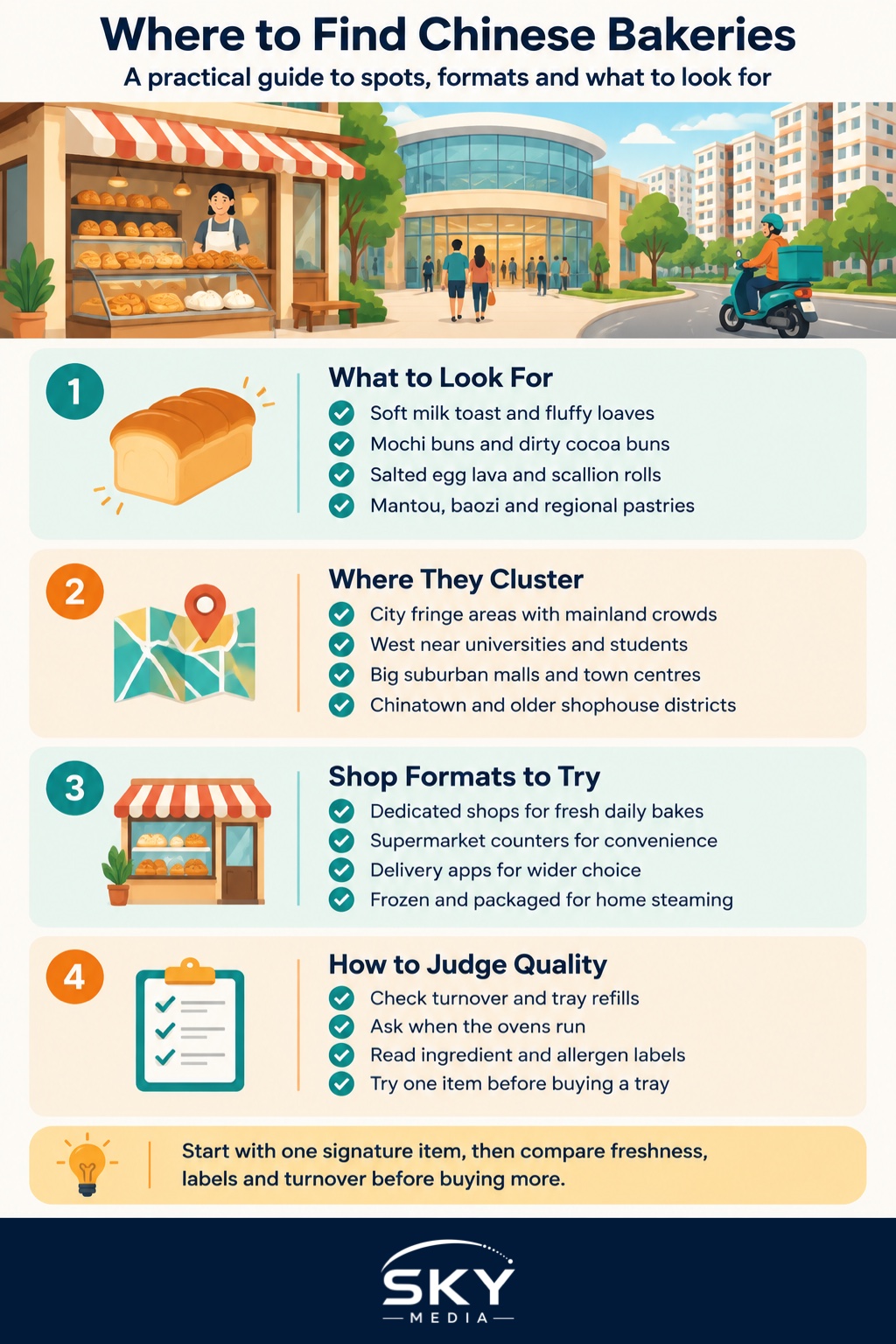
What many mainlanders look for is the newer wave of baking styles that spread across Chinese cities in the last two decades. Think ultra-soft milk toast sold as a full loaf, mochi-filled buns, dirty cocoa buns, salted egg lava pastries, scallion flower rolls, and Northern staples like mantou and baozi. Some regional favourites, such as flaky Suzhou-style pastries or Xinjiang naan, appear too. Knowing which tradition you want makes it far easier to choose the right shop rather than being disappointed by a very good bun that simply is not the bun you meant.
Neighbourhoods and Malls Where They Cluster
Chinese bakeries in Singapore rarely sit in isolation. They tend to follow where mainland residents, students and shoppers already gather, so a little geography goes a long way.
- Areas with a strong mainland Chinese and student presence, including parts of the city fringe and the west near the universities, often support bakeries and cafes that cater to northern and eastern Chinese tastes.
- Large suburban malls and heartland town centres frequently host a bakery chain outlet or a Taiwanese-style bakery, which overlaps heavily with the soft-bread styles many mainlanders enjoy.
- Chinatown and the older shophouse districts carry the traditional Cantonese bakeries, useful for mooncakes, wife biscuits and classic pastries around festive seasons.
- Asian supermarket chains and their in-store bakery counters are a quiet workhorse. Many carry steamed buns, packaged milk bread and seasonal items without you needing a dedicated shop at all.
A simple tactic is to search online maps in Chinese characters as well as English. Typing the Chinese name for a bun or pastry style often surfaces small shops that English-only searches miss entirely, which is a handy habit worth keeping for all your food hunting here.
Bricks and Mortar Versus Online and Frozen
Not every craving needs a shopfront. For newcomers, the fastest route to a familiar taste is sometimes a delivery app or a freezer, especially if you live away from the busier districts.
| Where you buy | Best for | Things to weigh |
|---|---|---|
| Dedicated bakery shopfront | Fresh daily bread, hot buns, festive pastries | Location bound, may sell out by evening |
| Supermarket bakery counter | Everyday loaves, steamed buns, convenience | Less specialised, limited regional items |
| Online and delivery apps | Wide choice, cakes to order, home comfort | Delivery fees, freshness varies in transit |
| Frozen and packaged | Mantou, baozi, dumplings to steam at home | Texture differs, needs your own steaming |
The table is a rough guide, not a ranking. Many settled newcomers mix all four: a favourite shop for weekend treats, a supermarket for the weekday loaf, and a freezer stocked with buns for busy mornings that taste close enough to home when steamed properly.
How to Judge a Good One at the Counter
Once you find a promising bakery, a few quick checks tell you whether it will become a regular. These habits travel with you to any new shop.
- Look at turnover. A busy counter with trays being refilled usually means fresher bread than a quiet shop with everything sitting out since morning.
- Ask what time the ovens run. Some shops bake in waves, and arriving near a fresh batch changes the whole experience, particularly for soft milk bread.
- Read the labels for allergens and ingredients, which matters if you avoid certain nuts, dairy or fillings. Staff are usually happy to explain if you ask politely.
- Try one signature item first rather than loading a full tray. If the plain milk bread or the house bun is right, the rest of the range usually follows.
Festive periods are their own adventure. In the weeks before the Mid-Autumn Festival, mooncakes appear everywhere, from traditional baked lotus paste to snow-skin styles, and around Lunar New Year you will find seasonal pastries and gift boxes. These are wonderful moments to explore, though queues and pre-orders are common, so plan a little ahead.
Making the Search Part of Settling In
Food hunting is one of the gentler ways to feel at home in a new country. Chasing down a decent scallion bun or the right soft loaf gets you walking through neighbourhoods, chatting with shopkeepers, and slowly building a mental map of your city. Many newcomers find that a favourite bakery becomes an anchor, a small weekly ritual that makes an unfamiliar place feel like theirs.
Keep your expectations flexible. A bun here may be slightly sweeter, a pastry a touch richer, and that is part of tasting how Chinese baking has travelled and settled across Southeast Asia. Treat the differences as discoveries rather than shortcomings, and you will build a list of go-to spots faster than you think.
Explore More
Finding familiar food is one thread of settling in; sharing a table is another. If you enjoy learning how everyday social customs shift across the causeway, read our guide to drinking and toasting culture in China versus Singapore, which pairs naturally with the meals and gatherings your new bakery finds will end up feeding.
Frequently Asked Questions
How early should I pre-order festive pastries to avoid queues? Order as soon as sales open, ideally a few weeks before the festival, since popular bakeries can sell out or limit pick-up slots. Check each shop’s ordering deadline and collection dates, and ask whether delivery is available. Early ordering also lets you compare options calmly.
How do I steam frozen mantou so it comes out soft? Steam from frozen or after a short rest, over boiling water, until hot through, and avoid letting condensation drip onto the buns. Lining the steamer with baking paper or a cloth helps. Follow the packaging for timing, since it varies by size and brand.
What should I ask if I avoid pork or have an allergy? Ask what is in the filling and whether the bun is baked with lard, and how the shop prevents cross-contact with nuts, dairy or eggs. Staff can usually explain if you ask politely. For serious allergies, avoid anything you cannot confirm and speak to a doctor about your needs.
How long does soft milk bread stay fresh? Usually only a day or two at room temperature, as soft bread dries out quickly. Keep it sealed, and freeze slices if you will not finish it soon. Check the label for the date, and warm frozen slices briefly to restore the texture.
Do Chinese bakeries accept WeChat Pay or Alipay in Singapore? Some do, but it varies by shop, and many take cards, PayNow or cash. Look for payment signs at the counter or ask before ordering. Keep a bank card or a little cash with you in case your preferred app is not accepted.
Further reading: Best Japanese Cheesecake in Singapore and Where to Buy It · Mainland Bubble Tea Brands in Singapore · Mooncakes: Types and Traditions · The Best Bakeries in Singapore for Bread, Pastries and Viennoiserie · Where to Find Mainland-Style Chinese Breakfast in Singapore