
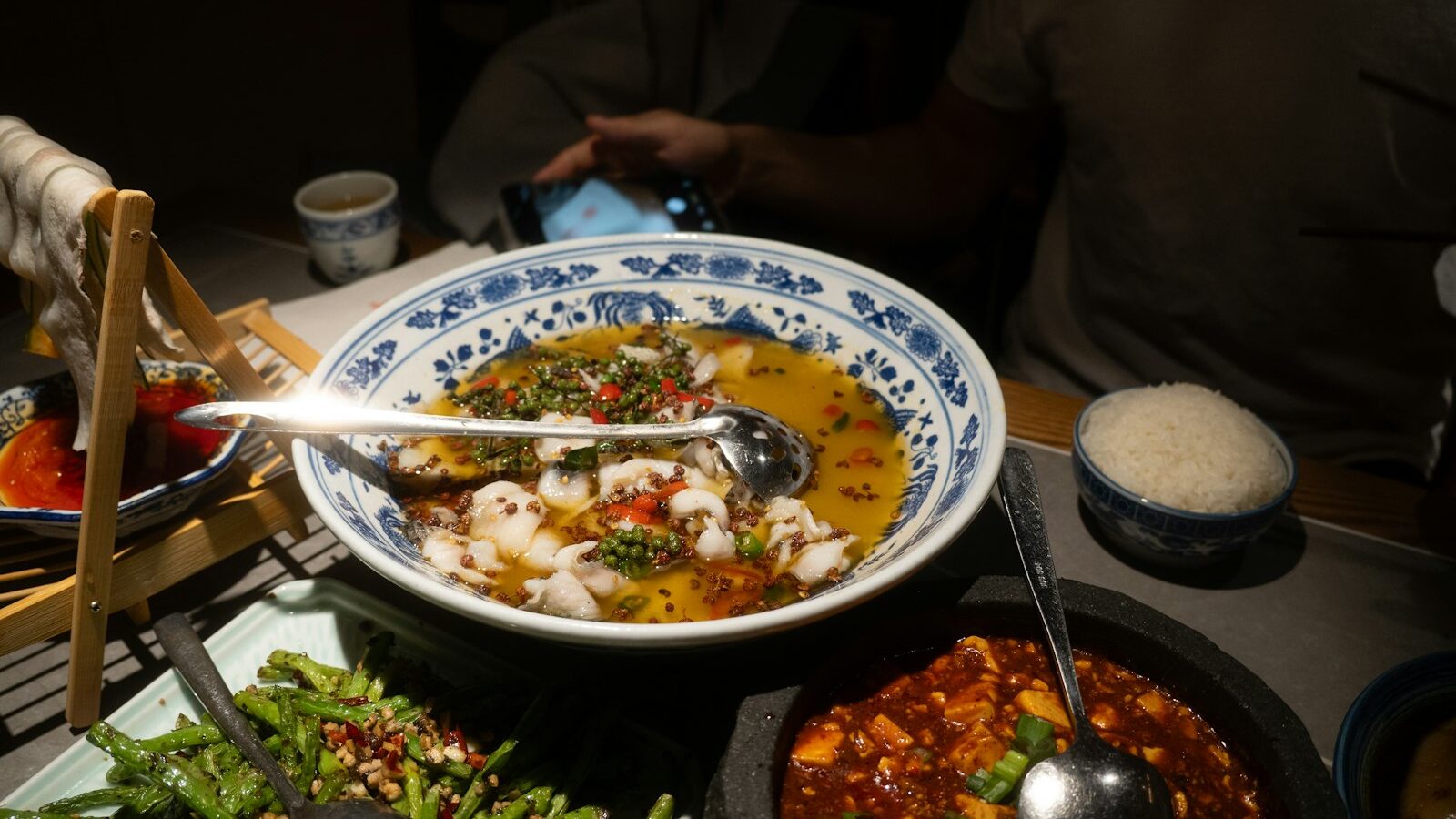
Few things comfort a mainland newcomer like the first proper hit of numbing, tongue-tingling spice, and the good news is that Sichuan and mala food is everywhere in Singapore once you know where to look. The famous ma la sensation, that buzz of Sichuan peppercorn layered over dried chilli, has become genuinely popular here, embraced by locals as much as by homesick arrivals. Whether you crave a bubbling hotpot with friends or a quick, fiery bowl on your own, the city has a version for every mood and budget.
This guide maps out the main kinds of Sichuan and mala eateries you will meet, the neighbourhoods where they cluster, and a few tips for ordering so your first bowl lands exactly at the heat you can handle.
The Different Faces of Mala
Before hunting for a meal, it helps to know that “mala” arrives in several distinct forms, and Singapore serves all of them. Knowing the difference means you can pick the right place for your hunger and your company.
- Mala xiang guo: a dry, stir-fried bowl where you choose your own raw ingredients by weight, they are cooked with chilli and spice, and served without soup. It is the everyday, single-diner favourite.
- Mala hotpot, or ma la tang: similar self-selected ingredients, but cooked and served in a spiced broth, lighter and soupier than xiang guo.
- Sichuan hotpot: the sit-down, shared experience, with a simmering pot at the table, often split into a spicy half and a mild half, ideal for a group.
- Classic Sichuan dishes: proper restaurant cooking such as mapo tofu, kung pao chicken, boiled fish in chilli oil and dan dan noodles, for when you want a full spread rather than one pot.
Each style has its own moment. A solo lunch calls for xiang guo, a rainy evening with friends calls for hotpot, and a family gathering suits a Sichuan restaurant where everyone shares.
Where the Numbing Spice Clusters
You do not have to travel far in Singapore to find mala, but a few areas are especially rich in it. As a rule, look wherever there is a large population of mainland residents and students, because the demand keeps the cooking authentic and the ingredients fresh.
| Setting | What you will find | Best for |
|---|---|---|
| Hawker centres and food courts | A dedicated mala xiang guo stall, priced by weight | A fast, affordable solo bowl |
| Chinatown and its side streets | Sichuan restaurants and hotpot houses | An authentic sit-down meal |
| Areas near universities and hostels | Casual mala tang and xiang guo spots | Student-friendly, generous portions |
| Suburban malls and heartland towns | Hotpot chains and Sichuan eateries | A relaxed group dinner |
| Late-night dining streets | Hotpot open into the small hours | A supper gathering after work |
Central districts around Chinatown carry the greatest concentration of sit-down Sichuan restaurants, many run by cooks from the region. For everyday mala, though, your own neighbourhood food court almost certainly has a xiang guo stall, and the heartland malls increasingly host full hotpot restaurants. Newcomers are often surprised how much good mala sits quietly in the suburbs rather than only in the city centre.
How Ordering Works
The self-select model is the heart of mala eating, and it can look daunting the first time. At a xiang guo or mala tang stall you take a basket or tongs and pick raw ingredients from a chilled display, choosing from leafy greens, mushrooms, lotus root, tofu skin, quail eggs, sliced meat, fishballs, luncheon meat and noodles. You hand the basket over, and it is weighed and cooked to order.
Two choices then decide your meal:
- Spice level: you will usually be asked to pick from mild, medium or spicy, sometimes described by number. Newcomers used to real Sichuan heat may want to test the kitchen with medium first, as levels vary a lot between stalls.
- Extras: many places let you add sesame paste, extra chilli oil, garlic or peanuts. A spoonful of the shop’s own chilli oil often lifts an average bowl into a great one.
Pricing by weight is the one thing to watch, since a basket piled with meat and noodles adds up faster than it looks. Load up on vegetables and tofu, which are lighter and cheaper, and go easy on the dense proteins if you are minding the bill.
Cooking Mala at Home
When you would rather stay in, Singapore makes a home mala night easy, and it is a lovely way to feed a group cheaply. Supermarkets and Chinese grocery shops stock everything you need, from packaged hotpot soup bases in spicy and mild varieties to the frozen meatballs, tofu products and vegetables that go in them. A simple electric pot on the table turns an ordinary evening into a small feast.
Sourcing ingredients will feel familiar and reassuringly cheap. Larger supermarkets carry a growing Chinese range, while the specialist grocers found in areas with many mainland residents stock the exact peppercorns, dried chillies and branded soup bases you remember from home. Online grocery platforms deliver these too, so a full hotpot spread is only a few taps away. Compared with dining out, a home pot shared among four or five people is far kinder on the wallet, and you control the spice entirely.
A Few Notes for Newcomers
A couple of gentle pointers will make your mala adventures smoother. First, heat labels are not standardised, so one stall’s “medium” is another’s “extra spicy”. Build a mental map of your favourites once you find them. Second, Singapore’s version sometimes runs a touch sweeter or milder than mainland cooking to suit local palates, though the authentic spots near Chinese communities stay faithful to the real thing. If a bowl disappoints, try another stall rather than writing off the whole city.
Finally, mala is best shared, and it is a wonderful bridge between newcomers and locals, since young Singaporeans love it just as much. Inviting colleagues or new friends to a hotpot is an easy, warm way to settle in. The flavours of home are closer than you think, and half the joy is in the hunt for the bowl that tastes just right.
Explore more
If mala has whet your appetite for home flavours, explore more of the map. Our guide on where to find Shanghai and Jiangnan food covers a gentler regional style, while where to find Cantonese dim sum is perfect for a leisurely weekend. To round off any meal, see our piece on Chinese tea culture and where to buy tea.