
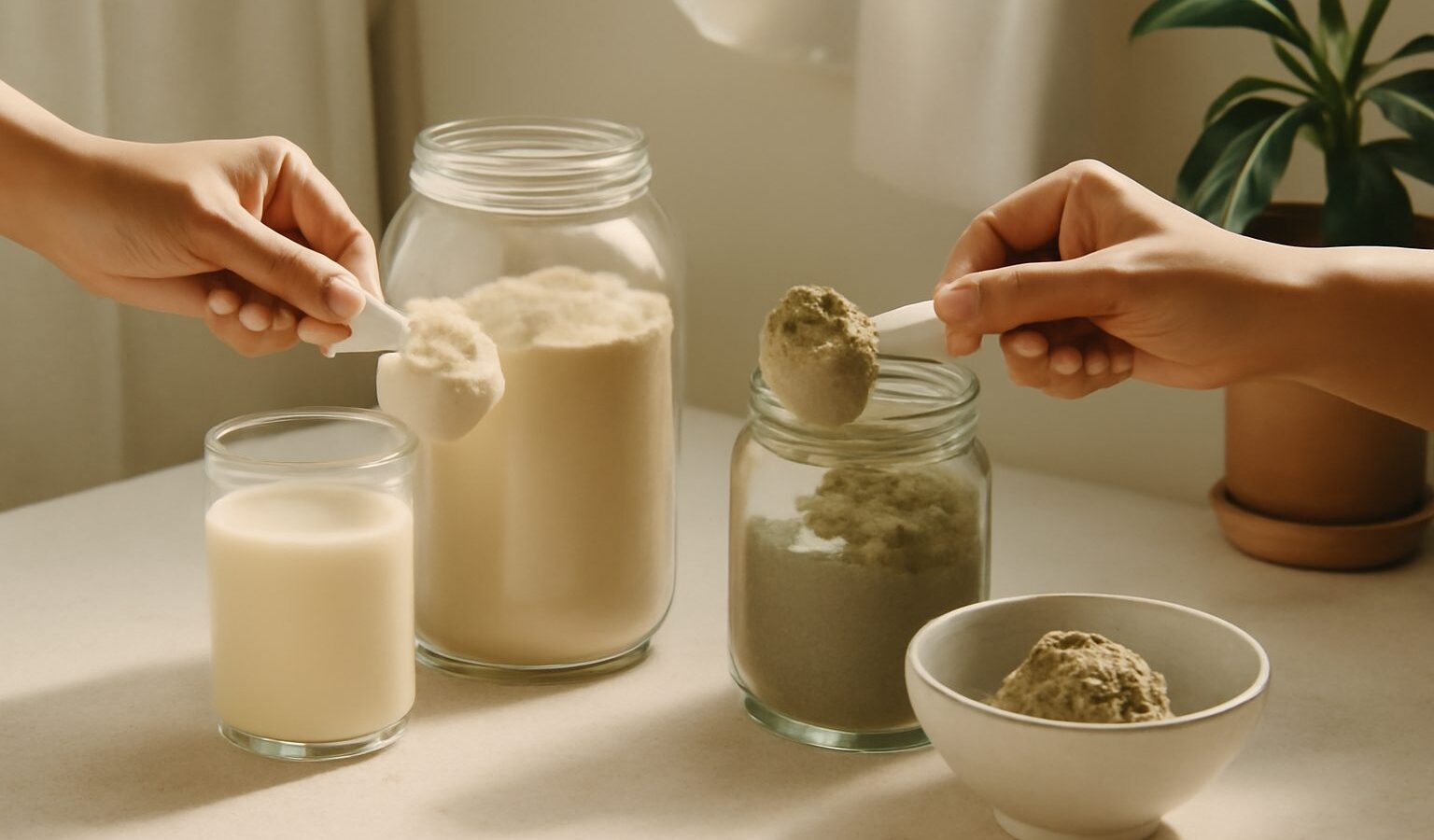
If you have ever stood in front of a wall of tubs at a supplement shop or scrolled endlessly online, the whey vs plant protein singapore question probably crossed your mind. Both are simply concentrated protein you can stir into water or a smoothie, and neither is a magic powder. This is general information to help you weigh up the options, not medical or nutrition advice, and food should always come first. A protein powder is a convenience, not a substitute for a balanced plate of hawker or home-cooked meals.
What each type actually is
Whey protein comes from milk. It is a by-product of cheese-making, dried into a powder, and it contains all the essential amino acids your body cannot make on its own. Because it digests fairly quickly and is rich in an amino acid called leucine, it has long been popular with people training for muscle and strength.
Plant protein powders are made from sources such as pea, soy, rice, or a blend of several plants. Soy on its own is a complete protein, while some single plant sources are a little lower in one or two amino acids. This is easy to solve. Blends that combine, say, pea and rice are formulated to cover the full amino acid range, and if you eat a varied diet across the day you are very likely getting what you need anyway.
The honest headline is this: for most people who are already eating enough total protein, the difference between whey and a good plant blend is small. Total daily protein and overall diet matter far more than which tub you pick.
Digestion, allergies and dietary needs
This is where personal factors tip the balance. If you are lactose intolerant, which is common across Asian populations, whey concentrate can cause bloating or discomfort. Some people do fine with whey isolate, which has less lactose, but plant protein sidesteps the issue entirely. If you follow a vegan or vegetarian diet, plant protein is the obvious choice. If you have a soy allergy, look at pea or rice blends instead.
Everyone’s gut is different, so it is worth paying attention to how you feel rather than following the loudest marketing. Supplements are not regulated in the same way as medicines, so claims on the label are not a guarantee of quality or of any particular benefit.
Taste, texture and mixing
Whey tends to mix smoothly and has a lighter, creamier taste that many people find easy to drink. Plant proteins have improved a lot, but some can feel grittier or have an earthy, slightly beany flavour, especially plain pea protein. Blending plant protein into a smoothie with banana, oats, or milk of your choice usually smooths this out. In Singapore’s heat, a cold blended shake often goes down more easily than a thick mixed drink anyway.
Cost and practicality
Prices vary widely between brands and shops, so compare the cost per serving rather than the price of the tub. Whey is often slightly cheaper gram for gram, but plant blends are competitive and both can fit a normal budget. Whole foods are usually the better value overall. Eggs, dhal, tofu, tempeh, fish, chicken, Greek yoghurt, and beans all deliver protein alongside other nutrients that no powder provides.
Fitting protein powder into your day
Powder is most useful when real food is inconvenient, for example straight after a gym session at an ActiveSG facility, on a rushed morning, or when you simply struggle to hit your protein target from meals. It is not something you need to build your diet around. To work out roughly how much protein you actually need, read how much protein do you really need, and if you are still unsure whether a tub is worth buying at all, do you need protein powder walks through it honestly. For the bigger picture of building a solid everyday diet, nutrition basics is a good starting point.
When to check with a professional
Protein powder is generally fine for healthy adults, but check with a doctor, pharmacist, or dietitian before adding any supplement if you are pregnant or breastfeeding, on medication, or managing a health condition such as kidney disease, where protein intake may need to be watched. A dietitian can tailor advice to your body and goals in a way no article can.
The practical takeaway
There is no universal winner in the whey vs plant debate. Choose whey if you tolerate dairy and like a smooth, creamy shake. Choose a plant blend if you are vegan, lactose intolerant, or simply prefer it. Either way, get most of your protein from food, use powder only to fill the gaps, and remember that consistency in training and eating matters far more than the label on the tub.