
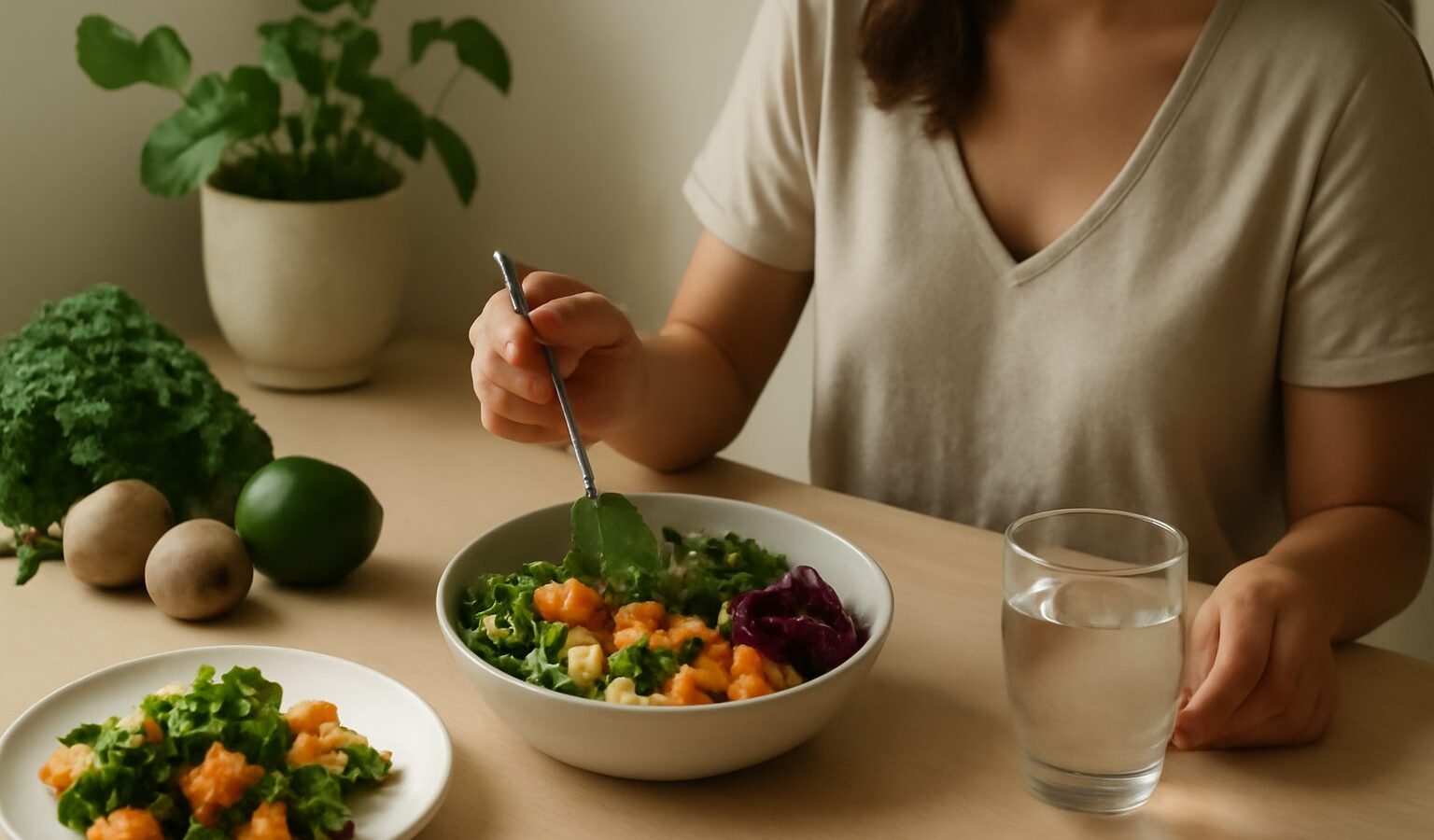
If you have ever thought about eating less meat but could not imagine giving up satay, fish head curry or a good bak chor mee, flexitarian eating is probably the most realistic path for you. It is not vegetarianism and it is not a strict rulebook. It simply means leaning your meals towards plants most of the time while still enjoying meat, fish and eggs when you want them. “Plant-forward” is the same idea from the plate’s point of view: vegetables, wholegrains, beans and other plant foods take centre stage, and animal foods play a supporting role.
This is general information, not medical or dietitian advice. If you are pregnant, managing a health condition, feeding growing children, or planning a big shift in how you eat, check with your doctor or an accredited dietitian so your plan fits your needs.
What Flexitarian Eating Actually Means
The word is a blend of “flexible” and “vegetarian”, and the flexibility is the whole point. There is no threshold you must hit and no membership card. Some people go meat-free on weekdays and eat what they like at weekends. Others simply make plants the star of most dinners and treat meat as a smaller feature rather than the main event. Both count.
Because it is a spectrum rather than a set of rules, flexitarian eating tends to last where stricter approaches fall away. You are not cutting out an entire food group, so there is nothing to rebel against. For a broader look at how eating patterns compare, our guide to diet trends like keto and paleo puts the plant-forward approach in context.
Why People Lean Plant-Forward
People arrive here for different reasons, and all of them are valid. Some want more variety and colour on the plate. Some are thinking about cost, since beans, lentils, tofu and eggs are among the more affordable proteins at any wet market or supermarket. Some like the idea of a lighter environmental footprint. And many simply feel that filling half the plate with vegetables and wholegrains, in the spirit of Singapore’s My Healthy Plate, leaves them feeling good.
Plants bring things that are easy to fall short on: fibre, which supports digestion and helps you feel full, along with a wide range of vitamins, minerals and the natural compounds that give fruit and vegetables their colours. Wholegrains add steady energy, which is why wholegrains and why they matter is worth a read if you are rethinking your staples. None of this requires giving up meat. It just means letting plants do more of the work.
Getting Enough Protein Without the Worry
The first question most people ask is about protein, and it is a fair one. The reassuring answer is that plants offer plenty of it, and Singapore’s food scene makes this easy. Tofu and tau kwa, tempeh, edamame, chickpeas, lentils, dhal, and the many beans in a bowl of bubur cha cha or a vegetarian economy rice spread are all everyday sources.
A practical way to think about it: include a protein you can point to at each meal, and vary it across the week. If you eat animal foods sometimes, eggs and fish slot in naturally alongside the plant options. To understand how protein sits alongside carbohydrates and fats, see understanding macronutrients, and for a closer look at beans, tofu and the like, understanding plant-based proteins goes further.
A few simple habits cover the bases:
- Anchor each meal around a clear protein, whether that is tofu, dhal, eggs or a modest portion of meat or fish.
- Mix your plant proteins over the day, for example beans at lunch and tofu at dinner, so you get a fuller range of nutrients.
- Do not forget wholegrains and vegetables also contribute small amounts, which add up across a full plate.
Meat-Eater Versus Flexitarian: A Simple Comparison
The shift is gentler than people expect. It is less about removing meat and more about rebalancing the plate around it.
| On the plate | Typical meat-centred meal | Flexitarian version |
|---|---|---|
| Main focus | Large portion of meat | Vegetables and wholegrains lead, smaller meat portion |
| Protein source | Mostly one animal protein | Mix of tofu, beans, eggs, fish and some meat |
| Vegetables | A side, if any | Around half the plate |
| Frequency of meat | Most meals | Some meals, by choice |
| Everyday cost | Often higher | Often lower, with beans and tofu |
Notice that nothing is forbidden in the flexitarian column. You are adjusting proportions, not banning ingredients, which is exactly why it feels sustainable rather than punishing.
Making It Work in Singapore
The good news is that our food culture is already rich in plant-forward options, so you rarely have to seek out anything special.
- At the hawker centre, order yong tau foo loaded with vegetables and tofu, vegetarian bee hoon, a thosai with dhal, or an economy rice plate built around two or three vegetable dishes and a smaller serving of meat.
- Indian vegetarian stalls, from dhal and sambar to chana and paneer, are some of the tastiest plant-forward eating anywhere in the city.
- When cooking at home, try a “meat as flavouring” approach: a little minced pork or dried shrimp to season a big pan of vegetables and tofu, rather than a large slab of meat as the whole meal.
- Build a couple of meat-free days into your week to start, then let it grow naturally if it suits you. Planning ahead makes this painless, and healthy meal planning for the week can help you do it.
- Keep easy staples on hand: canned beans and chickpeas, eggs, tofu, frozen vegetables and a wholegrain like brown rice or wholemeal bread.
Watch out for one trap. “Plant-based” does not automatically mean healthy. Some meat-free options are deep-fried or heavy on salt and sugar, and mock meats can be highly processed. Enjoy them if you like, but treat them as an occasional choice rather than a daily default, and let whole plant foods form the base.
Doing It Sensibly and Making It Last
Flexitarian eating is meant to be flexible, so let it be. Go at your own pace, keep the meals you love, and change proportions gradually rather than overhauling everything overnight. A slow shift is far more likely to stick than a dramatic one, and it gives your tastes and routines time to adjust.
Two cautions are worth stating plainly. First, eating fewer animal foods can, over time, make certain nutrients harder to get from food alone, which matters more the closer you move towards fully plant-based. If you are heading in that direction, or you are pregnant, breastfeeding or feeding children, an accredited dietitian can help you plan so nothing important is missed. Second, resist the urge to fill the gap left by meat with refined, processed foods. The aim is more plants, not more packets.
Done gently, plant-forward and flexitarian eating is one of the easier ways to add variety, fibre and vegetables to your week without giving up the dishes that make eating in Singapore such a pleasure. Start with one or two meals, keep it enjoyable, and let it grow from there.