
Protein has a reputation as something you get from meat, fish, eggs and dairy. That is true, but it is only half the story. Beans, tofu, nuts, seeds and wholegrains all carry protein too, and leaning on these plant-based proteins a little more often is one of the cheapest, most sustainable upgrades you can make to your everyday eating. You do not have to become vegetarian to benefit; even swapping in a few plant meals a week counts.
This is general information about food, not medical or dietitian advice. If you have a health condition, a food allergy or intolerance, are pregnant or breastfeeding, or you are planning a major change to your diet, speak to your doctor or an accredited dietitian for guidance suited to you.
What Plant-Based Proteins Actually Are
Protein is one of the three macronutrients your body needs in larger amounts, alongside carbohydrates and fats, and you can read more about how they fit together in our guide to understanding macronutrients. Your body uses protein to build and repair muscle, skin, hair and countless other tissues, and to make enzymes and hormones. It also helps meals feel more filling.
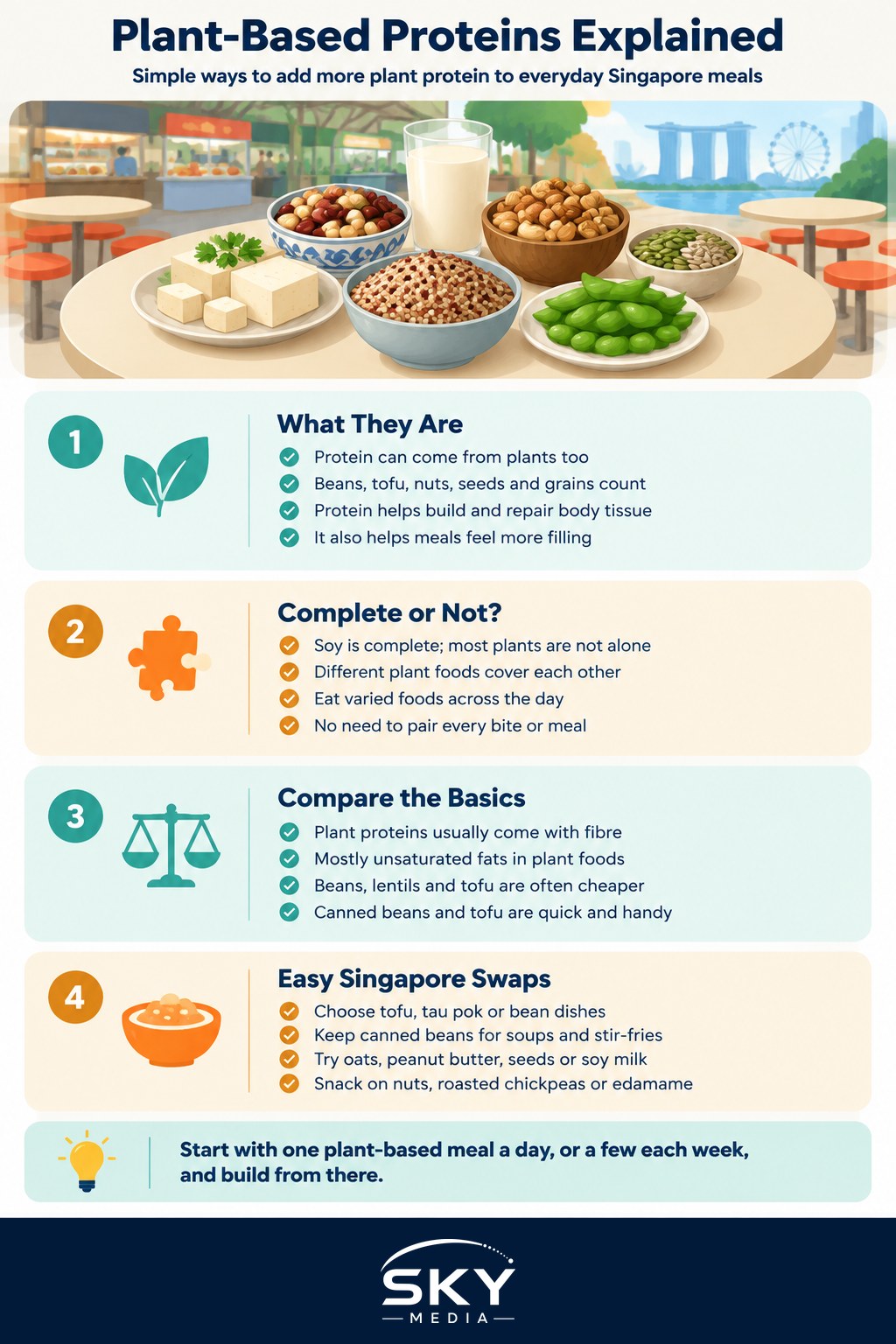
Plant-based proteins are simply protein that comes from plants rather than animals. In Singapore, you already eat plenty without labelling it that way: the tofu in your laksa, the tempeh in a nasi padang spread, the chickpeas in a prata-shop dhal, the peanuts in gado-gado, the edamame at a Japanese eatery. The main families are:
- Soy foods: tofu, tempeh, edamame and soy milk, all rich and versatile.
- Legumes: lentils (dhal), chickpeas, kidney beans, black beans and green beans.
- Nuts and seeds: peanuts, almonds, cashews, sesame, chia and pumpkin seeds.
- Wholegrains: brown rice, oats, quinoa and wholemeal bread contribute smaller amounts that add up.
Are Plant Proteins “Complete”?
You may have heard that plant proteins are “incomplete”. Here is the plain version. Proteins are made of building blocks called amino acids, and nine of them must come from food. Animal foods and soy contain generous amounts of all nine, so they are called complete. Many other plant foods are a little lower in one or two of these building blocks.
This used to worry people, but the practical reality is reassuring. When you eat a normal, varied diet across the day, different plant foods cover each other’s gaps. Rice and dhal, bread and peanut butter, or a stir-fry with tofu and mixed vegetables together provide the full set. You do not need to combine them in the same mouthful or even the same meal, just across your day. For most people eating a mixed diet, getting enough protein from plants is far easier than the “incomplete” label suggests.
How Plant and Animal Proteins Compare
Neither category is simply better; they bring different strengths, and most balanced eating in Singapore includes both. The table below sums up the practical differences to help you choose what suits a given meal.
| Factor | Plant-based proteins | Animal proteins |
|---|---|---|
| Amino acids | Soy is complete; other plants combine across the day | Generally complete on their own |
| Fibre | Naturally high, supporting digestion and fullness | None |
| Accompanying fats | Mostly unsaturated; often heart-friendly | Can be higher in saturated fat, depending on the cut |
| Cost | Usually cheaper, especially beans, lentils and eggs’ plant alternatives | Often pricier, particularly leaner cuts and fish |
| Convenience | Canned beans and firm tofu are quick; dried beans need soaking | Fast to cook but spoils faster in the heat |
The takeaway is not to pick a side but to widen your options. Because plant proteins bring fibre and mostly healthier fats, nudging a few meals a week in their direction fits neatly with the ideas in healthy fats vs unhealthy fats and the flexible approach in plant-forward and flexitarian eating.
Eating More Plant Proteins the Singapore Way
You do not need new recipes or specialty shops. The easiest path is to notice where plant proteins already appear and choose them a little more often:
- At the hawker centre: Order yong tau foo and pick the tofu, tau pok and bean products. Choose a dhal or chickpea curry at the Indian stall. Add tofu or tempeh to your economy rice.
- At home: Keep canned chickpeas and kidney beans in the pantry to toss into soups, salads and stir-fries. Firm tofu takes on any sauce and cooks in minutes.
- For breakfast: Overnight oats with peanut butter and seeds, or soy milk with wholegrain toast, starts the day with plant protein. See more in our healthy breakfast ideas.
- For snacks: A handful of nuts, roasted chickpeas or edamame is satisfying and portable, which pairs well with our healthy snacking ideas.
A gentle way to start is one plant-based meal a day, or a few across the week, rather than an overnight overhaul. Small swaps that you enjoy will always outlast a strict plan you dread.
Getting the Balance Right
A few sensible pointers keep plant proteins working for you:
- Watch the salt and oil. Many convenient plant options, like some canned beans, mock meats and heavily sauced tofu dishes, can be high in sodium. Rinse canned beans and go easy on rich gravies, in line with our guide to cutting down on salt and sodium.
- Choose whole over highly processed. Beans, tofu, tempeh, nuts and lentils are minimally processed. Some plant-based “meats” are ultra-processed and not automatically healthier, a point worth remembering from reducing ultra-processed foods.
- Mind portions of nuts. They are nutritious but energy-dense, so a small handful is plenty.
- Keep variety. Rotating soy, legumes, nuts and grains covers your bases without any need for supplements or protein powders for most people.
If you follow a fully vegetarian or vegan diet, are pregnant or breastfeeding, feeding growing children, or managing a medical condition, some nutrients need a little more planning. That is exactly when a chat with your doctor or an accredited dietitian pays off.
A Realistic Place to Land
Understanding plant-based proteins is not about swearing off meat or chasing a trend. It is about knowing that beans, tofu, tempeh, nuts, seeds and wholegrains are genuine, affordable protein sources that already sit on Singapore’s plates, and that eating them more often brings fibre, budget savings and variety along for the ride. Aim for a mix you enjoy, lean plant-ward when it is easy, and let the overall pattern do the work.
For a wider view of how this fits into everyday healthy eating, our nutrition basics: a beginner’s guide ties the pieces together. And remember, this is general guidance only. For advice matched to your health, condition, allergies or life stage, see your doctor or an accredited dietitian, and look to HPB’s HealthHub and the My Healthy Plate guide for trustworthy, Singapore-specific information.
Further reading: Whey vs Plant Protein Powder · Making Tofu at Home